Theron Couch
The 30th anniversary look at Age of Apocalypse continues (even if it’s now technically 31)…
 You know in those days, you would read a crossover and have to read all 23 parts of it to makes sense. I was adamant and Bob was supportive of saying, “Let’s not do it that way. These characters need to be here by the end of your fourth issue to lead into X-Men: Omega. How you get them there is completely in your hands.” It took people a bit from our fellow creators to roll with it. At first they were like, “Well, you’re just leaving us out here.” And I go, “We could tell you where to go, but I think we’re giving you the freedom. Go have fun with it.” —Scott Lobdell
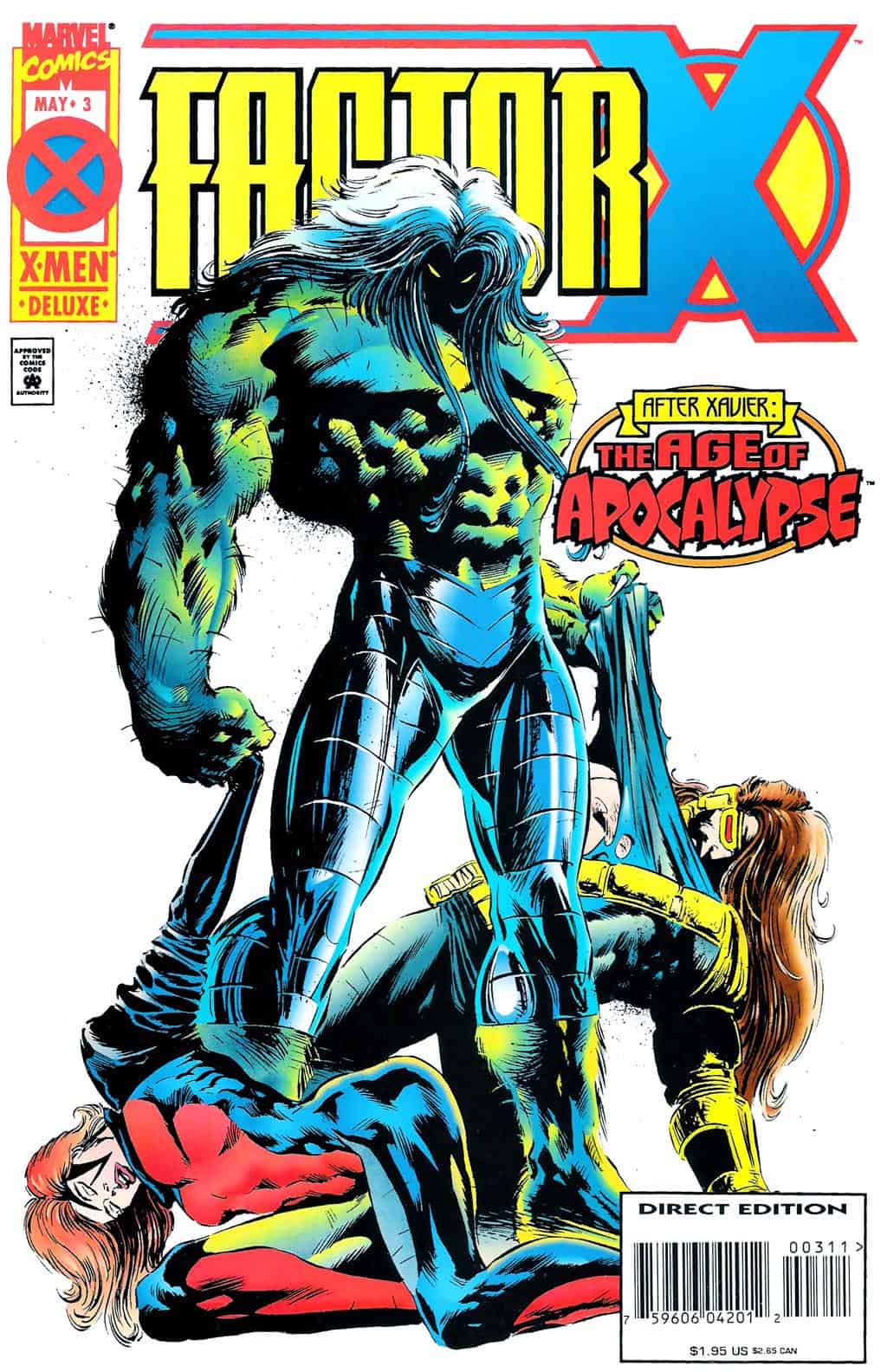 Factor X #3
W: John Francis Moore | P: Steve Epting w/ Terry Dodson | I: Al Milgrom | C: Glynis Oliver | L: Richard Starkings & Comicraft
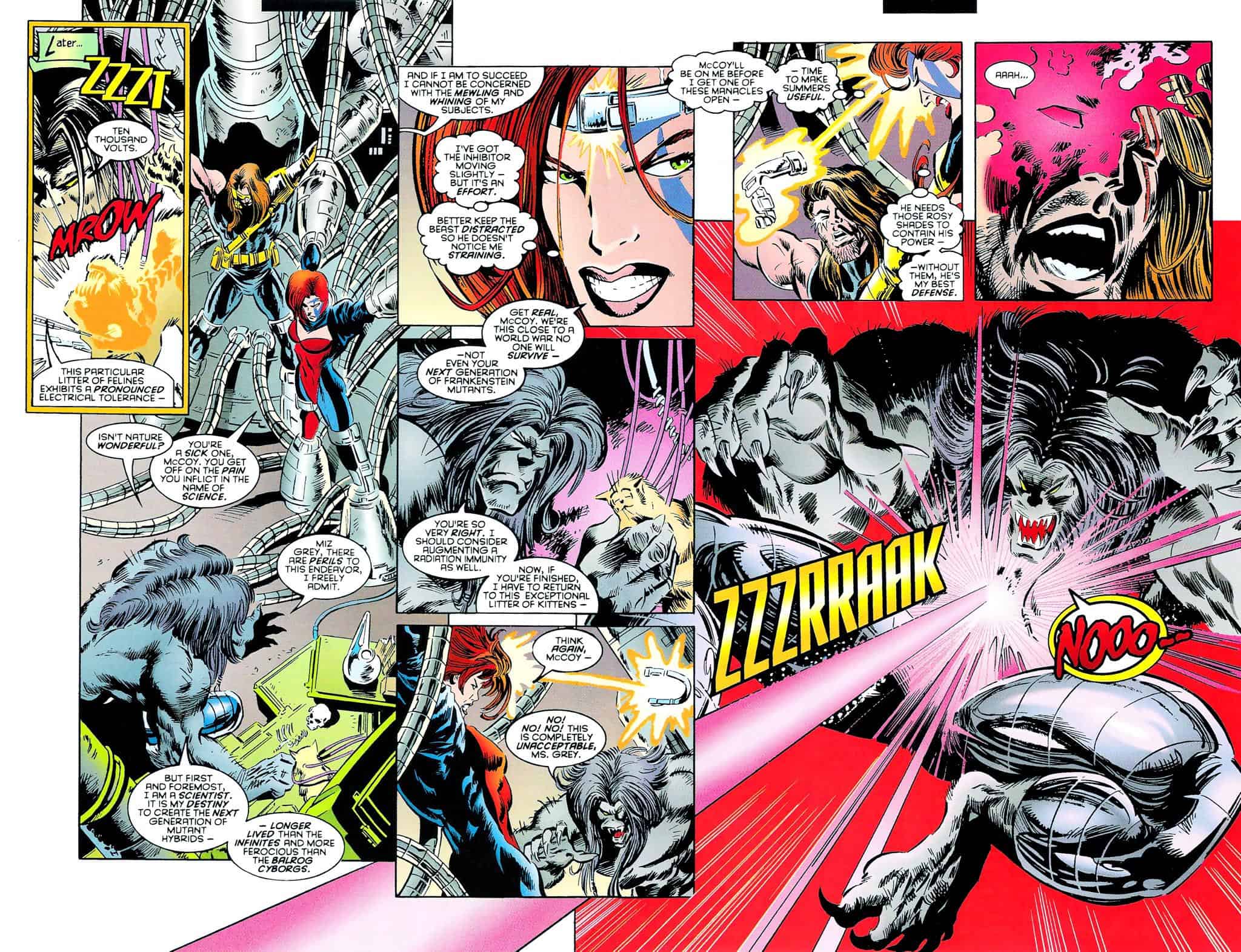
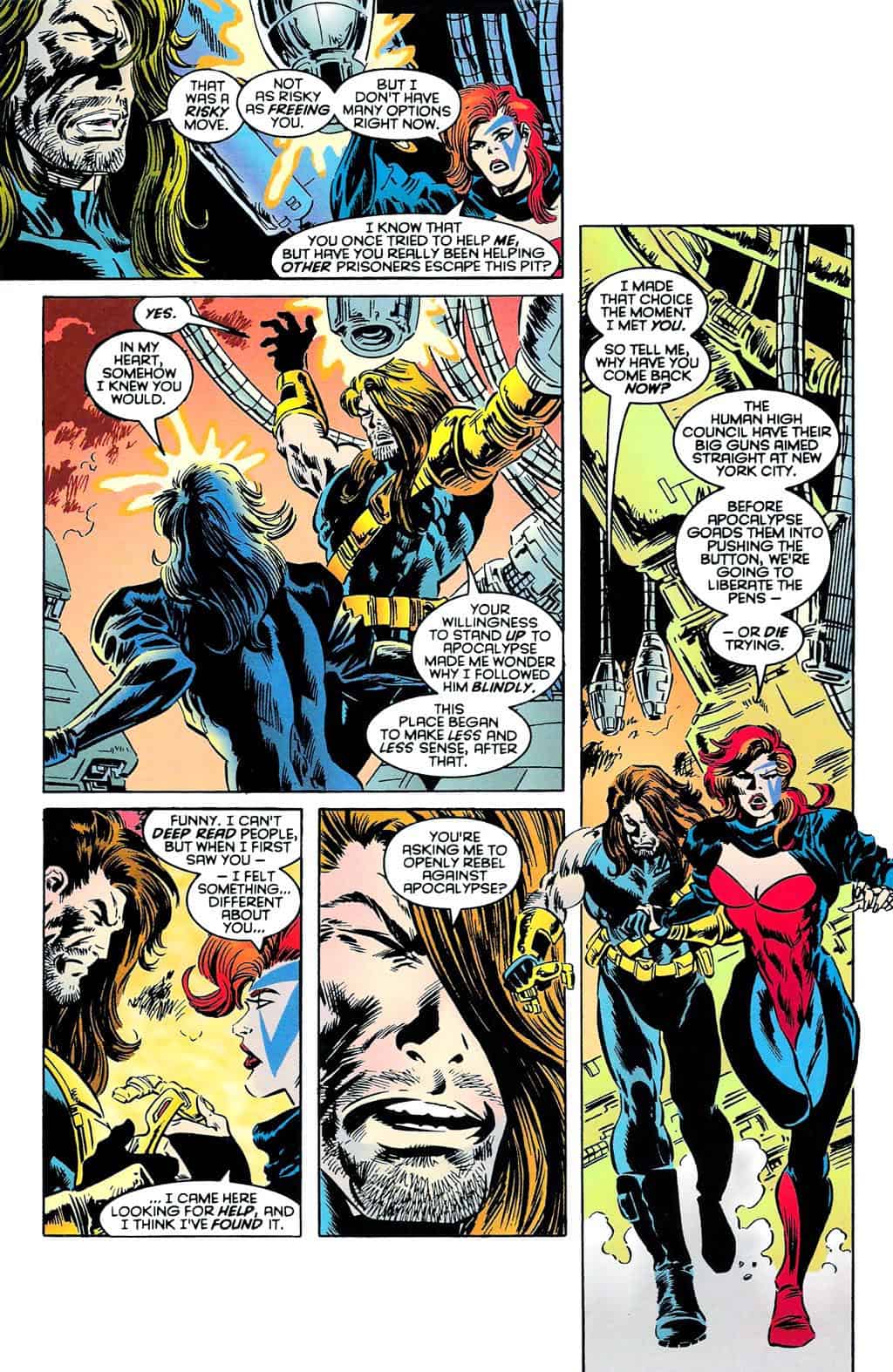
ESSENTIAL – Continued in part from Weapon X #2…Factor X #3 begins, and it’s all Havok can do not to confront his brother with what he learned in the previous issue about Cyclops helping prisoners to safety. Meanwhile, Jean Grey is infiltrating the pens. Her self-declared mission–find Sinister and warn him about the Human High Council’s upcoming strike on Apocalypse’s territory. Sinister provided Logan and Jean with the intelligence they delivered to the council in X-Men Alpha. Jean hopes his reasonableness about preventing a war will come in handy. Unfortunately, Jean discovers Sinister’s lab and quarters destroyed and before she can react, she is captured by Havok. Elsewhere, Angel’s lounge singer Scarlet worries she might be pregnant with Havok’s child. She doesn’t have time to worry long, though, as the Bedlam Brothers arrest her for being a spy. Back in the pens, Havok reveals to his brother that he’s captured Jean Grey and then makes his move, capturing Cyclops and turning both he and Jean over to McCoy. It’s a short lived captivity, though, as Jean is able to use Cyclops’ optic blasts to set them both free. Following the escape, Apocalypse gives the new head of the pens, Havok, the order to cull all the prisoners.
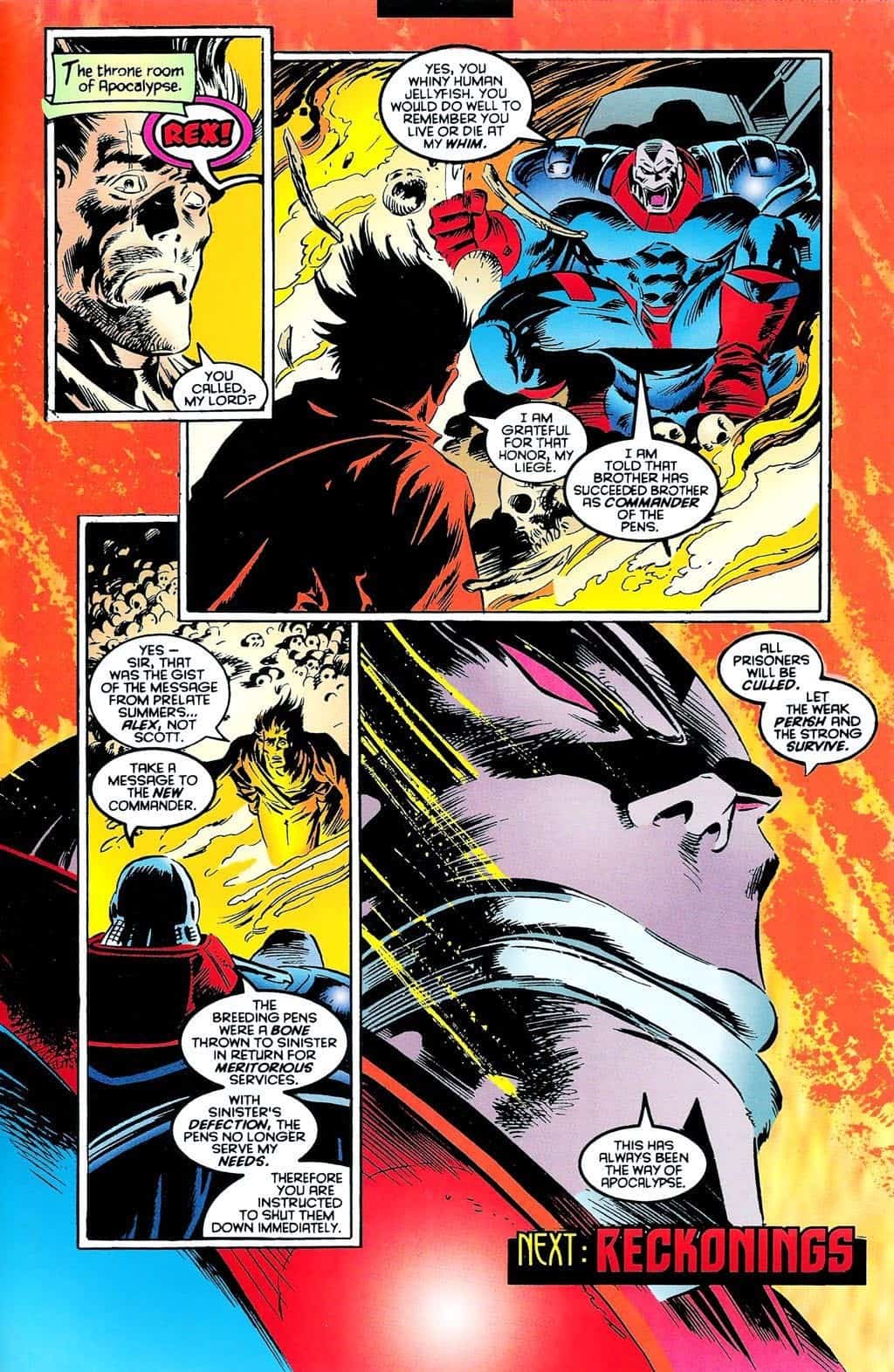 The way Moore writes it, Apocalypse almost seems spiteful when it comes to Alex’s ascension over Scott–the less favored brother takes something over only for Apocalypse to destroy that very thing.
Jean and Scott…back together again. Character relationships don’t necessarily fall into a nature versus nurture debate, but Moore certainly suggests that there is a bond between these two characters that can’t be broken. It’s also hard not to further re-evaluate the relationship between Jean and Logan.
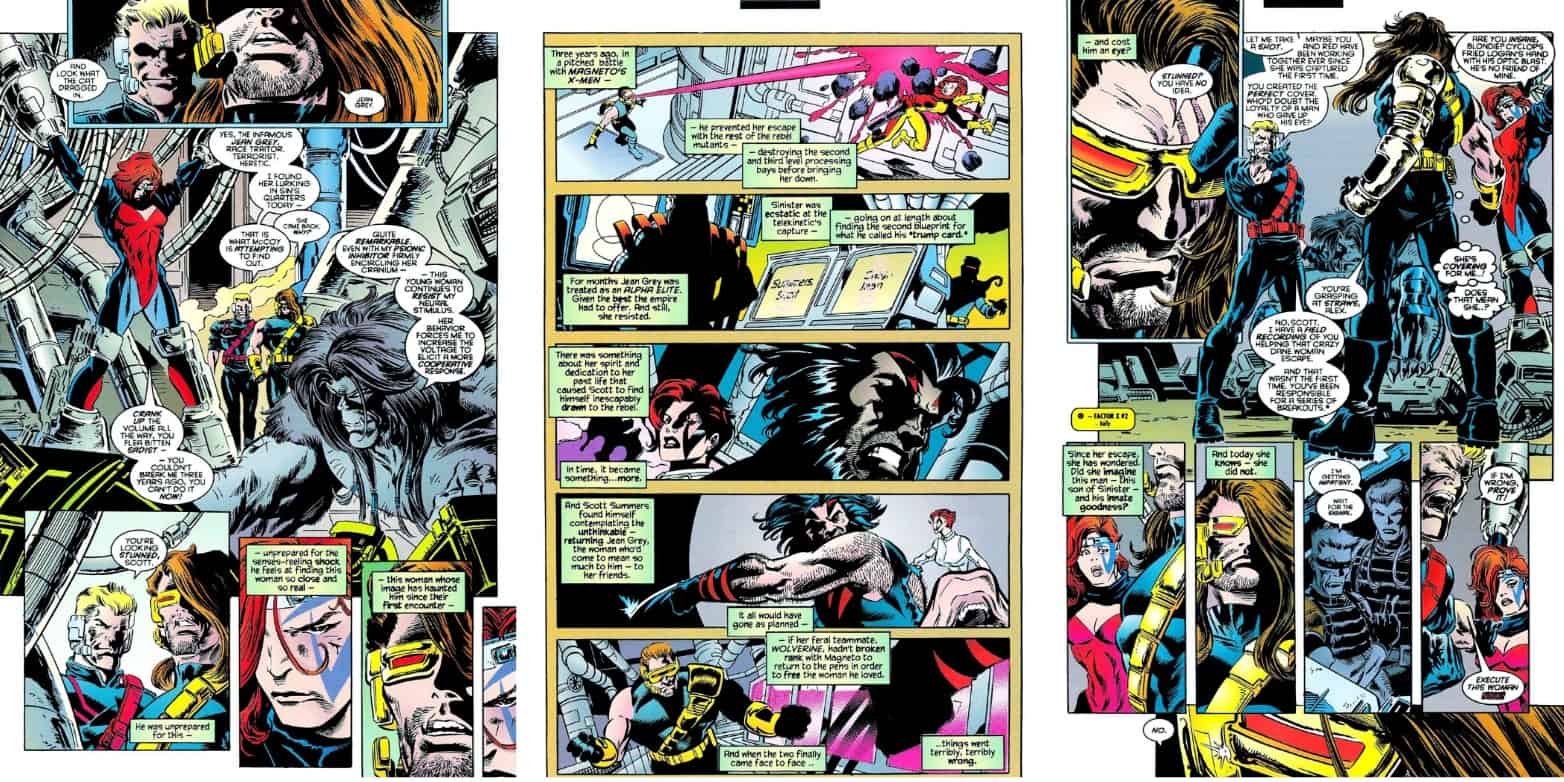 Weapon X is told from Logan’s point of view, but there is certainly never the suggestion that there is any kind of bond between Jean and Logan like there is between Jean and Scott even though in this universe there is no romantic connection. This makes sense for the time, though. There were moments of jealousy between the two (for instance a period circa X-Cutioner’s Song when Scott crushed on Psylocke a bit), but at the time these two were as rock solid as Peter and Mary Jane and Reed and Sue. There was never going to be anyone else for either of these characters.
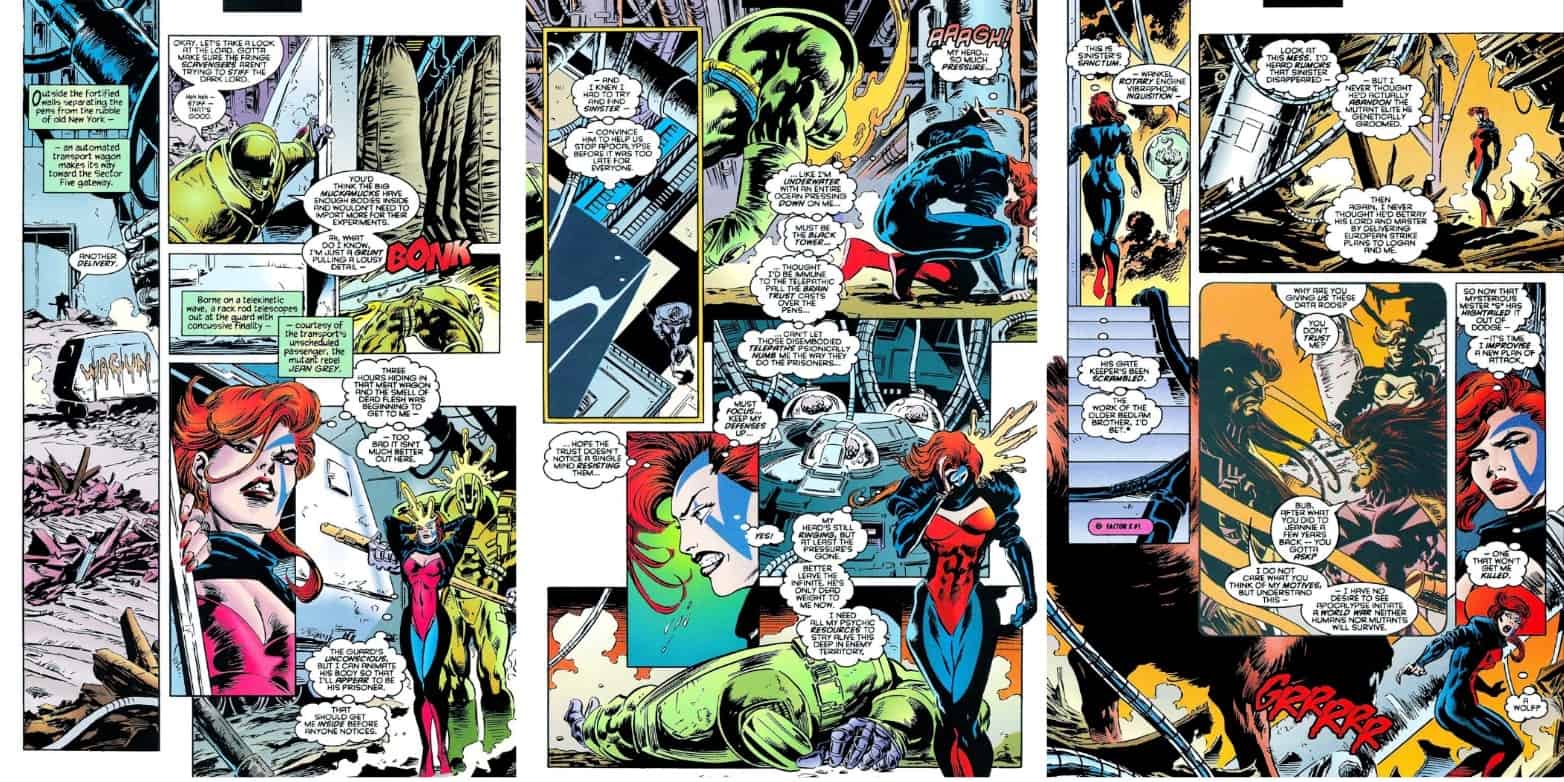
 Factor X #3 includes a one panel flashback to a moment prior to X-Men Alpha in which Sinister gives Logan and Jean the intelligence that they provide to the Human High Council. The very limited dialogue once again establishes Sinister as the most reasonable villain in all of Age of Apocalypse. He did horrible things to Jean when she was captured but also wants to avoid an apocalyptic war. It’s actually too bad Sinister didn’t appear in more of Age of Apocalypse. He is an important part of X-Man, but he pushes the envelope there a little bit more because of his goals with Nate.
 McCoy appears powerful for the first time on Steve Epting’s cover. This truly emphasizes the physical difference between him and the original timeline’s Beast. It’s never quite matched on the series’ interiors where the character is usually hunched over or in close-up.
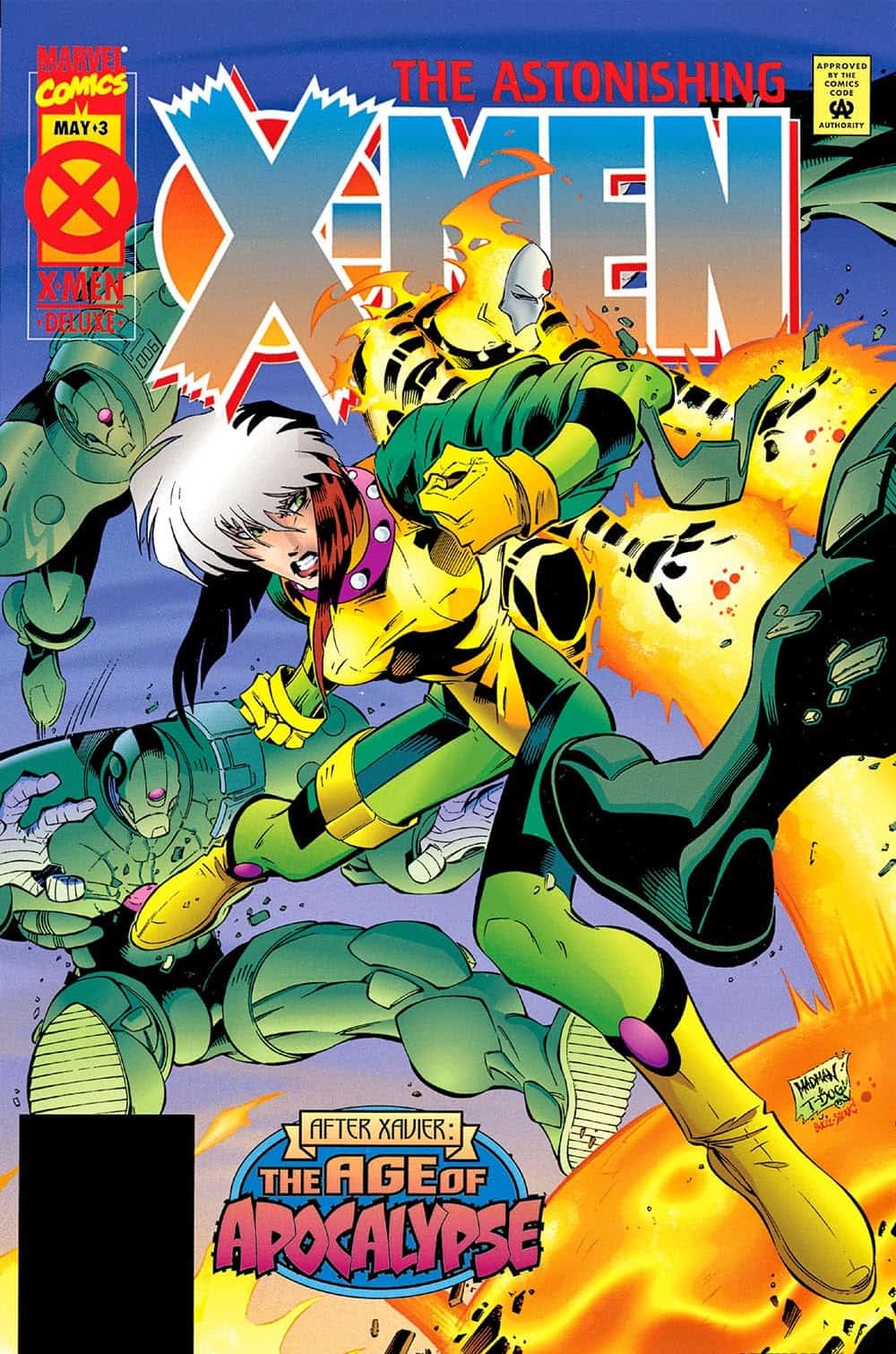 Astonishing X-Men #3
W: Scott Lobdell & Jeph Loeb | P: Joe Madureira | I: Tim Townsend & Al Milgrom | C: Steve Buccellato | L: Richard Starkings & Comicraft
ESSENTIAL – Wild Child flees Holocaust’s Infinites in Astonishing X’Men #3’s opening pages, intent on delivering the location of Holocaust’s culling operation to the rest of the X-Men. Sunfire and Morph intercept Wild Child, saving him from the Infinites. Meanwhile, Holocaust shows off his culling operation to a dying Sabretooth. And back at the mansion, Apocalypse’s forces approach. Nanny’s defensive programming kicks in, and the robot protector spirits young Charles away. Back at Holocaust’s culling factory, the X-Men attack. They very quickly come across a chained up and dead Sabretooth.
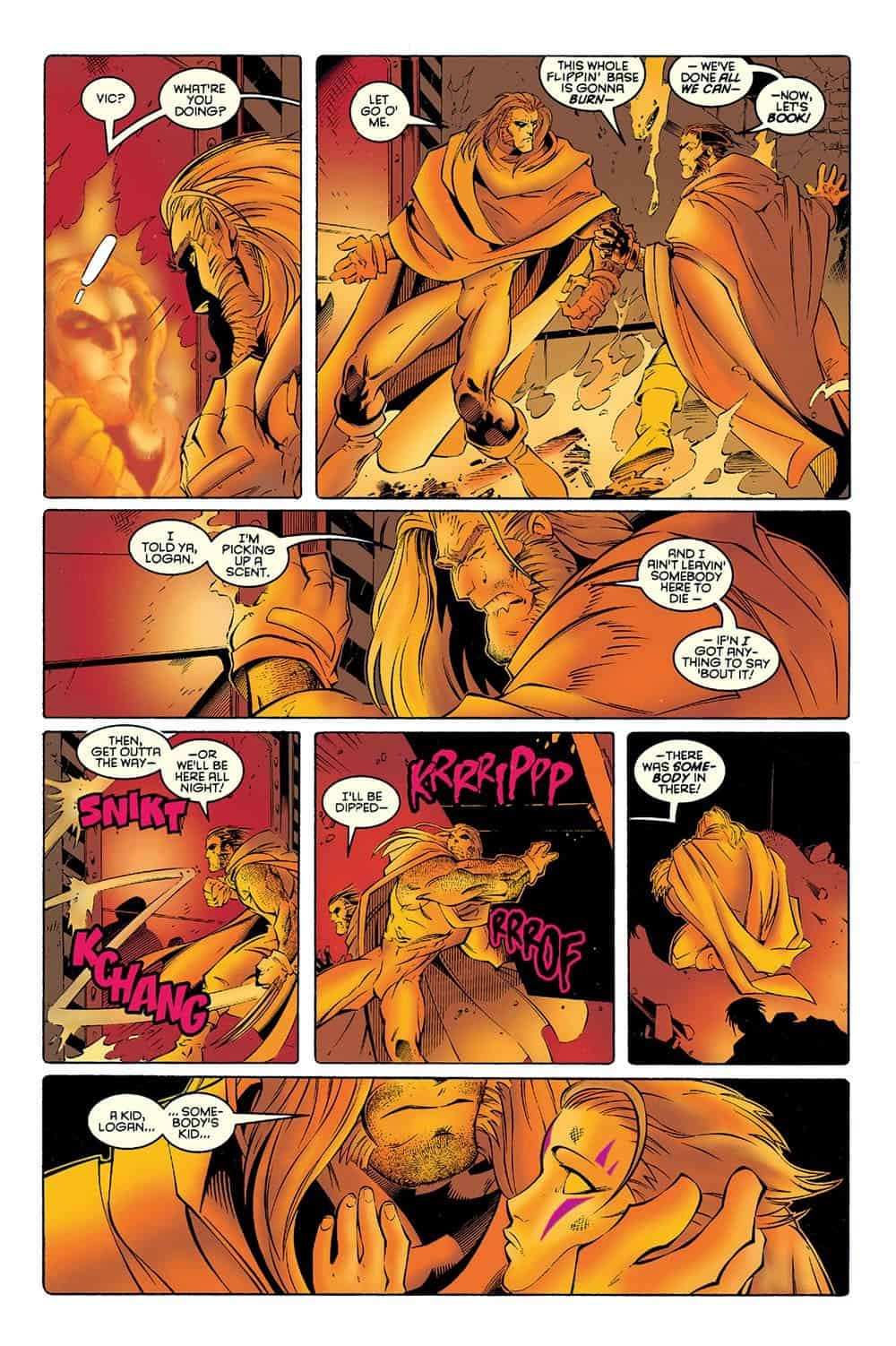 Astonishing X-Men #3’s emotional power revolves entirely around Sabretooth and Blink. Despite minimal space being dedicated to that, it takes over because there isn’t much else going on. Lobdell and Loeb continue to really build up a character that doesn’t exist in the original timeline. Indeed, no other character that doesn’t have a 616 counterpart gets the kind of development that Blink does. Illyana in Generation Next is little more than a MacGuffin. Destiny’s development in X-Calibre is limited to a kindly old lady who runs a human/mutant nature preserve. And the universe’s original characters are largely ciphers.
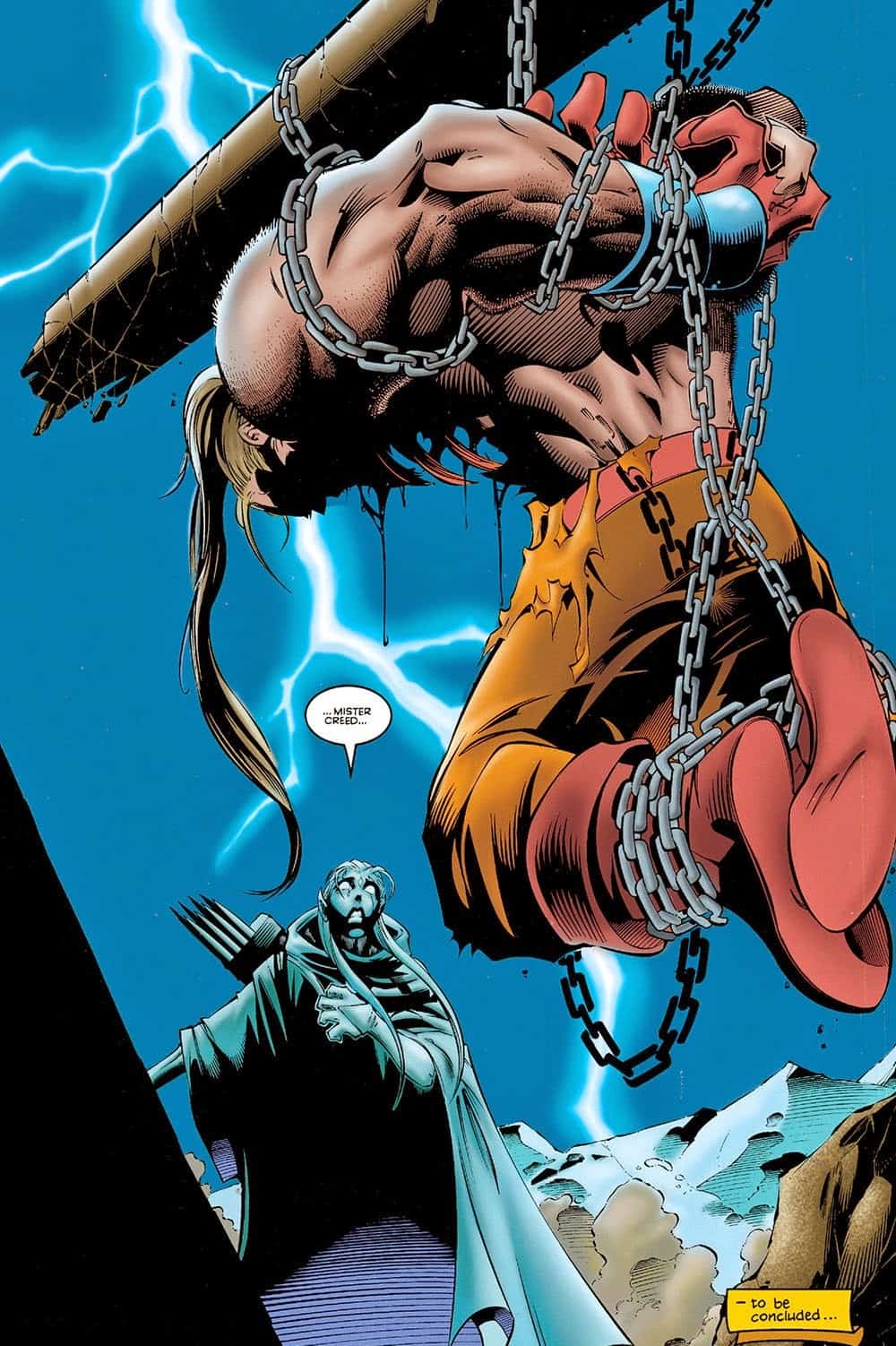 It does feel like there is a missed opportunity at the end of Astonishing X-Men #3 to see Sabretooth from the front as Blink does rather than end more on her expression with the reader seeing Sabretooth from behind. Whatever was done to Sabretooth isn’t going to hit crucified Wolverine levels of intensity, but it could have hit harder. That said, Buccellato’s overly bright color palette in this series makes hitting those notes difficult to begin with, so it may not have worked in any event.
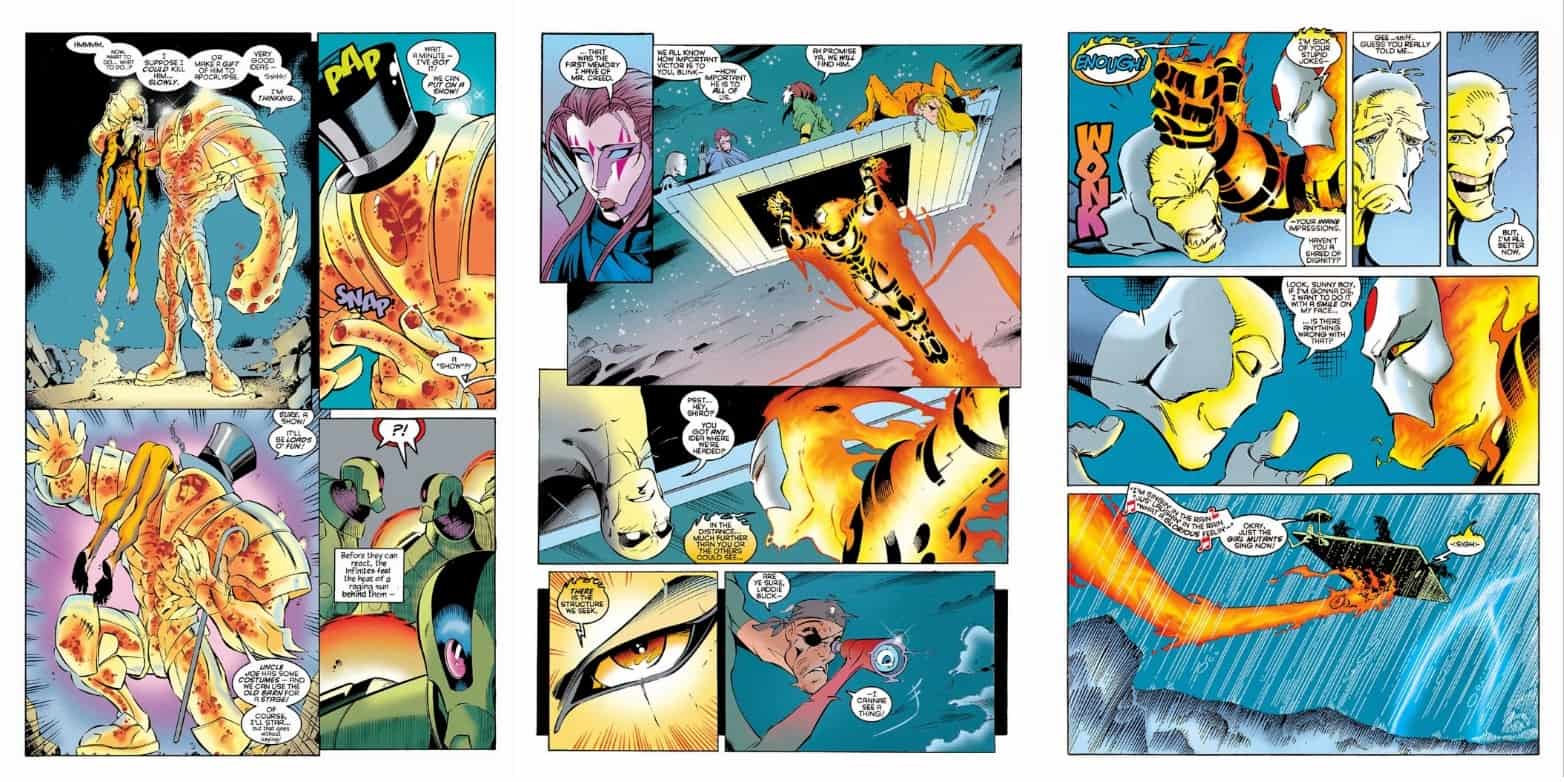 The usefulness of opportunities to catch one’s breath in this kind of fictional world can’t be overstated. It is possible to tell a story that is nothing but non-stop tension ratcheting. But it’s hard to read those stories for extended periods. Morph serves a valuable function in Astonishing X-Men by providing a tension valve. His humor is groan worthy, but this kind of regulated bleakness helps make Astonishing X-Men one of the easiest to read series in the event.
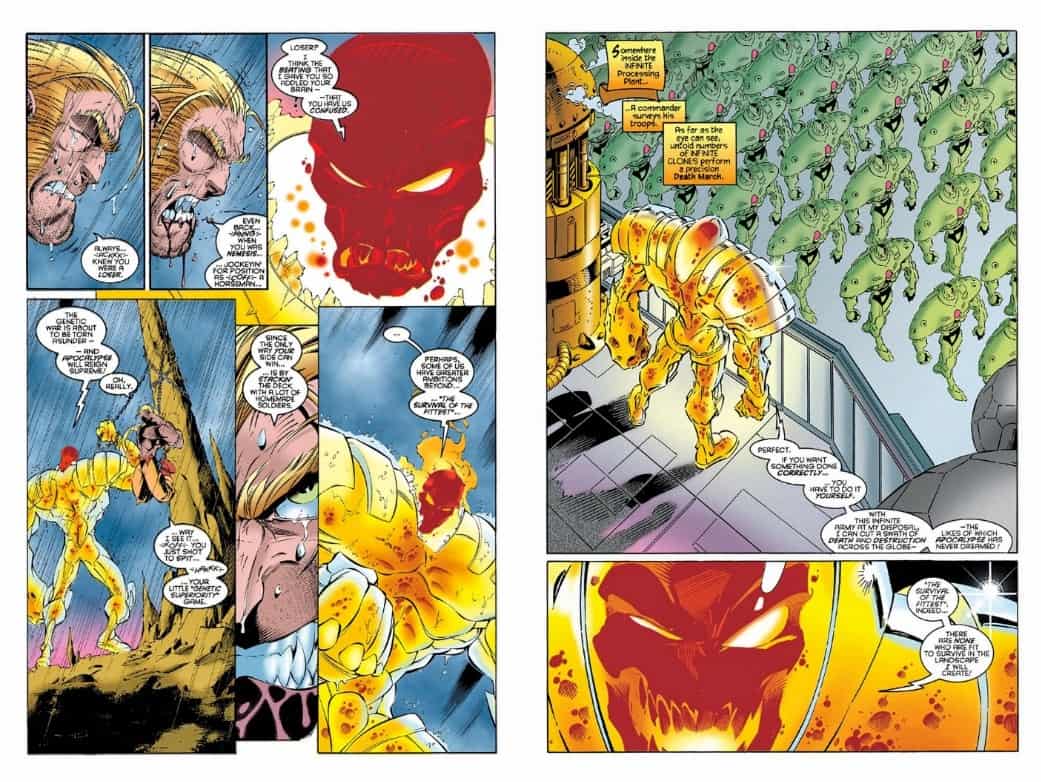 If there’s any Marvel character whose shoulders could out-do that infamous drawing of Cable with guns and 10 foot shoulder pads, it is Holocaust every time Madureira draws him. As Madureira’s tenure on Uncanny X-Men goes on, particularly muscled characters start to look a little top heavy–that’s a style choice already on display in Age of Apocalypse. Holocaust, though, is that idea pushed to the absurd maximum. At least that particular depiction of Cable didn’t give him toothpick legs.
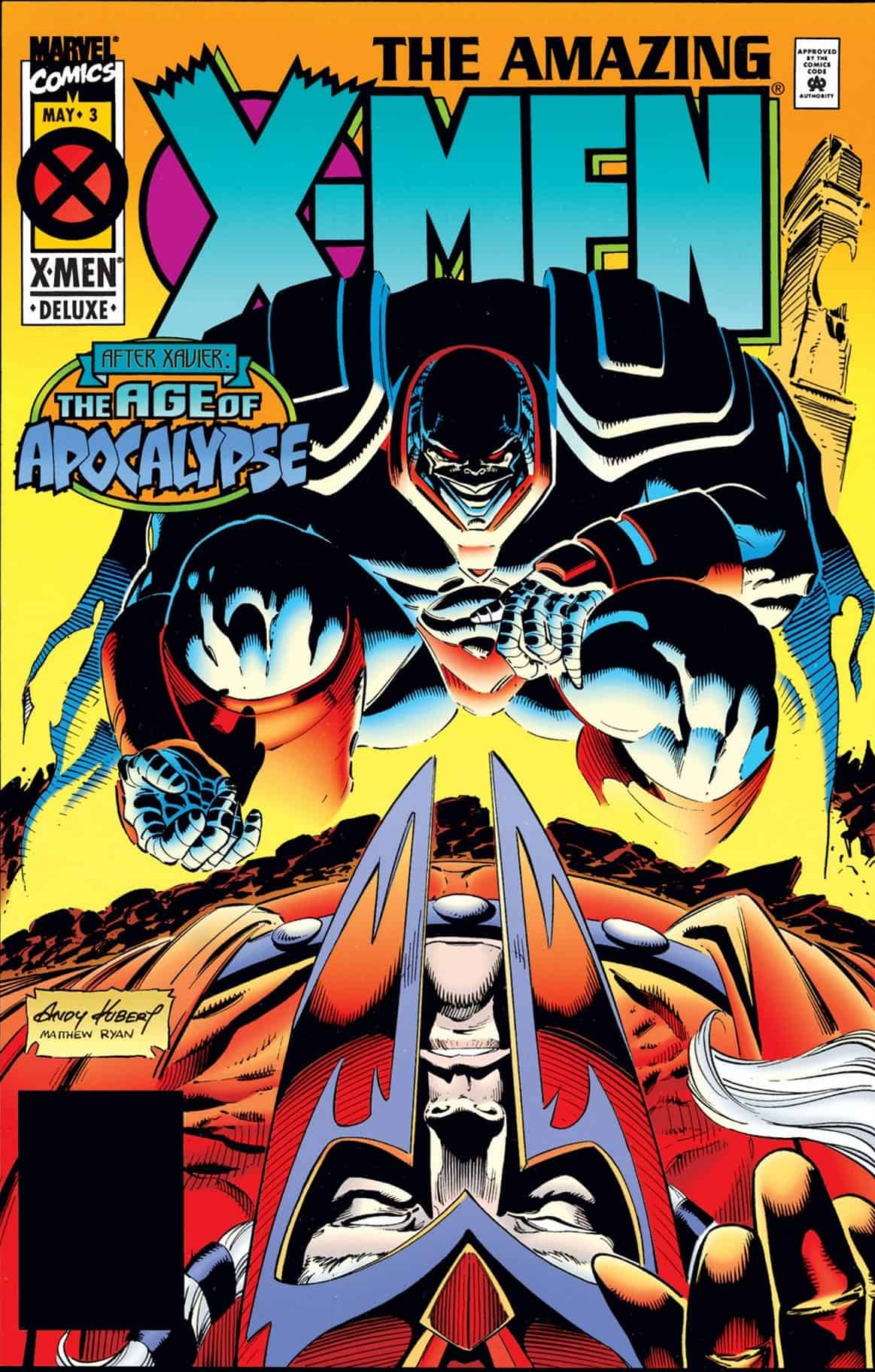 Amazing X-Men #3
W: Fabian Nicieza | P: Andy Kubert | I: Matt Ryan | C: Kevin Sommers & Digital Chameleon | L: Richard Starkings & Comicraft
ESSENTIAL – Continued in part from Astonishing X-Men #3…Infinites attack Magneto and Bishop from almost the start of Amazing X-Men #3. Magneto makes short work of them. That victory is short lived, though. Apocalypse himself confronts the X-Men’s leader. Magneto and Bishop put up a valiant struggle but are finally defeated with ease. Quicksilver’s force of X-Men return to the ruined mansion soon after. They find Magneto absent and evidence that Nanny’s powerful defenses were unleashed to protect Charles. Quicksilver rushes off to Manhattan and accosts Warren Worthington, seeking information. Warren volunteers everything he knows: Magneto is being held in Apocalypse’s citadel while Bishop has been taken to the Tabernacle of the Madri in Quebec. Meanwhile, in Quebec, the Shadow King rifles through Bishop’s memories of a world where Apocalypse never came to power. Back at the former Xavier estate, Quicksilver makes a fateful decision. He doesn’t have enough X-Men to split his forces and rescue both Bishop and his father. Since Bishop is necessary to Magneto’s plan, the X-Men leave for Quebec.
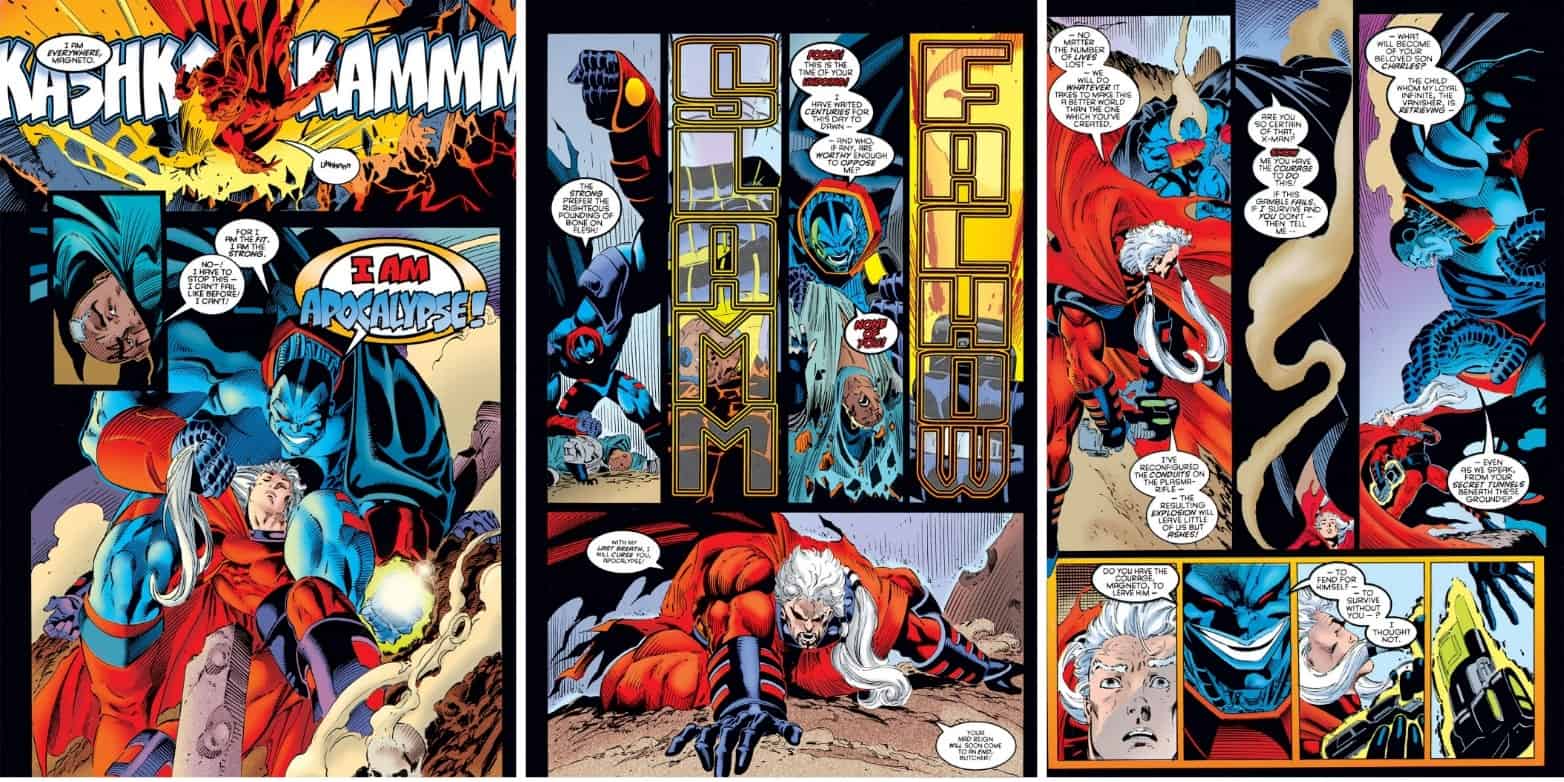 Nicieza and Kubert give us Apocalypse in all his glory in this issue. Cruz drew an unusually proportioned Apocalypse X-Men Alpha, one that arguably implied his personal strength. But this is really the only time Apocalypse’s power is on display. Nicieza’s script for the confrontation between Magneto and Apocalypse lets Kubert show off Apocalypse’s strength, especially his size changing abilities.
Kubert’s strength with dynamic poses and lack of subtlety in facial expression serves the series well again in the fight between Apocalypse and Magneto–two powerhouses who are throwing everything they have at each other.
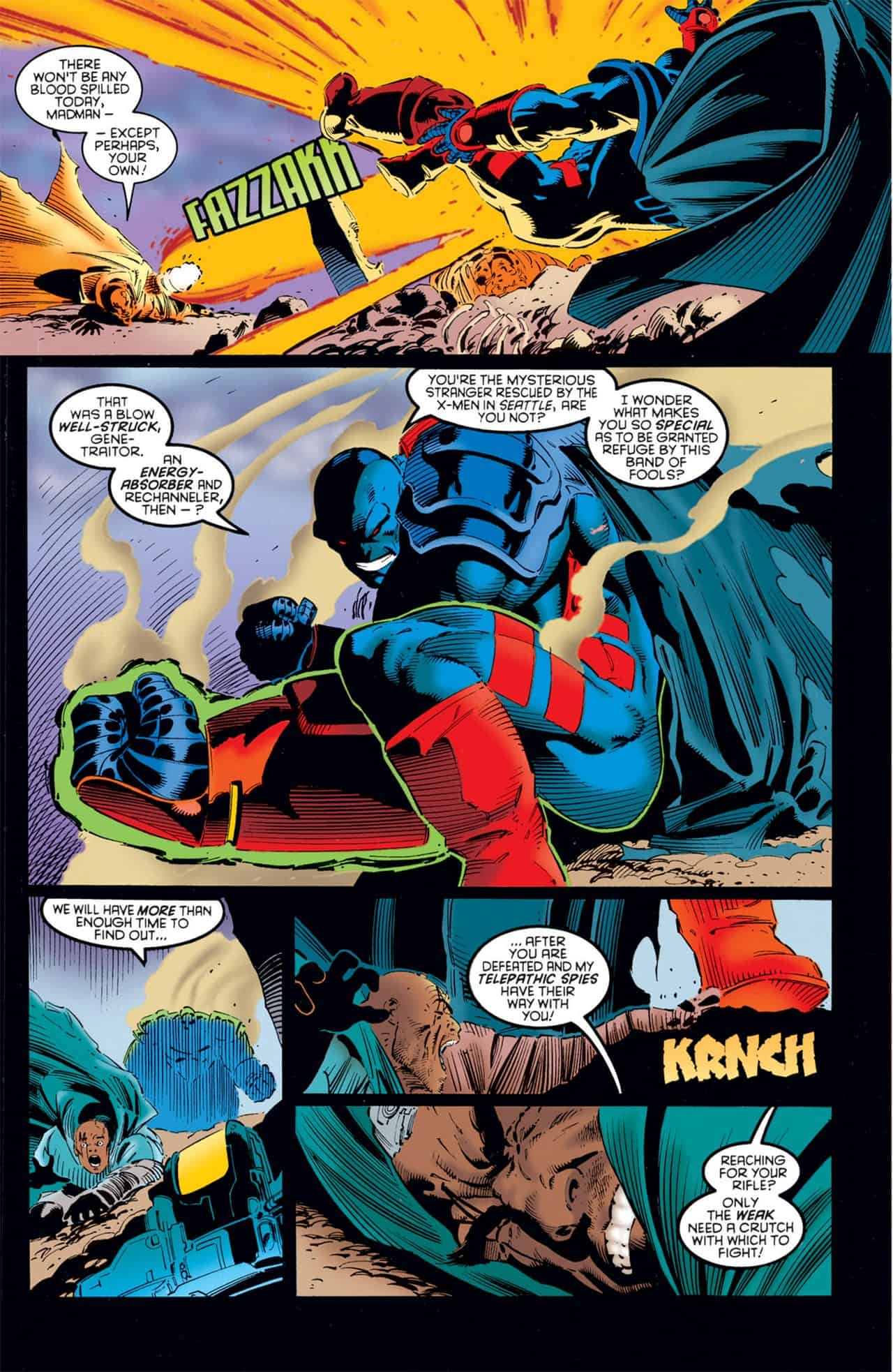 It’s also nice to see the leaders of the two sides go at it one on one. Most of the fighting in Age of Apocalypse is between the larger forces under the command of Magneto and Apocalypse. In Apocalypse’s case, there’s a definite bonus to seeing him do something. Even in X-Men Chronicles #1, which shows Apocalypse’s first move on humanity and the X-Men, he himself does nothing. A leader has to do something to earn followers, after all.
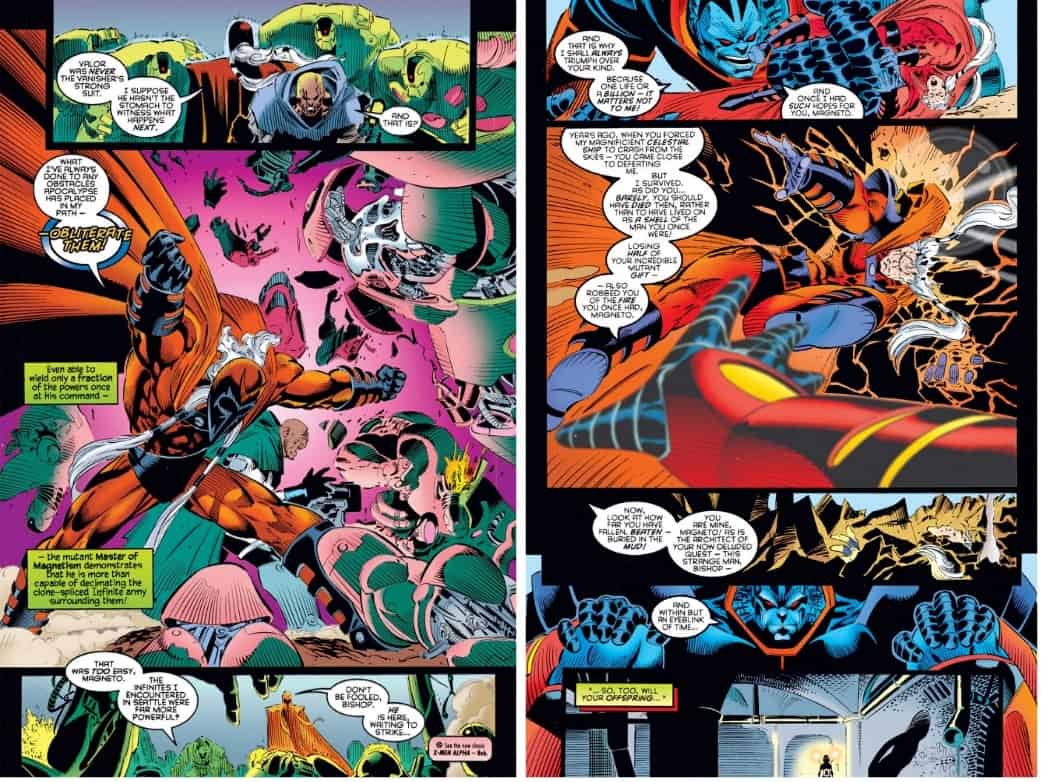 This is really the only issue that makes a big deal about Magneto’s powers being reduced. Indeed, he never looks diminished during Age of Apocalypse. At times it seems like almost everyone is more powerful in this timeline.
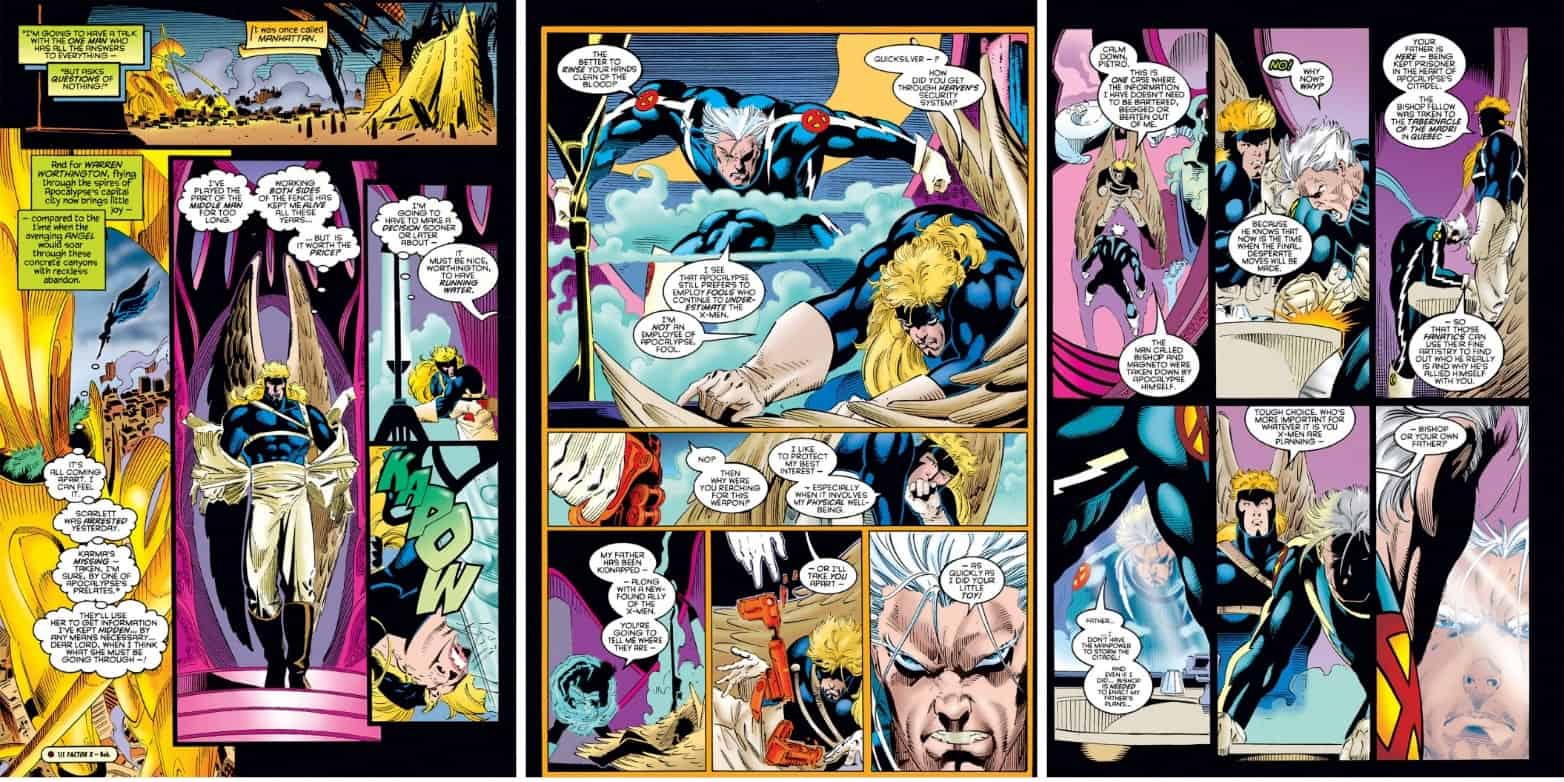 Angel’s appearance here tracks with what’s going on in Factor X. Both this issue and Factor X #3 get the “essential” label, so it’s no problem to track what is going on. But it’s easy to see how various character arcs could be missed by not getting the whole event. Angel’s willingness to help Quicksilver here without any inducement grows completely out of what has happened to Karma and Scarlet over in Factor X.
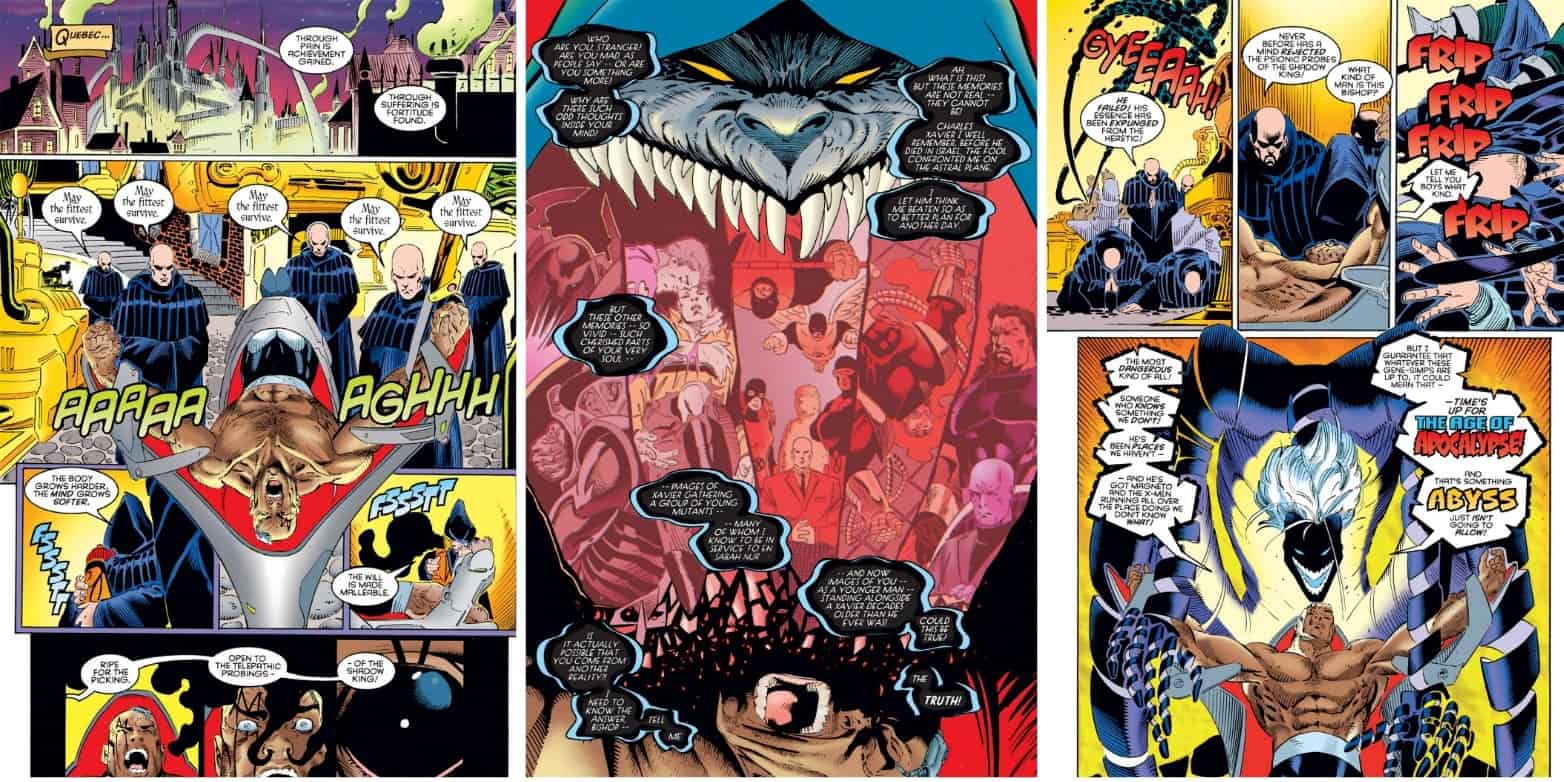 The Madri get explored a little bit more here. Nicieza envisions them as a pseudo-religious order, even folding Shadow King into that. There’s also a greater visual hint toward what the Madri are (for those readers who hadn’t yet guessed).
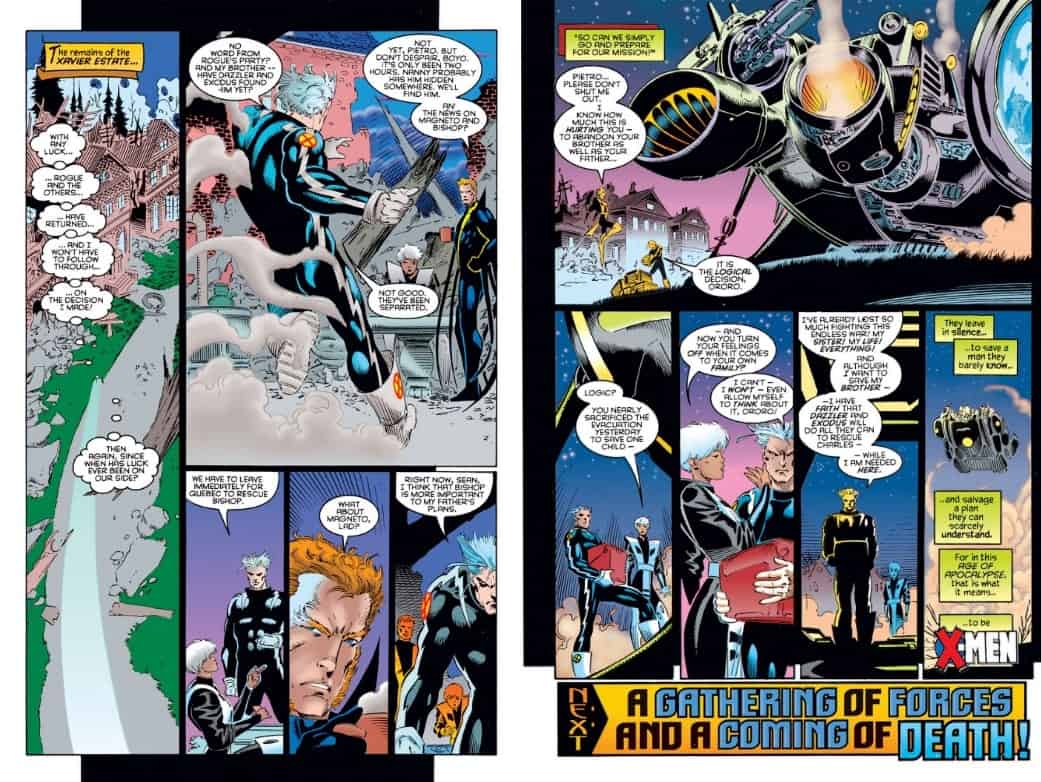 Creating a situation where the heroes have to choose between emotion and mission necessity is always a good story device. And it’s not just a matter of Magneto versus Bishop. Quicksilver already lost Wanda in X- Men Chronicles #1 and now his younger brother Charles is missing.
 X-Calibre #3
W: Warren Ellis | P: Ken Lashley | I: Tom Wegrzyn with Philip Moy | C: Joe Rosas & Digital Chameleon | L: Richard Starkings & Comicraft
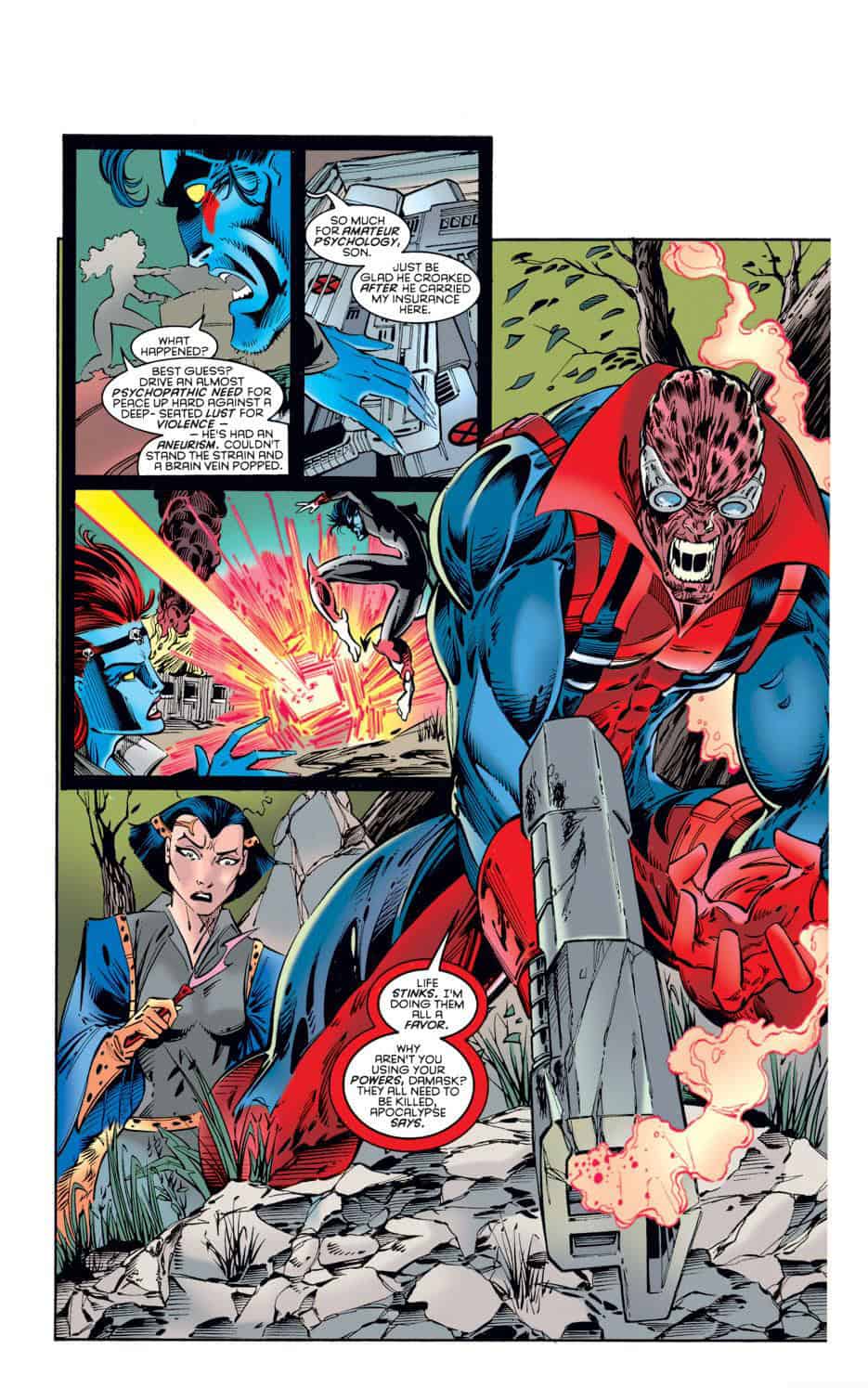
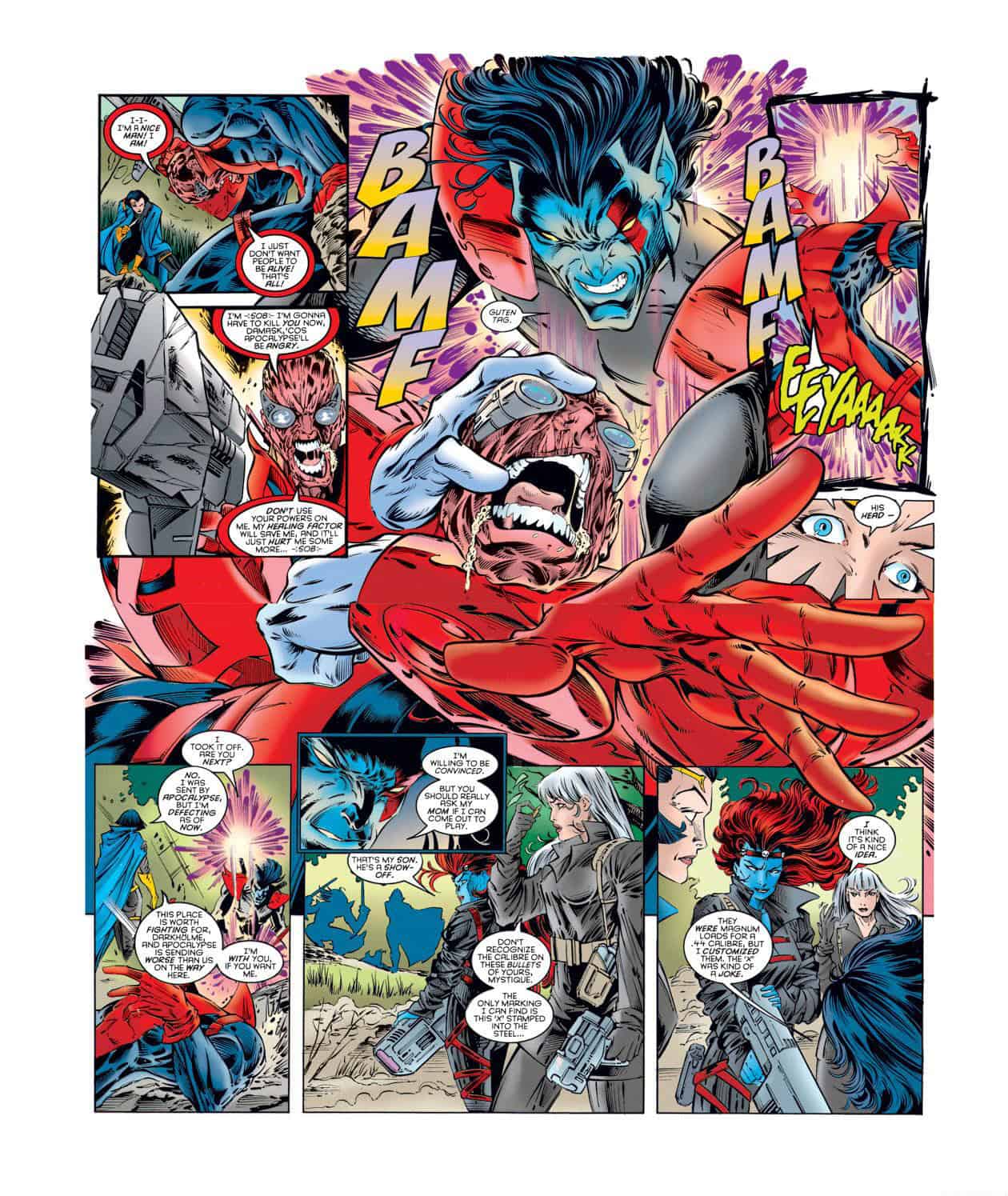
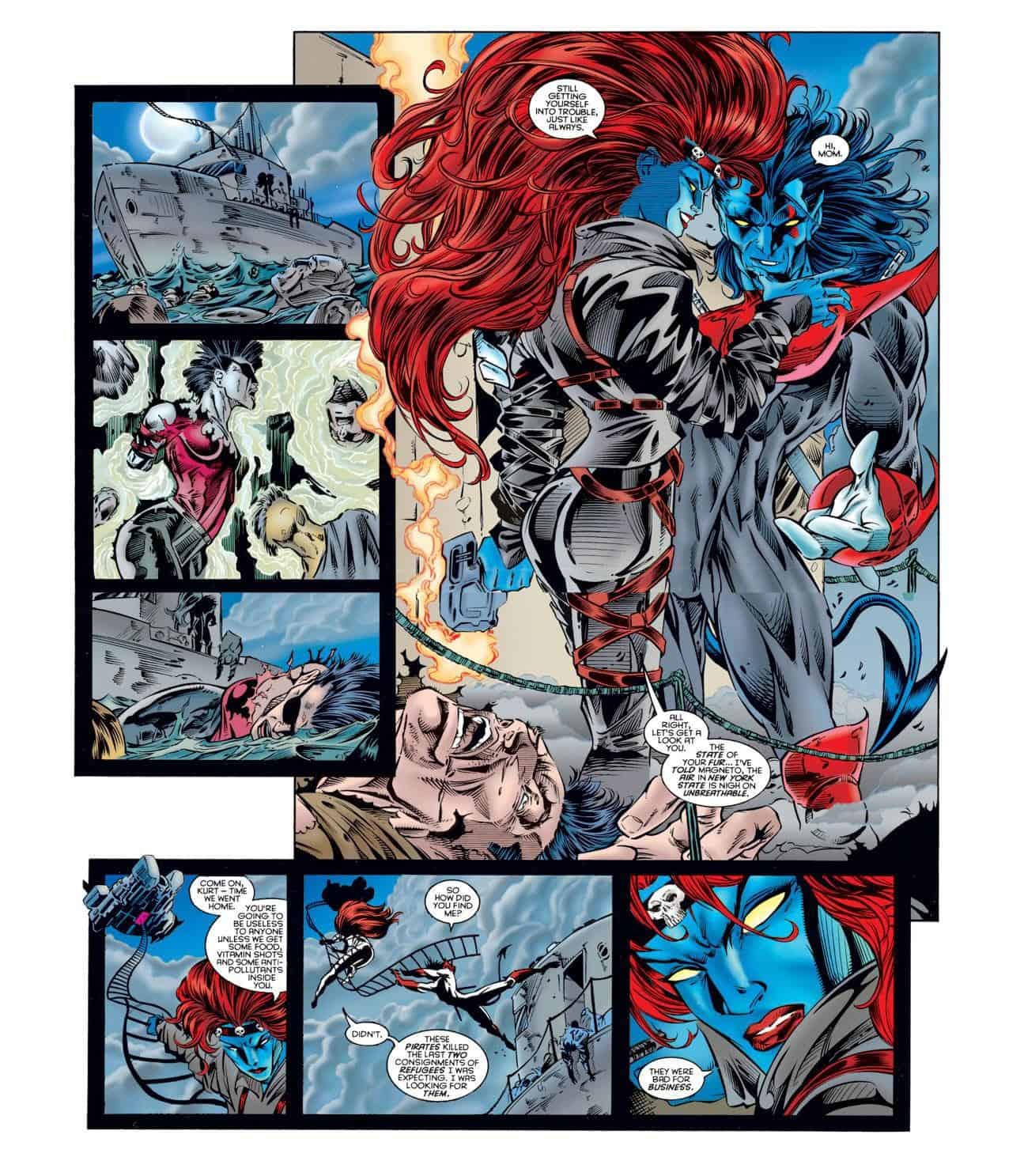
Callisto’s corpse has joined the others in the atrocity zone in X-Calibre #3, and Mystique has safely conveyed her son to the Antarctic station on her leg of the route to Avalon. Kurt confronts her over the claims that she takes everything of value from the refugees who come to Avalon. That it’s true doesn’t matter, though. Kurt and Mystique travel together to the shores of Avalon where they are met by Cain. He leads them to Avalon proper, talking about his dead brother Charles all the way. Apocalypse’s surviving Pale Riders, Damask and Dead Man Wade, track Kurt and Mystique to Avalon’s shores. In Avalon proper, Kurt and Mystique meet with Destiny who is reluctant to abandon Avalon to help Magneto. Suddenly Amazon is attacked. Cain dies rather than fight back. Damask turns on Dead Man Wade who is quickly killed by Kurt. The two of them meet up with Mystique and Switchback, preparing for further attacks.
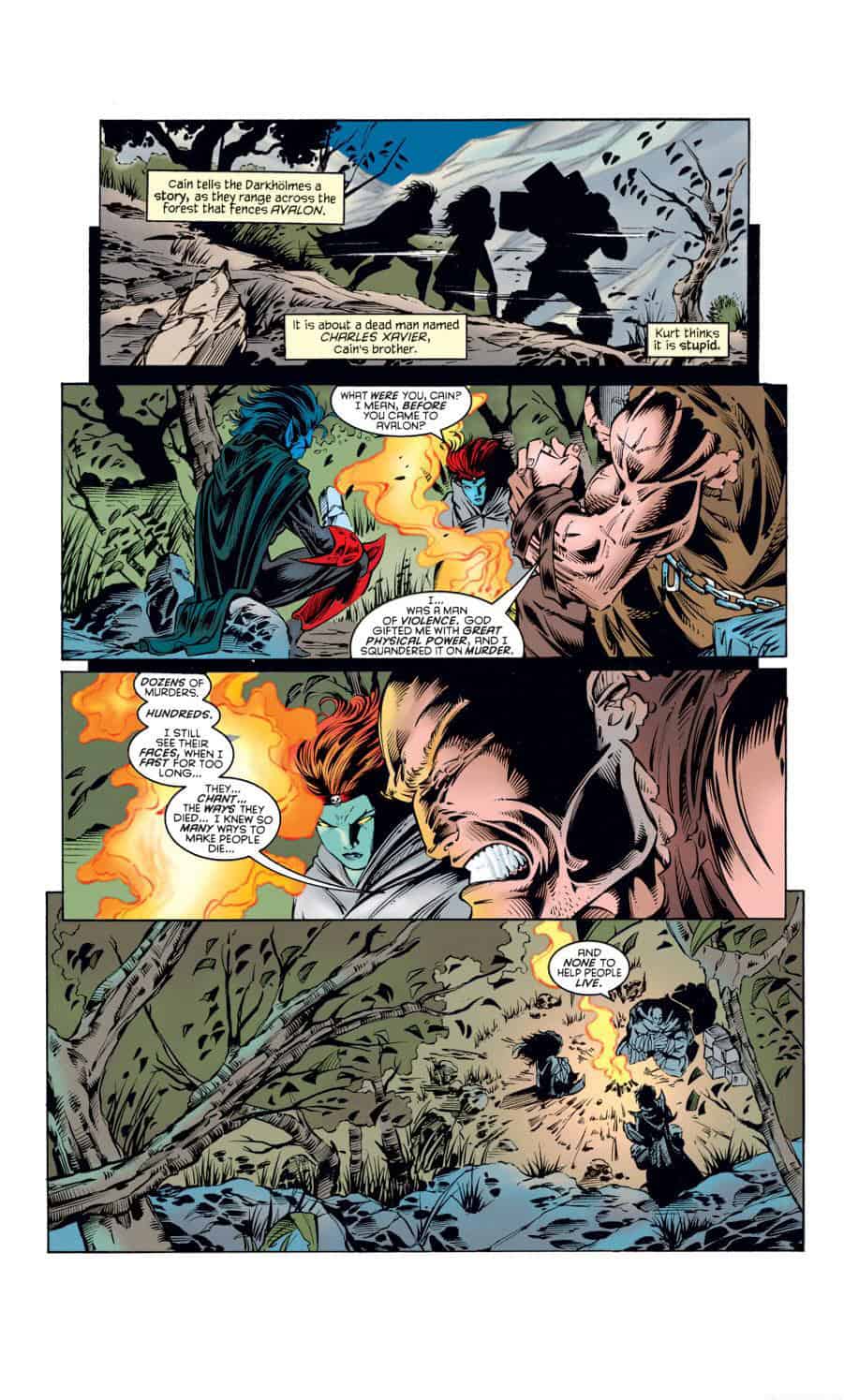 Ellis’ narration makes a point of saying that Kurt thinks Cain’s story about his brother Charles is stupid. Kurt is fighting to essentially make that story a reality.
Damask’s realization that such a place like Amazon could exist is a powerful one. Some readers have almost certainly noticed the stark difference between Avalon and every other location in the Age of Apocalypse. But for those that haven’t, it is a nice wake up call to just how ugly and lifeless the rest of the world is. Apocalypse’s rule has ruined the planet itself.
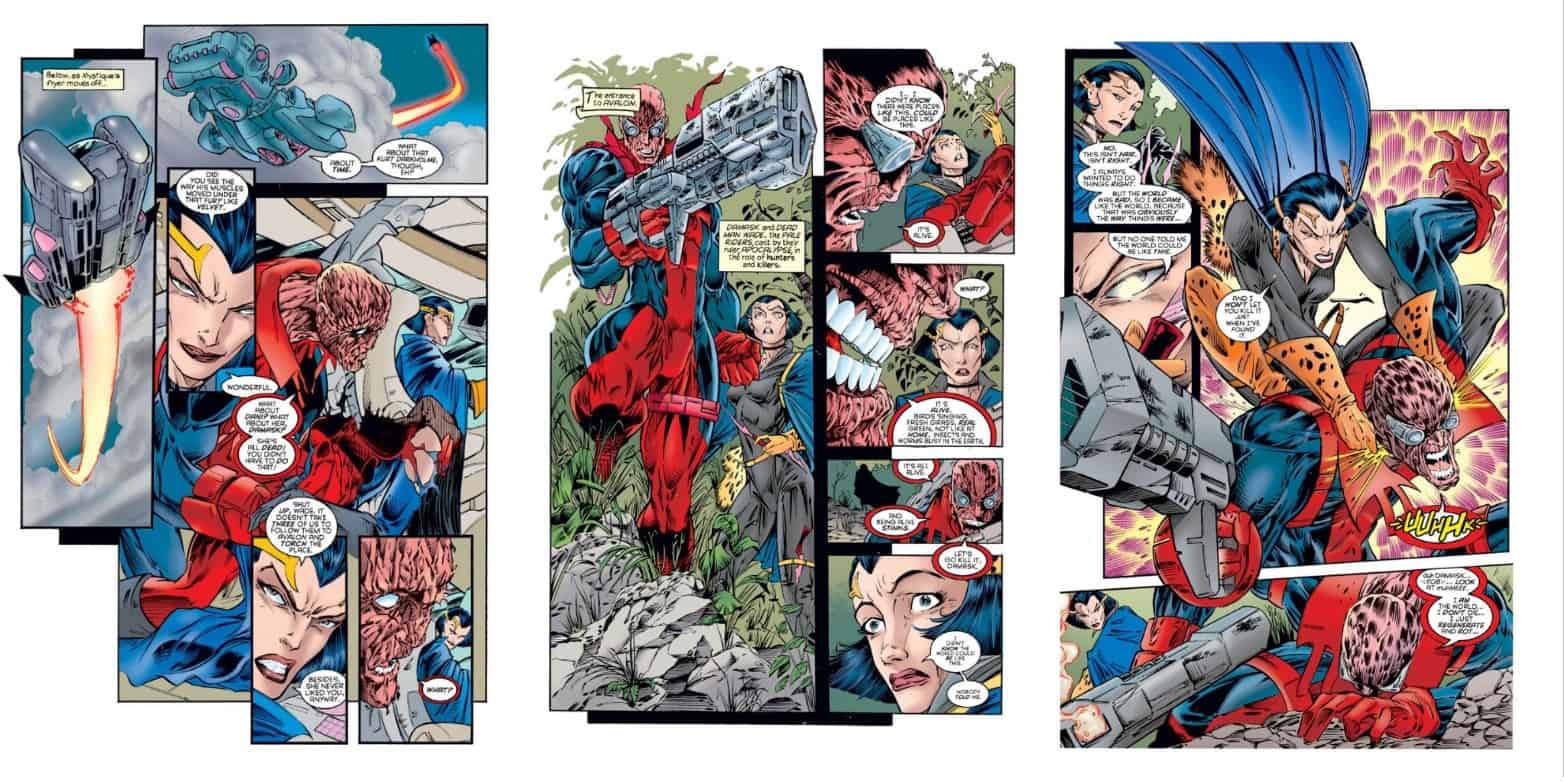 There’s also an interesting crisis of faith quality to the whole thing. Perhaps with more space or if Damask were a central character Ellis would have dug deeper into this. But Damask killed Dani in X-Calibre #2 without a hint of remorse. She was a willing if not happy participant in the world she existed in. Then she gets to Avalon and everything she understands about that world changes.
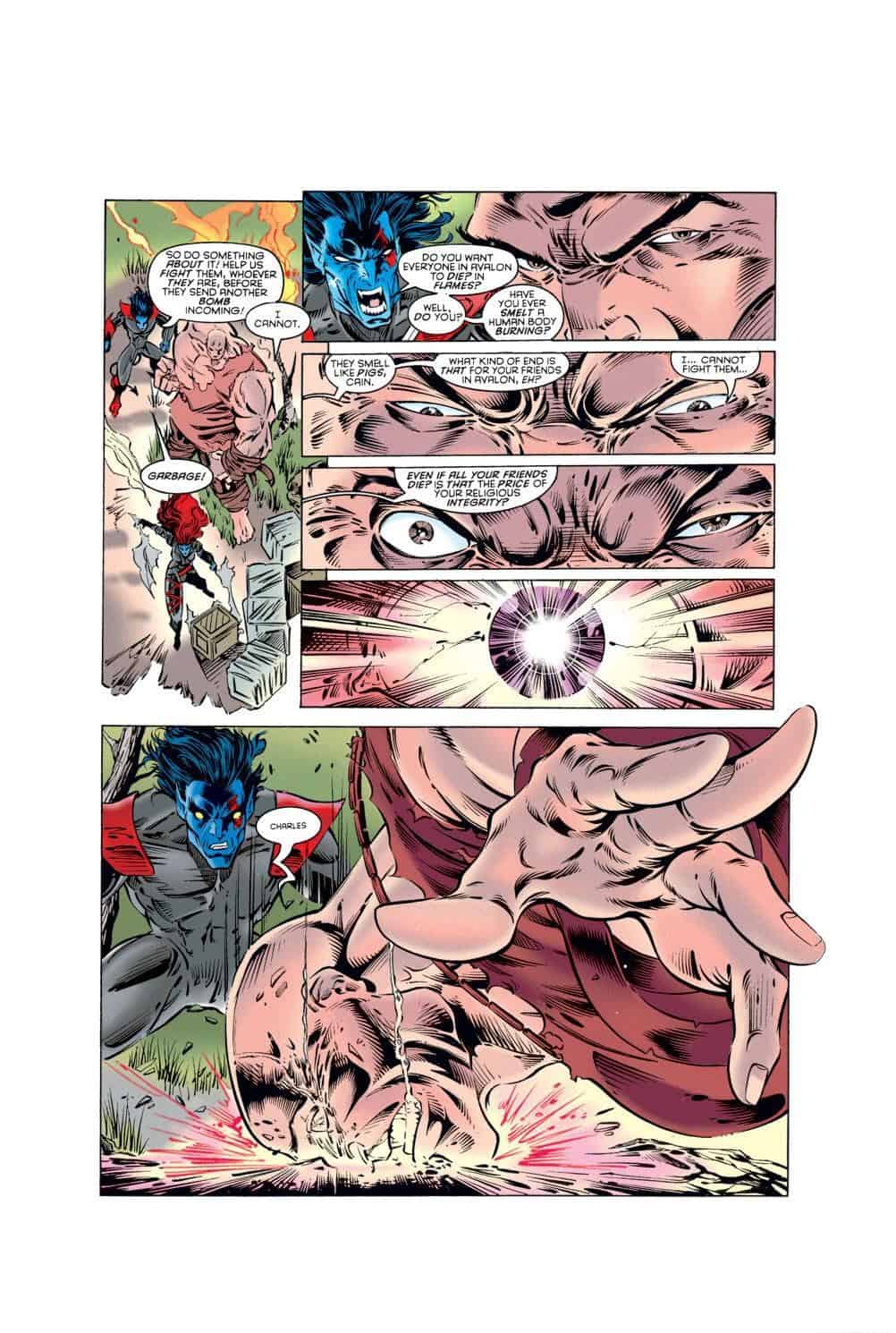 Sticking with the same crisis of faith idea, Cain at this time in this universe is so devoted to peace that he has an aneurysm rather than commit any violence. Like Dani, Cain would have been a fascinating character to explore if there was more room.
Dead Man Wade, on the other hand, is so much a part of this world that he sees all the life in Avalon as something that needs to be destroyed. The character is dark in his obsession with death. It’s hard to imagine Deadpool being treated this way in any universe now. The most recent Age of Revelation turned Deadpool into a zombie who murdered a group of heroes (mid quality though they were) in his first issue yet still used quirky humor to keep him strangely lovable–or at least tolerable. If Age of Apocalypse were being written today, Dead Man Wade would probably have made a joke after Kurt teleported his head off.
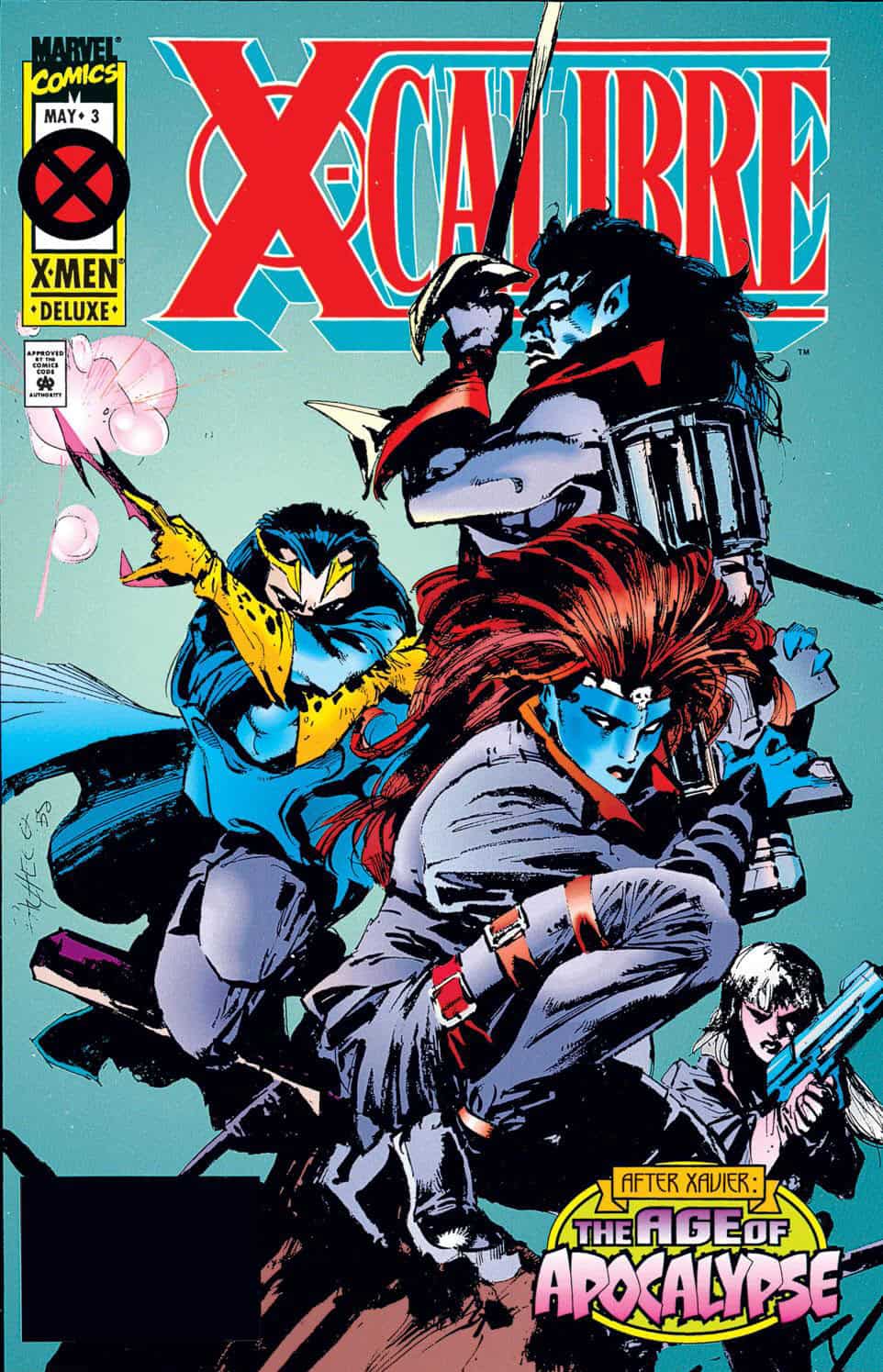
 Pacheco’s cover, a significant stylistic departure from Lashley and Wegrzyn’s (and Moy’s) interior work, shows the main characters in a far more menacing light. It’s sometimes hard to take Mystique seriously in the interiors when she has flowing red hair almost as big as people.
 Next time…True love and the nexus of all realities.
 Scott Lobdell quote: “One for the Ages: An oral history of Age of Apocalypse, the X-Men’s massive crossover, 25 years later” (https://www.syfy.com/syfy-wire/x-men-age-of-apocalypse-oral-marvel-history-25-years-later)