Fireborn #2

Logan Mullins
Recap
Aaron Hillburg, the son of a billionaire, spends his life jumping from rooftop to rooftop. On a day like any other, Aaron Hillburg bonds with a dragon egg, echoing the word “Fireborn” in his head. Now, the criminal underworld is after him.
Review
Fireborn is a high-octane comic series set in the fantasy-superhero world of Lost Fantasy, crafted by the minds of Curt Pires and Franklin Jonas. Following up after the first issue, Aaron Hillburg is questioned by the NYPD while threats from the World Beneath start making moves to acquire the dragon egg. The launch of Fireborn was a massive success in April 2026: issue #1 sold out and required a third printing. With all of this in mind, issue #2 arrives with considerable expectations.
Fireborn’s story is a coming-of-age tale for the world’s newest superhero. Aaron is an up-and-coming superhero, so a coming-of-age story fits the narrative. The framework it borrows is well-worn for a reason; the question is whether Fireborn does anything new with it. In the last issue, it’s revealed that Aaron Hillburg is the teenage son of a billionaire, who feels isolated from society, and then is gifted with a mysterious object that grants him superpowers. Aaron’s set-up is very familiar, even marketed as something fans of Invincible and Batman would enjoy, but the comic does little to distinguish him from the well-established heroes sitting on the same comic bookshelf.
Aaron Hillburg is boring. Aaron is an unnecessarily edgy protagonist who just hates his life. In every scene, Aaron acts with such angst and edge: there’s very little emotional depth to him, despite the comic’s attempt to portray it. A protagonist doesn’t need to be likeable, but they do need to be compelling. Aaron is neither. In a scene where Aaron is asked a series of questions, a character reveals information about his past. Rather than use this opportunity to expand on Aaron as a character and give him more depth, this scene just makes him even angstier and even edgier. The scene ultimately provides the reader with nothing of substance about the protagonist, other than being another plot thread the story must pick up later. Two issues in, and Aaron has no goals, no drive, and no real agency. The plot happens to him, not because of him.
Furthermore, the dialogue in this series is incredibly clunky. It feels as if every line contains unnecessary profanity that sounds unrealistic. A few naughty words are common; one every other sentence is just not how people talk. Profanity can be a powerful tool in comics, often adding emphasis or realism. But profanity must be earned; here, it functions as a shortcut that signals edge. While each character has a distinct voice, they all talk with the same edgy and profane tone.
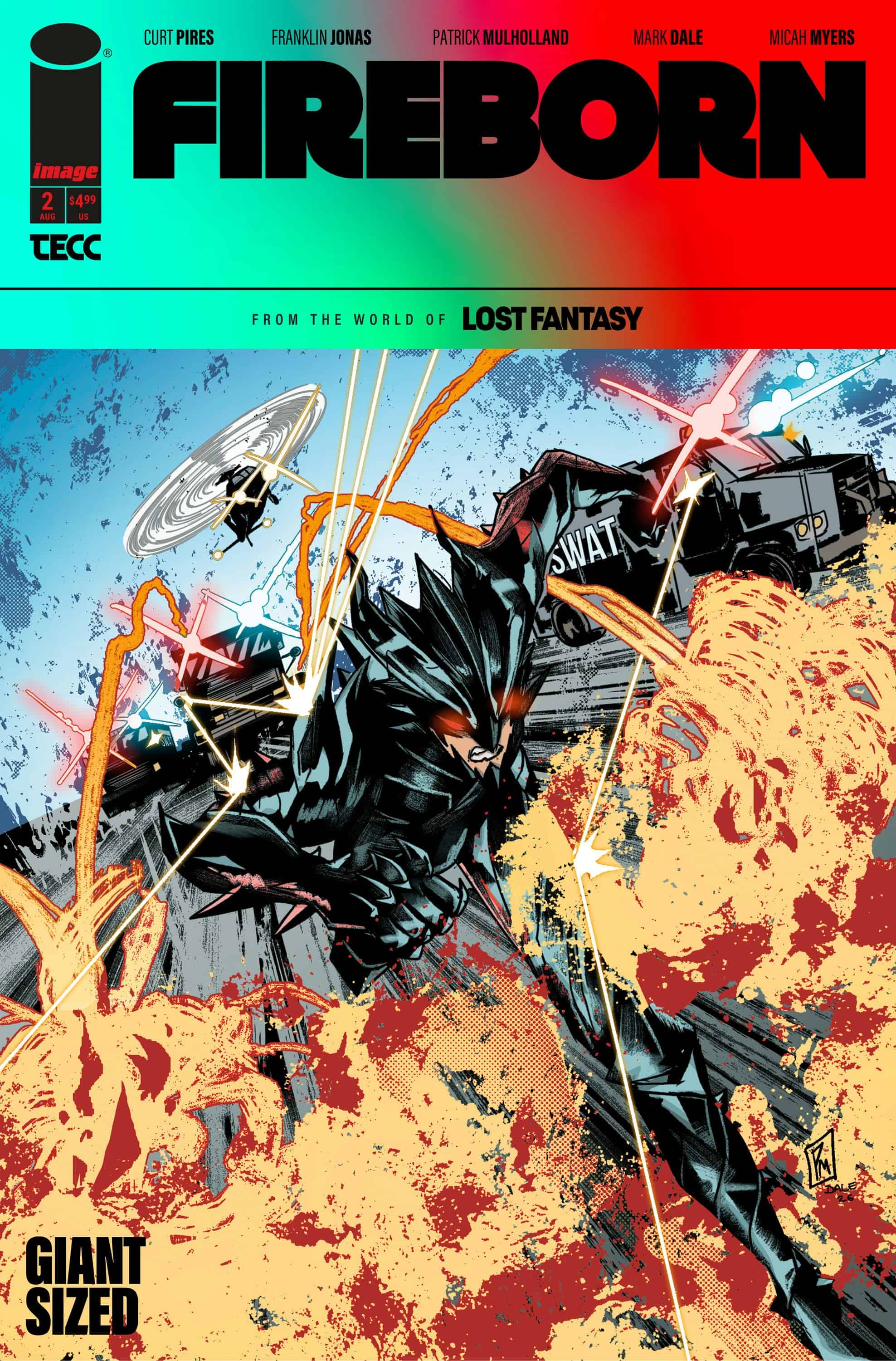
However, there is one undeniable positive with Fireborn: this comic book is absolutely gorgeous. Patrick Mulholland’s linework is dynamic and kinetic. These characters have a weight and physicality to them that leaps off the page, yet they still maintain a level of detail and expressiveness. Panels blend across the gutters to create scenes of vivid motion. The action reads with a clarity and excitement that many big-budget titles fail to capture. When the story gets out of Mulholland’s way, Fireborn is thrilling to look at. Mulholland’s artwork does all the heavy lifting in this comic, and it shows.
Final Thoughts
Fireborn captivated readers for a reason. It’s one of the hottest comics on shelves right now. However, the second issue fails to maintain the momentum, only expanding the plot and not the characters within it. Fireborn is beautifully boring: all style with no substance.
Fireborn #2: Beautifully Boring
- Writing - 5/105/10
- Storyline - 5/105/10
- Art - 9/109/10
- Color - 8/108/10
- Cover Art - 7/107/10