Endeavor #3
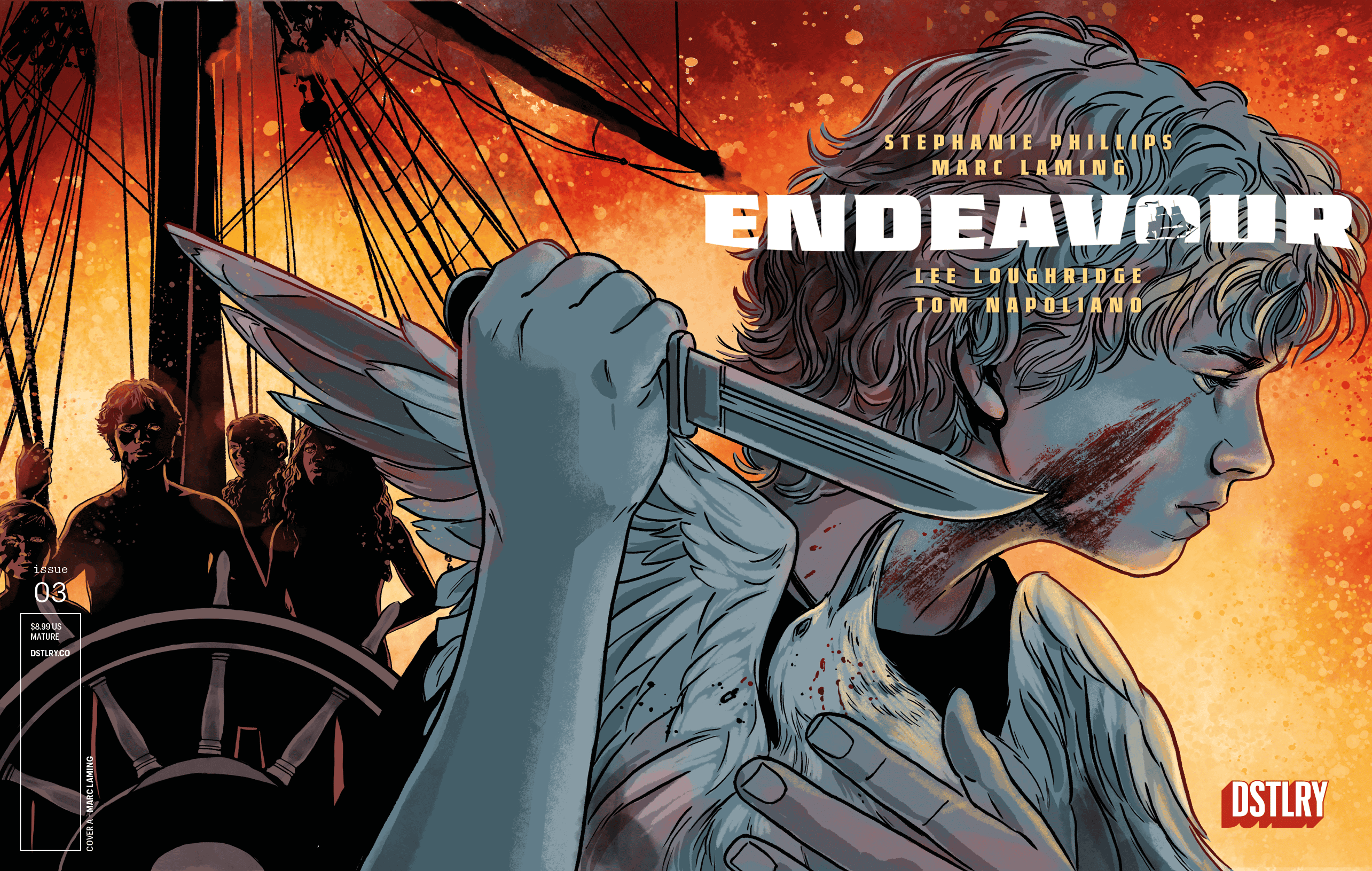

Theron Couch
Recap
The storm has passed, but the real horror has only begun.
Adrift and starving, the surviving children of the Endeavour are haunted by guilt, paranoia, and the whispering ship beneath their feet.
As the line between reality and madness unravels, they’ll discover the sea isn’t the only thing that wants them.
Review
A descent into savagery was certain. In that respect Endeavor #3’s story was inevitable. The surprise comes in how it happens and who is responsible.
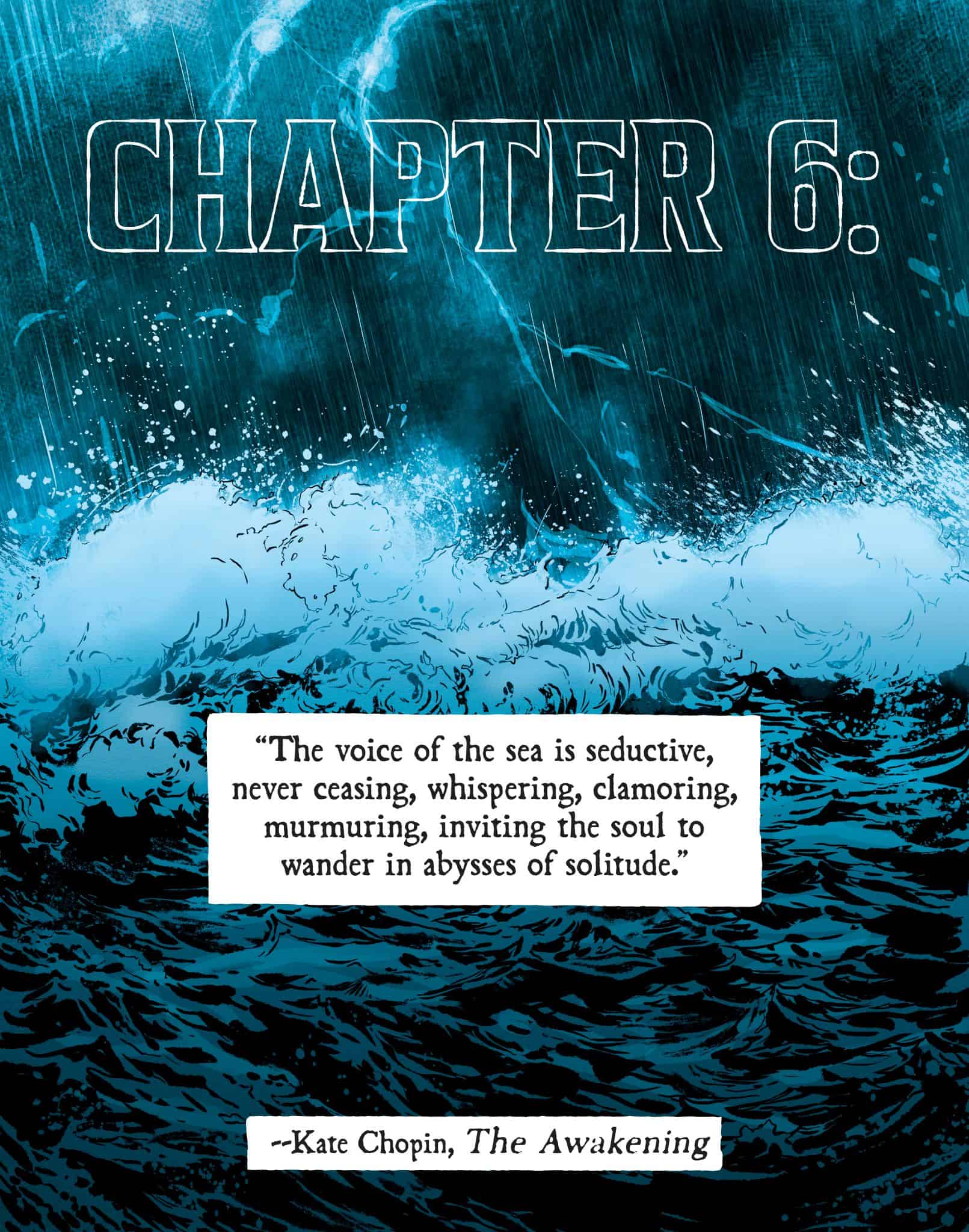 Endeavor shares certain plot and thematic elements with Lord of the Flies. The most significant of these is the examination of the children’s quick descent into chaos absent adult authority. But there is more than enough of a spin to let these themes be evaluated from a different perspective. For instance, unlike Lord of the Flies, Phillips introduces an actual threat–the disease–as opposed to Lord of the Flies’ imagined beast. The disease is not only the reason the children are left alone on the ship Endeavor but also the impetus for the children’s descent in Endeavor #3. Additionally, Phillips adds the idea that children are pulled toward this kind of savage behavior by the ocean itself, a place that frees someone and makes them more primal.
The children’s actions in Endeavor #3 quickly become disturbing. What little organization the group might have had in the second issue is lost. This is when the relationship between Roy and Via really asserts itself. The flashbacks are paid off here when the extent of the twins’ bond is on display. Roy’s actions with regard to his sister isn’t necessarily a surprise, but a crucial action Via takes is.
A big lost opportunity in Endeavor #3 is not fully paying off the descriptions of each of the children. It’s all well and good to call Isaac “the follower” and then show him going along with whoever is in charge, but that doesn’t really say much about him. Nora, “the believer,” all but disappears in the issue, and Emily, though seemingly holding to who and what she was in a bit of misdirection, never does anything on the ship that could be considered part of her quality as “the voice.” The character page sets up an expectation that isn’t really fulfilled, and the series would have been better off without it.
 Laming’s art remains a big selling point for the series. Children aren’t always the easiest characters to depict and their expressions even more so. That ability is crucial to Endeavor #3, especially when it comes to the character who takes charge of the other children. That character in particular runs through a range of emotion from the power and authority exerted over the other children to rage in moments when they don’t comply to listlessness when drunk. None of these expressions are overly exaggerated. Laming’s style stays consistent during this particularly emotional final issue.
Physicality is just as important during multiple fight sequences as the children’s expressiveness elsewhere. The children aren’t drawn in dynamic poses or intense melee action. There is even a measure of clumsiness in some panels. The children feel like children in these moments, and the visual reminders play into the savagery of Phillips’ story.
Endeavor #3 contains flashback sequences as the previous two issues did. Loughridge uses a comparatively faded palette that has light sepia undertones. The present day sequences are more vivid. The coloring feels especially rich during the nighttime scenes when the darkened ship and its otherwise brown coloring stands in stark contrast to the dark blues surrounding it. The contrast effectively reinforces the isolation and the dark colors compound the idea of the ocean being a primal expanse that is influencing the children.
Napolitano’s use of plain white captain boxes without an outline actually makes them stand out more. The captions aren’t distracting but they feel like an interruption to the art that adds urgency to Via’s internal monologue.
Final Thoughts
Endeavor is a compelling examination of the ease with which children will backslide from civilized to primal behavior in the absence of adult guidance. This story progresses slowly over the first two issues but speeds up considerably in Endeavor #3. There is a lot of urgency behind everything that happens here. Phillips’ two major twists on this idea–the disease and the call of the ocean–offer an interesting perspective. Laming’s high quality art adds a lot of weight to Phillips’s story. Endeavor #3 is a strong final issue and compelling enough to stand on its own with its ideas even absent the first two issues.
ADVANCED REVIEW: Endeavor #3: The Primal Ocean
- Writing - 7.5/107.5/10
- Storyline - 8/108/10
- Art - 8/108/10
- Color - 8/108/10
- Cover Art - 7.5/107.5/10