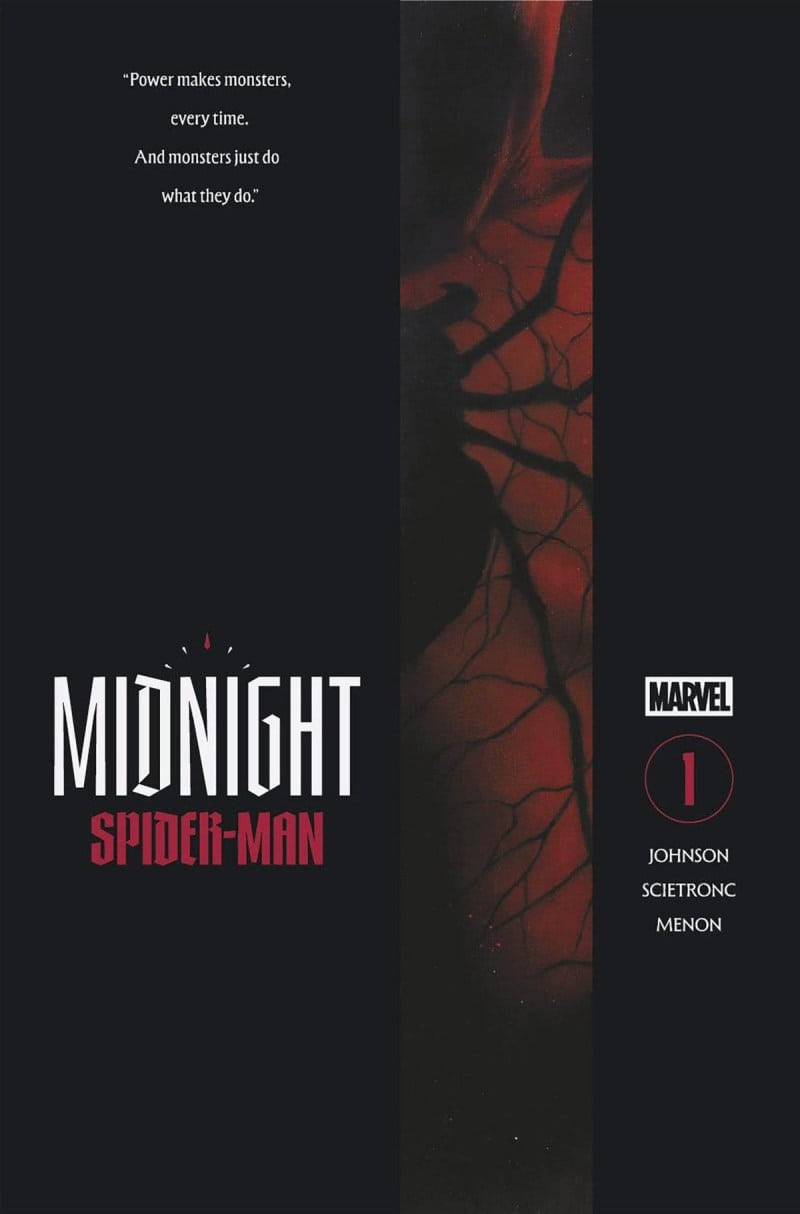
Midnight Spider-Man #1

Jamison Nilsson
Recap
Announced back in June, the Midnight Universe is a new horror line from Marvel Comics. Midnight Spider-Man in particular focuses on body horror and a Spider-Man as hideous as his villains’ motivations.
Review
From its very first page, Midnight Spider-Man #1 begins developing its themes of the corrupting nature of power. It’s a poignant message, one that resonates with current events.
Warning: Spoilers ahead for Midnight Spider-Man #1.
The issue’s horror elements don’t come from anything as obvious as a slasher villain or even a dangerous creature. Instead, they come from how the art showcases the themes discussed above. Oscorp’s research into immortality has led them to human test subjects, trying to blend their DNA with animals. The grotesque transformations of these test subjects are a representation of corruption, while the tests they are forced into and the abilities they could gain both represent power.
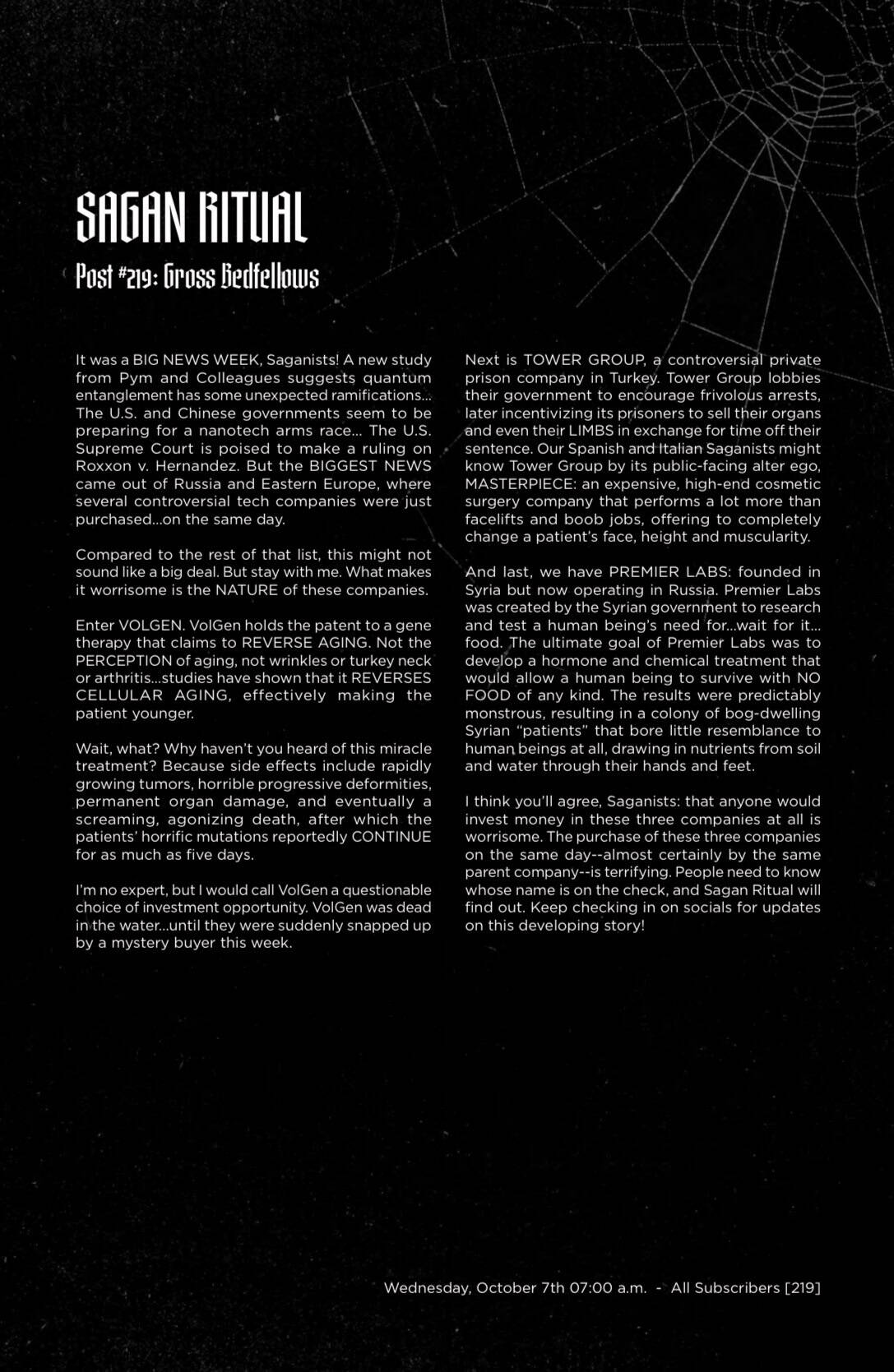
All three of the new Midnight titles use the now-famous Hickman-style text pages, which provide additional world-building to the story. In Midnight Spider-Man #1, one of these pages is written by Peter Parker himself under his online persona “Sagan Ritual,” which posts anonymously about corporate corruption in the science industry and is a direct reference to Dr. Carl Sagan, a real-life astrophysicist and author.
Midnight Spider-Man is pulling on Sagan’s description of relying on technology as a “combustible mixture of ignorance and power” in his book ‘The Demon-Haunted World.’ Carl Sagan’s argument, which fits the themes of Midnight Spider-Man, is that the people who have power over technology and science are often dangerously ignorant of how it works. This lines up with Oscorp’s haphazard experimentation in the issue very well. By connecting Peter Parker to Carl Sagan, Phillip Kennedy Johnson is portraying his version of Peter as someone all too aware of the darkness in their world.
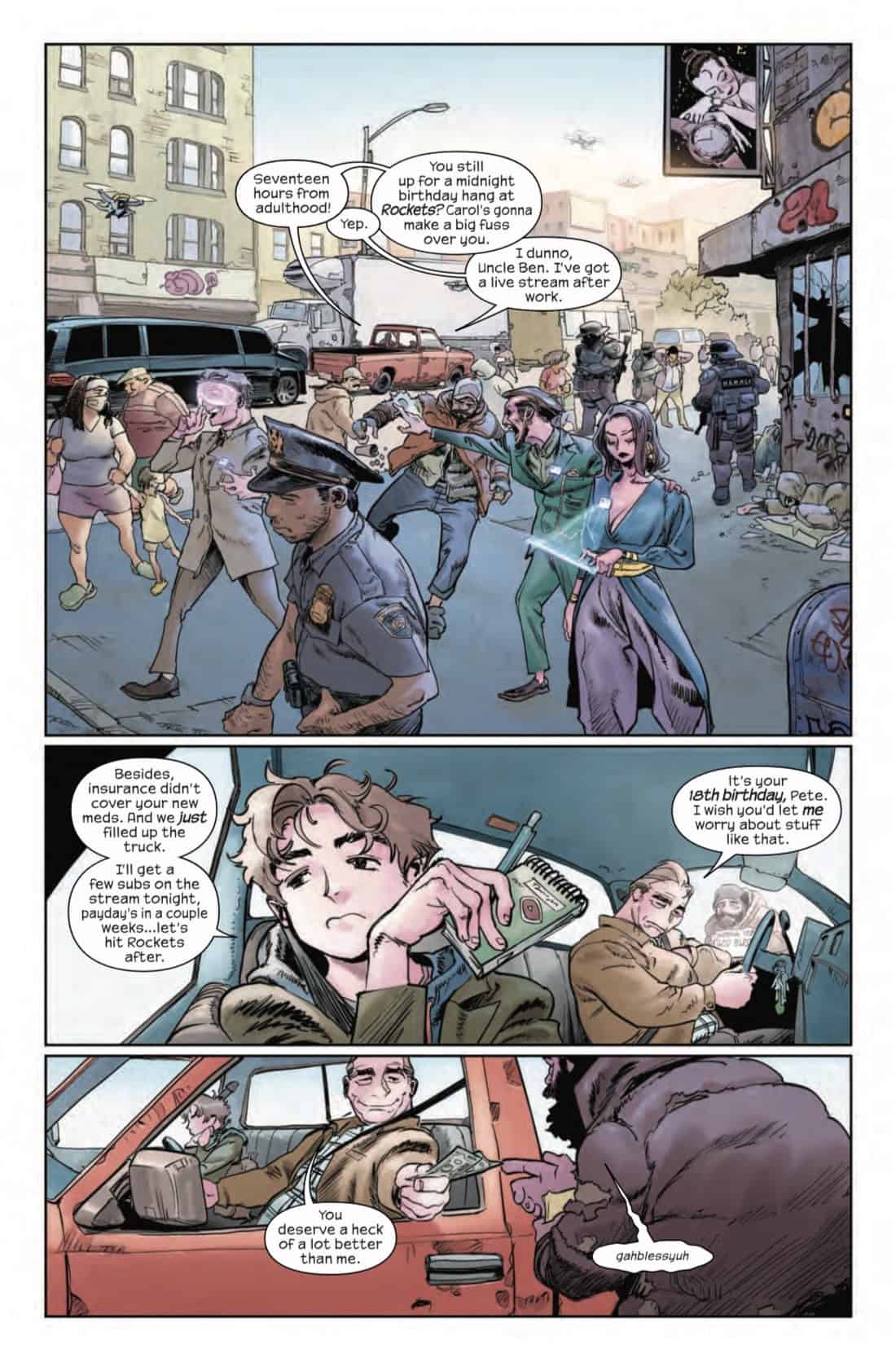
ScieTronc’s artwork does a lot of the issue’s world-building visually. While most scenes focus on Peter’s dialogue, various things happening elsewhere on the page show the blatant corruption in the world. A panel in the foreground, as close to the reader as the art can get, shows a man in a high-end suit shoving another man in cheaper clothing while his girlfriend ignores it.
The art walks the line between comic book and manga volume like a tightrope. Some pages go over their own panel gutters with spiderwebs stretching across the page, smaller panels to cutaway moments, and more. The color plays a massive role here as well, even in the smallest parts of the issue’s presentation.
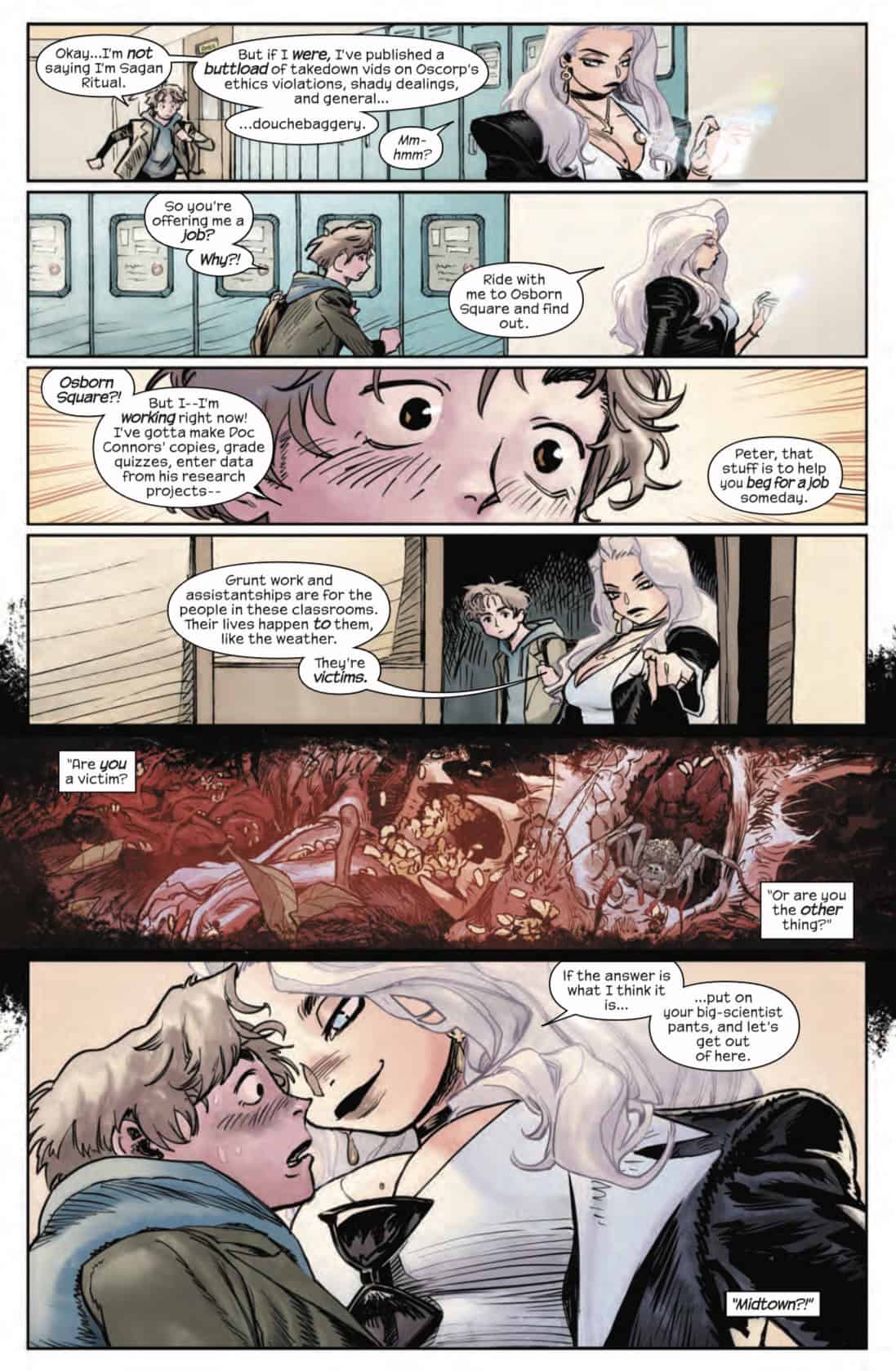
Neeraj Menon’s colors are noticeably bright and charming in some scenes, which does not fit the horror elements. But that is being done on purpose. The bright colors are the world’s way of seeming nice and safe, while the sudden horror sections with their bloody red and dark gray colors disrupt the lies. It’s a brilliant way of creating ambiance without relying on jump scares or creaking doors and other horror genre cliches.
Atmosphere is one of the most important elements in horror media. Midnight Spider-Man’s world is more bleak than eerie and more depressing than it is terrifying. Instead, the atmospheric tension comes from the violent twists and turns the story takes.
Final Thoughts
Midnight Spider-Man #1 is an excellent start to a new ongoing series, one that sets up its world and characters in a way that could last for years to come.
Midnight Spider-Man #1: With Great Power Comes Great Corruption
- Writing - 9.5/109.5/10
- Storyline - 10/1010/10
- Art - 10/1010/10
- Color - 10/1010/10
- Cover Art - 8/108/10