


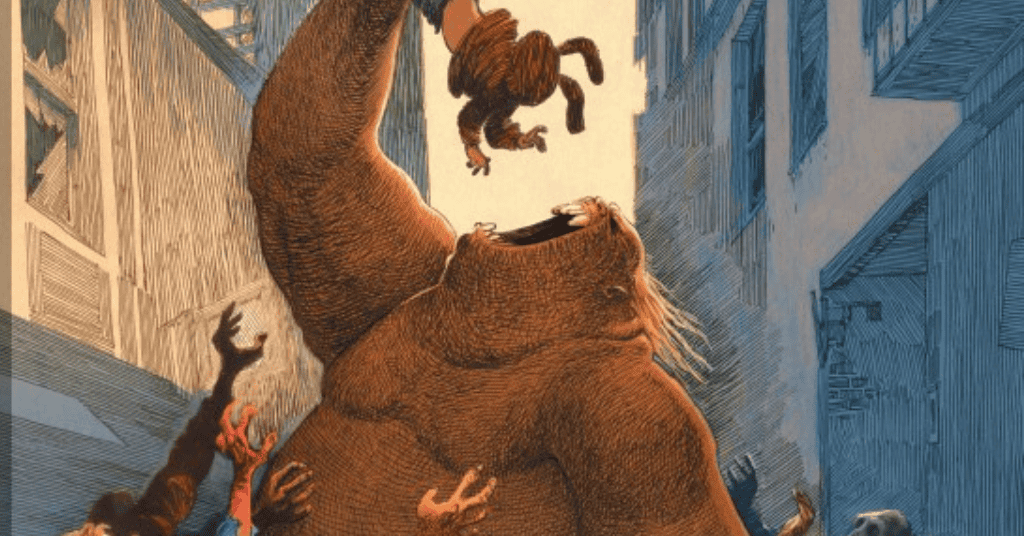
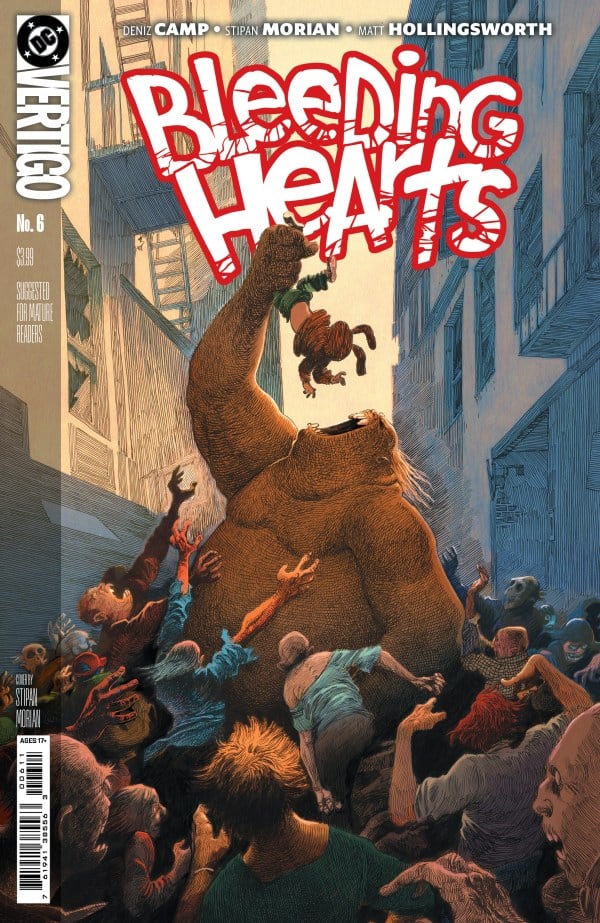
Bleeding Hearts #6

Recap
IT'S TIME TO PARTY LIKE YOU'RE NEVER GONNA LIVE! It's the 11th Annual Outbreak! For months, hordes all over the world have been preparing to celebrate the unholy origin of our species with a week of Bone-Tower building, ritual Live One hunts, live food, undead music, and so much more! You are what you are — be proud of that and of death's victory over life!
Review
Bleeding Hearts #6 serves as a strong conclusion to the series’ first major story arc, delivering dramatic shifts to the status quo while expanding the world in compelling new ways. The previous issue ended with the “Outbreak” festival beginning, an event that unleashes several captured humans into the wild for the zombies to hunt. This chapter picks up immediately from that moment, showing the humans scattering in every direction, with some killed almost instantly. From there, the narrative splits, following the series’ two central characters, Poke and Rabbit, as the events of the festival push them into entirely new trajectories. By the final pages, it becomes clear that the story is headed toward major changes, with the characters’ lives altered in ways that cannot be undone.
Spoilers follow:
Poke’s storyline is particularly powerful in this issue. From the beginning of the series, his sudden discovery that his heart has started beating again has forced him to question everything he knows about himself. Over time, he has developed an unexpected sense of empathy toward humans, those he once saw only as prey, and has lost the desire to eat them altogether. This shift has placed him in direct conflict with the expectations of his species, creating tension when he returned home with his best friend, Mush, and the rest of the horde. That conflict reaches its breaking point here, as Poke finally reveals his secret to Mush. The resulting confrontation is heartbreaking: Mush rejects him, forcing Poke into a fight that ends with him killing the friend he once trusted most. It’s a devastating turning point that sets Poke on a new, irreversible path.
One of the strongest aspects of Bleeding Hearts has always been its inversion of the traditional zombie narrative. By centering a zombie protagonist and offering insight into how their society functions, the story creates a deeper emotional resonance than typical entries in the genre. This issue brings that world-building to its peak, helping the reader understand why Mush cannot accept Poke’s transformation. What unfolds is not merely the end of a friendship, but a form of cultural exile: Poke becomes caught between the human and zombie worlds, belonging fully to neither. The final moment, Poke managing to utter Rabbit’s name, suggests that he may be becoming more human than anyone realized, opening the door to entirely new directions for the story.
Rabbit’s storyline provides its own emotional weight, following her escape from the zombie horde. As foreshadowed, her mother is revealed to be alive and returns to rescue her. This development introduces a complex dynamic: Rabbit is unsure whether she can trust her mother, especially after witnessing her allow the death of the woman who previously protected Rabbit. The contrast between Rabbit, who has grown up knowing only the apocalypse, and her mother, who remembers the world before and carries its trauma, creates a fascinating tension. The reunion between Rabbit and Poke at the end deepens this divide, illustrating how differently Rabbit views the world compared to those around her.
In the end, Bleeding Hearts #6 is rich with subtext and emotional nuance. Beneath its zombie-story exterior lies a thoughtful examination of identity, loyalty, and what it means to change in a world that refuses to do the same. The issue elevates the narrative far beyond typical genre conventions, solidifying the series as something truly exceptional.
Final Thoughts
Bleeding Hearts #6 delivers an emotional, genre-defying finale to its first arc, pushing its characters into bold new territory and redefining what a zombie story can be.
Bleeding Hearts #6: Everything Changes
- Writing - 9.5/109.5/10
- Storyline - 9.5/109.5/10
- Art - 9.5/109.5/10
- Color - 9.5/109.5/10
- Cover Art - 9.5/109.5/10