



Catwoman #91

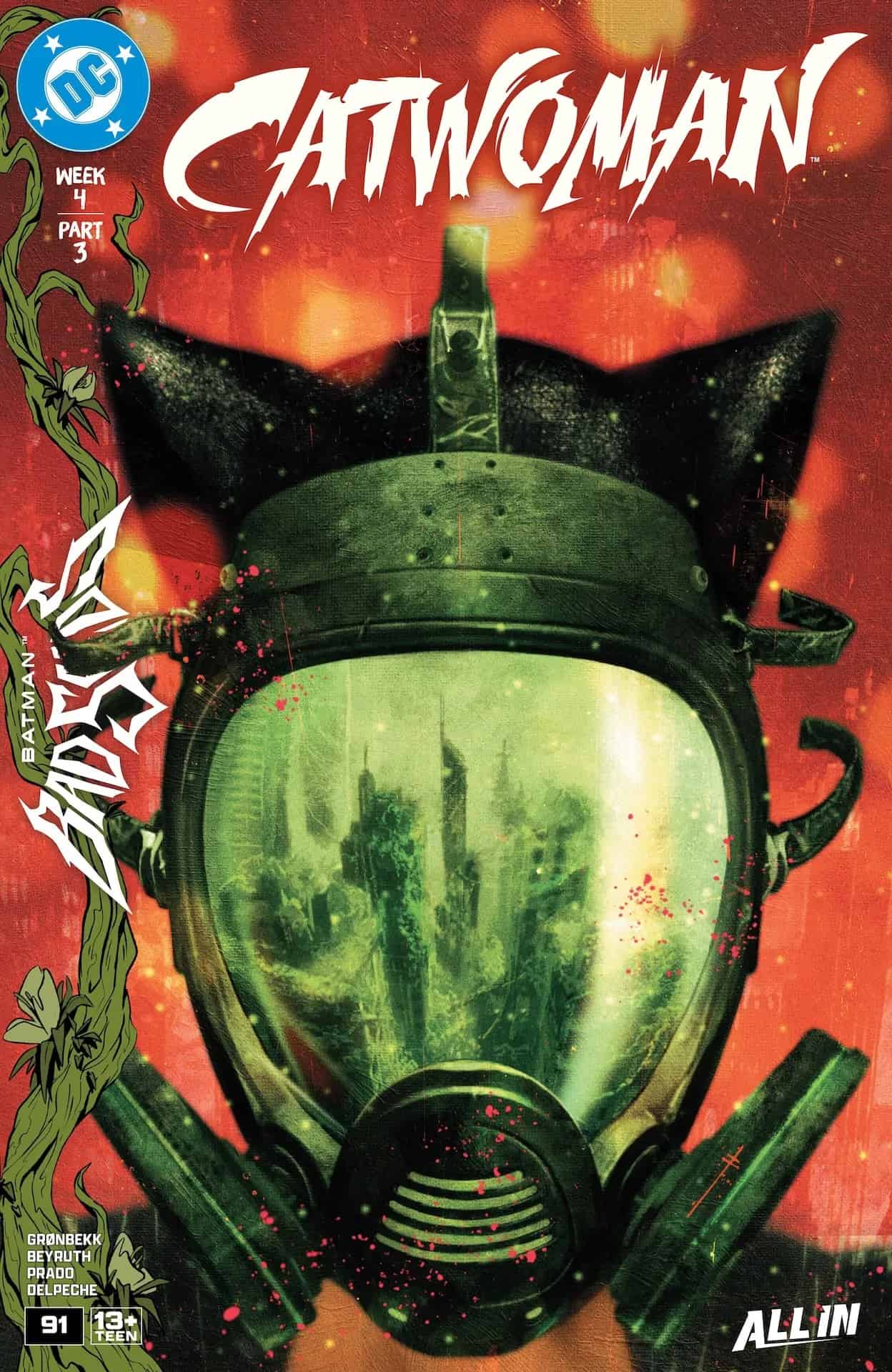
Recap
CAPER AT 2,000 FEET! With the city in disarray, Catwoman sets out to make the best of the situation and do the one thing absolutely no one else would dare: break into Vandal Savage's home.
Review
Catwoman #91 takes a decidedly street level approach to Bad Seeds. The titular character is sent out on a job for Carmine Falcone and in the process of crossing the city she encounters both strangers and friends dealing with the deadly chaos Poison Ivy has created. The issue isn’t as approachable as the other Bad Seeds tie-in issues have been. Getting invested in certain aspects of the plot, in particular Catwoman’s relationship with Carmine Falcone and a young woman named Holly, requires familiarity with recent issues. Readers without that familiarity likely won’t find the plot very compelling. Fortunately the issue has more to recommend it.
Gr?nbekk makes Catwoman #91 about what Catwoman sees and experiences on her trek through Gotham City. Ordinary people are menaced by the plants and the changed air around them. Looting has begun. Price gouging is already rampant ($500 cash for a pizza!). Gr?nbekk’s depiction of the ordinary person’s response to the events of Bad Seeds resembles what is often seen in the real world in the wake of natural disasters and riots.
Catwoman’s response to the night’s events are expressed largely through first person narration. Gr?nbekk doesn’t go overboard with this, turning her internal monologue into a nonstop running commentary. Catwoman also doesn’t have a built-in point of view such as the cynicism of hard boiled fiction or the moral ambiguity of noir fiction. The narration is very moment specific and thus very effective.
This examination of people in the midst of chaos and danger is what makes Catwoman #91 especially compelling. It’s a point of view that so far hasn’t been seen anywhere else–not even the explicitly street level Bad Seeds Gotham Central #1.
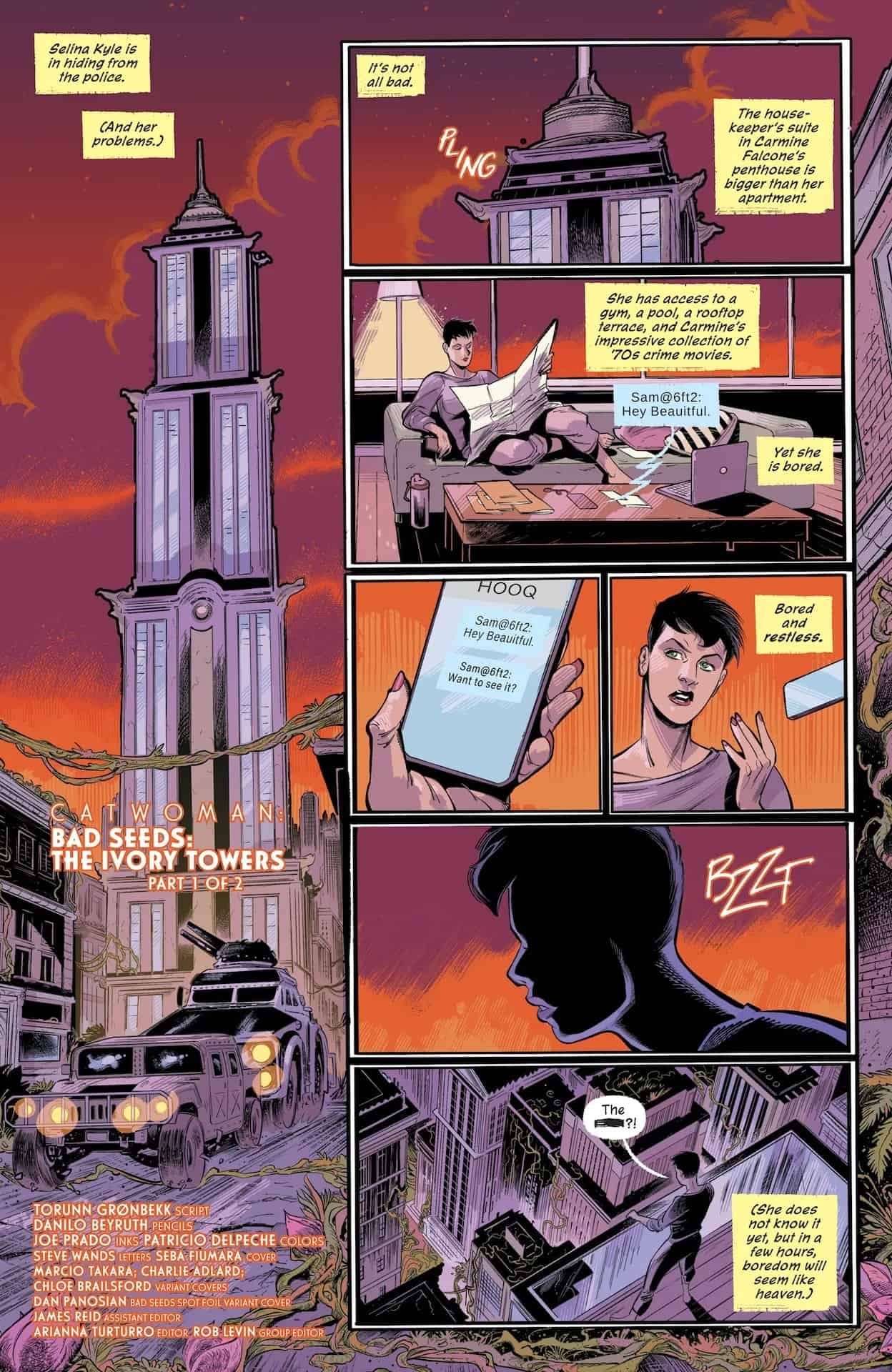
That said, the level of detail here is considerably better than the issue’s interior sequences. In those cases Beyruth often draws a background as a kind of establishing shot early on only to completely drop those background details as the scene goes on. Characters frequently stand against otherwise empty panels. While this does help emphasize characters on a page, it considerably reduces any sense of space and dimension.
The level of detail applied to characters is greater than any backgrounds. Beyruth uses patches of thin lines, emphasized by Prado’s inks, to build out facial features and emphasize emotions. This works especially well in the early scenes featuring Catwoman and Carmine Falcone. The comparatively quiet scene benefits from improved visual nuance.
Delpeche uses a relatively bright color scheme for a nighttime setting. This is especially the case with the shade of green used on the plant life which contrasts heavily with the surroundings. In a more general sense, the exterior sequences take place against a combination of shades of purple in the background and twilight-esque blues in the foreground. As a result this street level story doesn’t have any kind of moodiness or atmosphere.
Wands does a good job organizing dialogue bubbles and caption boxes around the issue’s artwork. Catwoman #91 is very much a case of lettering working well precisely because it doesn’t stand out.
Final Thoughts
Catwoman #91 stands out for how Gr?nbekk examines ordinary Gotham citizens responding to growing chaos around them. Beyruth, Prado, and Delpeche deliver eye-catching art, but it lacks nuance and depth at times. The street level story is enough to make this an intriguing Bad Seeds tie-in, though hardly a necessary one.
Catwoman #91: The View on the Street
- Writing - 7.5/107.5/10
- Storyline - 7/107/10
- Art - 6.5/106.5/10
- Color - 6/106/10
- Cover Art - 7/107/10