


Flash Gordon #16

Recap
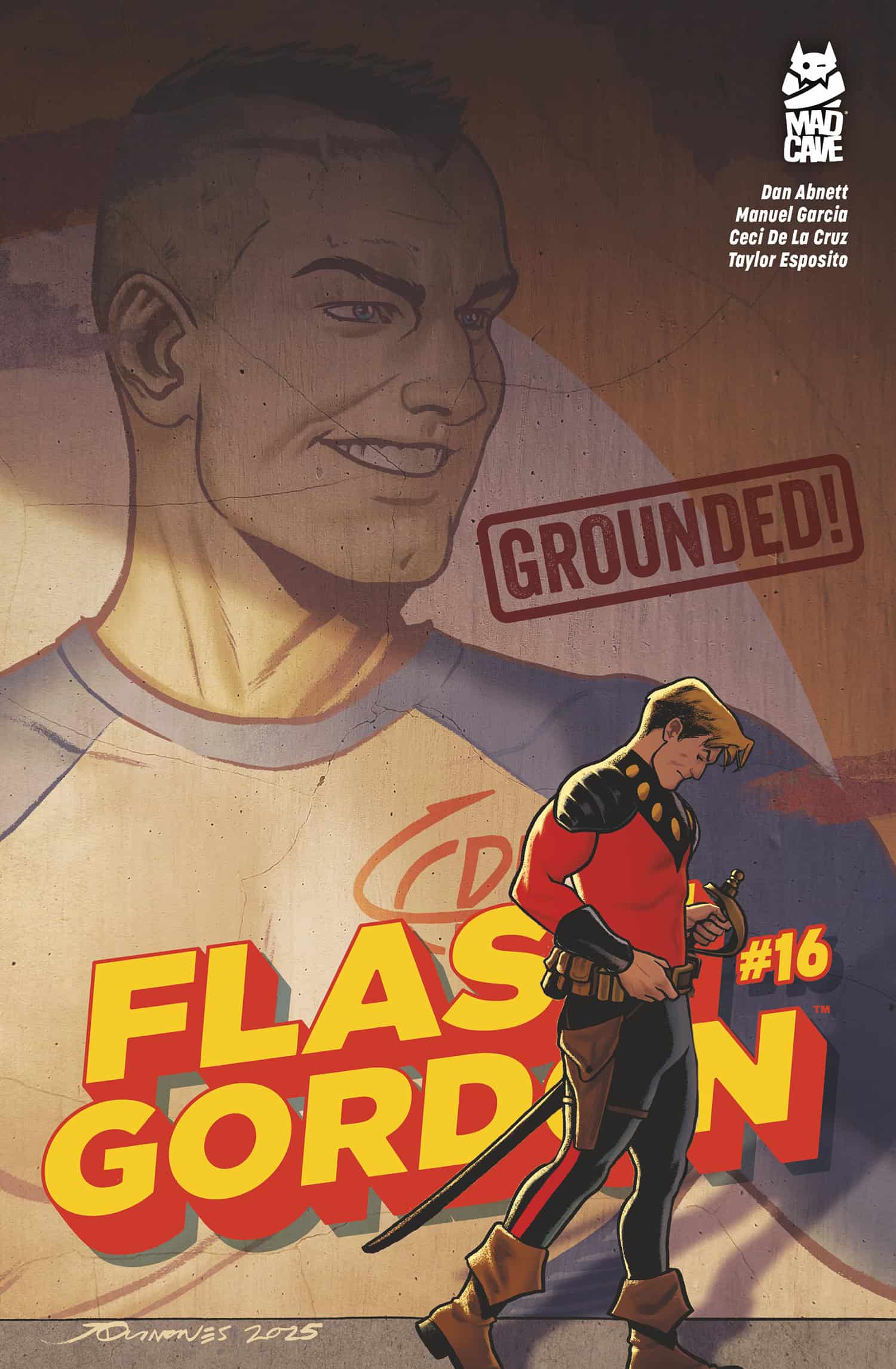
Flash Gordon is grounded! With Mongo now an impossible distance away, and Earth's governments reacting to the potential dangers of alien worlds, space travel is now reserved for the experts...and a former football player-turned-sword-wielding rabble rouser isn't making the cut. But when a huge object--a meteor? a planet?--appears on a collision path with Earth, Flash will leave the experts in the dust. With a bootleg spaceship courtesy of Doctor Zarkov and fiery backup in the form of Dale Arden, Flash blasts off on an intercept course. But the Earth Rocketry Administration isn't far behind--and astronaut Dane “Ditch” Albright is not about to let Flash Gordon steal his spotlight. A rivalry for the ages, a new alien world, and threats deadlier than ever--adventure awaits for fans new and old!
Review
Flash Gordon’s new reality continues in Flash Gordon #16. He’s grounded, and his counsel is barely listened to. This is precisely where Abnett left him at the end of the recent Flash Gordon #0. That said, Flash Gordon #0 is not an essential issue for readers to understand Flash Gordon #16 which sets up the new status quo while kicking off a brand new multi-issue storyline.
Abnett wastes no time establishing big stakes in his first Flash Gordon story arc–a Mars-sized planetoid is headed straight for Earth. It’s an outsized threat, for better or worse. But it’s the perfect way to set up the space related status quo on Earth. Most importantly, the storyline establishes that amateur space adventuring a la Flash’s previous adventuring isn’t allowed. He’s basically a relic with no purpose.
This is where Flash Gordon #16’s real strength lies. Abnett establishes Flash’s new situation and takes time to develop his character. There is a compelling blend of anger and resignation at the heart of the character as he watches another crew prepare to launch and hopefully save the day. Especially interesting is Abnett’s choice to amplify Flash’s sense of resignation as his friends push him to go into space without authorization. A reluctant protagonist can be a tricky thing. If they have too much reluctance, readers may not be as eager to embrace them as a hero. Given that Abnett is essentially resetting the series, this could be risky–both in holding existing readers and appealing to new ones. But for now it’s an effective choice and makes for a complex character. Abnett also defuses this problem a little by adding humor near the end of the issue.
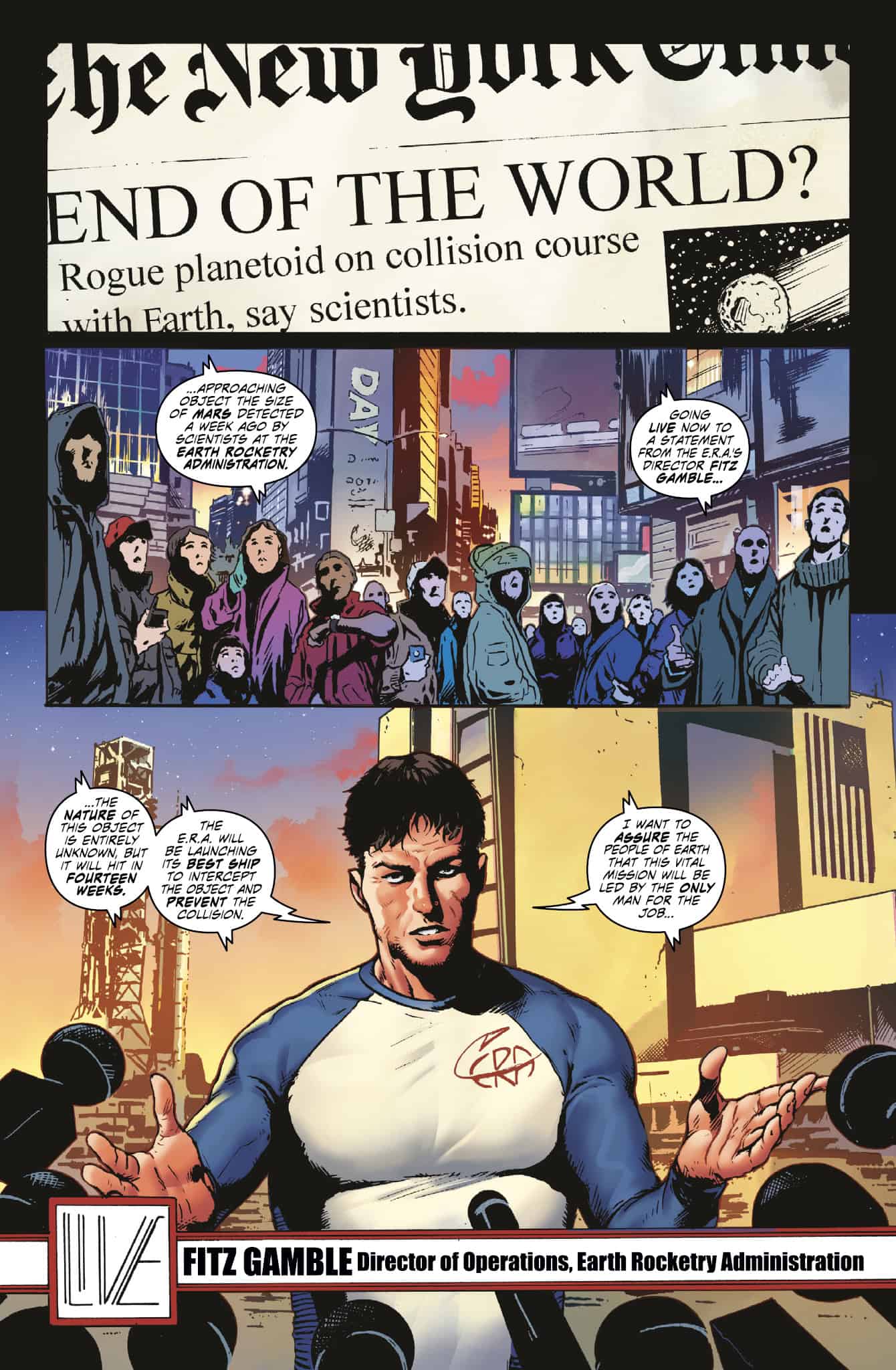

There is actually a greater level of detail to backgrounds than these characters. Garcia is far more liberal with linework which helps create a sense of depth. This is furthered by De La Cruz’s choice to mute background colors relative to foreground objects and characters.
Esposito does a good job keeping the dialogue fast paced when it needs to be. Dialogue bubbles will slightly overlap during some conversations. And when multiple dialogue bubbles are needed to hold all the dialogue text, Esposito connects the bubbles one to another without tails in between. It reads as though the dialogue just keeps going, without pause between the bubbles.
Final Thoughts
Flash Goron #16 is a very effective beginning to Abnett’s first story arc. It fleshes out recent events, develops the main character, and kicks off a high stakes plot. It’s perhaps a little more generally sci-fi than traditionally Flash Gordon, but it is very engaging. Flash Gordon is setting up to be a sci-fi adventure series to rival any space superheroes.
Flash Gordon #16: The New Mission
- Writing - 8/108/10
- Storyline - 7.5/107.5/10
- Art - 7.5/107.5/10
- Color - 7.5/107.5/10
- Cover Art - 8.5/108.5/10