


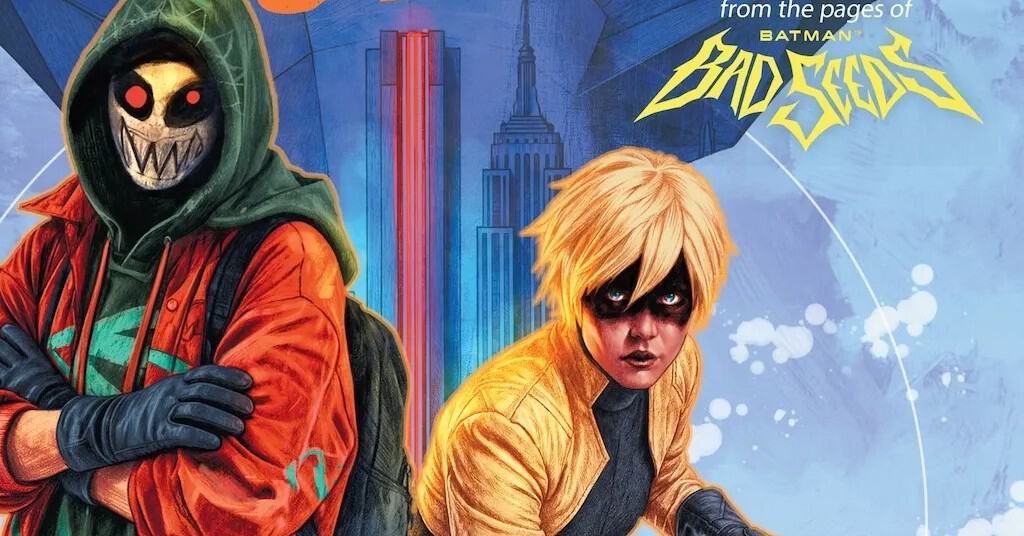
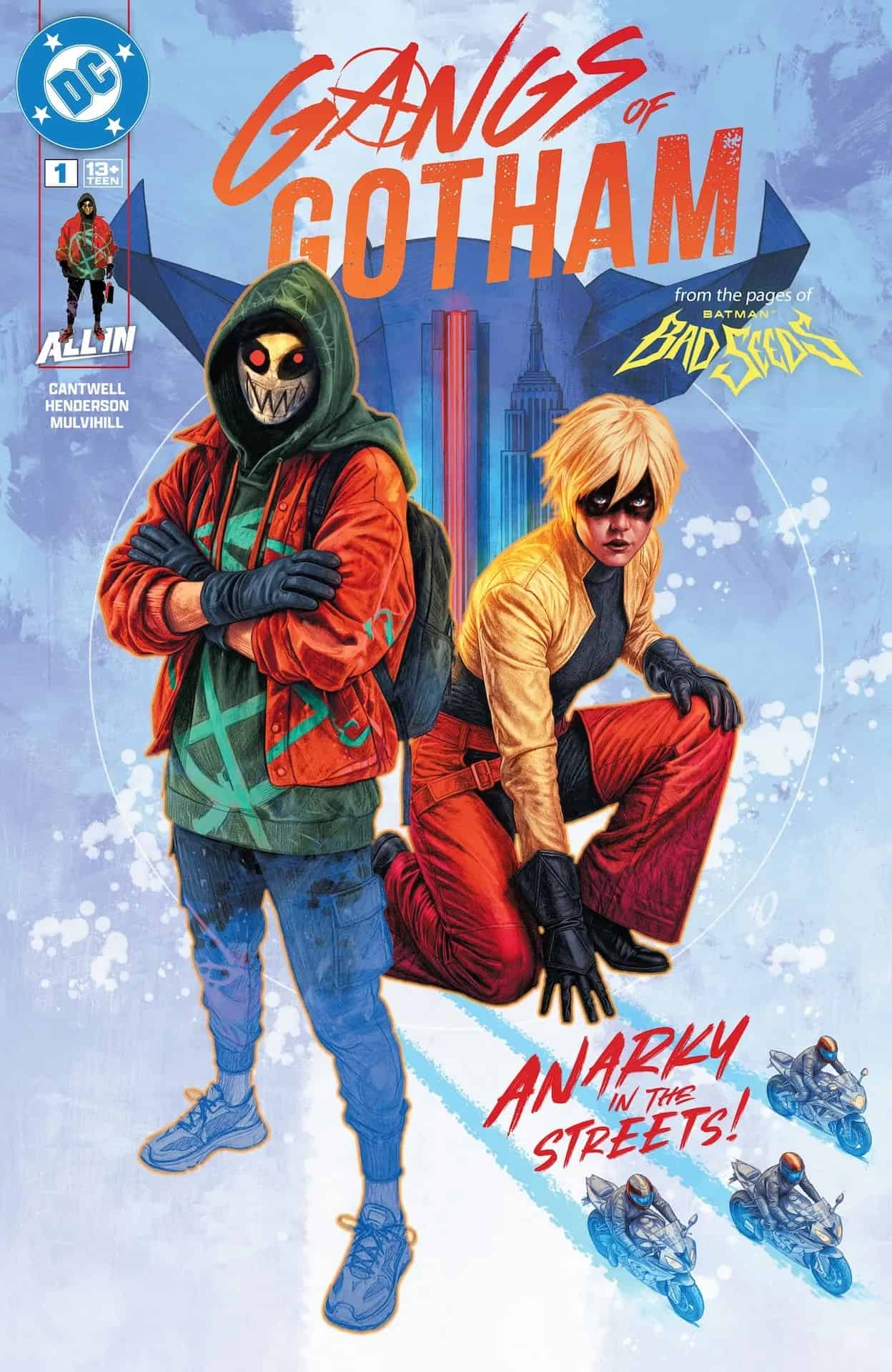
Gangs of Gotham #1

Recap
CHRISTOPHER CANTWELL AND MIKE HENDERSON TAKE ON GOTHAM CITY IN THE AFTERMATH OF BATMAN: BAD SEEDS!
Anarky rules! Anarky has been given an ultimatum by the Torus: Unify the 100 low-level street gangs not currently under Torus control—or die. If Lonnie Machin succeeds, he'll get a seat at the table. But if he fails, it's lights out for Anarky.
Review
Anarky’s role in Batman: Bad Seeds – Gotham Central was fairly substance-free when all was said and done. The character had a splashy entrance, but beyond a few panels where Cantwell put Anarky’s mission statement into dialogue, there wasn’t much to him. But the miniseries did put the character in front of readers, setting him up for his major role in Gangs of Gotham #1.
Gangs of Gotham #1 is almost a solo Anarky story. Anarky’s circumstances have changed for the worse since Batman: Bad Seeds – Gotham Central. The issue opens with him being mugged, losing his last quarter. Shortly after, he ends up in a gas station restroom writing a letter to Batman on toilet paper. Rock bottom doesn’t get much worse than that.
The situation is made even worse by Anarky being forced by Minotaur to bring Gotham’s East End under his control. This is a nice tie-in to previous storylines in Batman. It also puts Anarky in a strange situation. The character’s lofty goal has always been to tear down a system he views as corrupt and oppressive. Cantwell is putting Anarky in a position where getting in with Minotaur, assuming he succeeds in the East End, might be too lucrative for him personally to want to tear down the criminal organization. The potential shades of gray, at least according to how Anarky views his life, provides welcome complexity for the series.
Henderson’s art brings a lot to the Anarky-centric story that Cantwell is telling in Gangs of Gotham #1. The multiple sequences where Anarky is without his mask reinforce the rock bottom quality that the character has in this issue. Henderson doesn’t go too extreme with facial details, though. A lot of Anarky’s emotions are communicated through his eyes. But there are never overly exaggerated depictions of the character. Henderson effectively captures a less is more quality in most of the downcast expressions he draws for Anarky. Rather than go for any kind of extreme look, Henderson keeps Anarky’s eyes looking downward through most instances of him being maskless. There are only a few extra lines around the character’s mouth and under his eyes to further reinforce the emotions underpinning Anarky’s arc in this issue.
Jim Gordon and his partner Espinoza make an appearance in Gangs of Gotham #1 as well. This follows the end of Batman: Bad Seeds – Sunrise #1 where they were transferred to the East End. They arrest the young man who mugged Anarky (this following them roughing up and attempting to question him). Ultimately they not only let the mugger go–it was only a quarter, after all–but they also buy him a cheese steak. Gordon has a reasonable enough explanation for doing so, but his actions arguably support Anarky’s disillusionment with Gotham’s law enforcement and justice system. It’s a nice bit of added complexity from Cantwell. It balances Anarky’s criminality with a measure of sympathy for him as a main character in the series.
A surprise revelation in Gangs of Gotham #1’s final pages provides an extra twist. Hopefully it does not undermine the focus on Anarky, though, which is a big reason this issue is compelling out of the gate.
Trish Mulvihill uses a varied color palette but leans into darker hues for much of the issue. Particularly effective is the color choices she makes for backgrounds versus foreground elements, especially characters. An example of this that runs through the entire issue is Anarky’s red jacket which is almost never set against a similar background color. Anarky always stands out and that in turn adds to a sense of depth and dimension. This is seen elsewhere as well, such as with the blue of Gordon and Espinoza’s uniform shirts set against a much darker exterior. The characters pop off the page nicely, especially in action sequences.
The backgrounds against which these relatively vivid characters appear are very detailed. Whereas Henderson gets a lot out of limited detail when it comes to characters’ facial features and expressions, backgrounds and objects, including characters’ apparel, are heavily detailed. The world of Gangs of Gotham #1 is a rich one. Possibly the best page in this regard is one that sees Anarky sitting on a toilet in the aforementioned gas station restroom. Henderson captures the blend of anger and resignation that Cantwell has leaned into in the dialogue and the letter he’s writing.
Twice in the issue Anarky writes a letter to Batman on toilet paper. Carey does a good job drawing the look of toilet paper to feature the letter’s text. It’s another instance of visuals successfully reinforcing the mood Cantwell is establishing.
Final Thoughts
Anarky is a fully realized character in Gangs of Gotham #1, so much so that this might as well be kicking off an eponymous solo series. Cantwell is setting Anarky up for some of the best development the character has had in a long time. Henderson and Mulvihill’s art and colors create a rich world that reinforces the issue’s overall mood and depiction of Anarky. Gangs of Gotham #1 should absolutely get a look, especially from fans of Gotham adjacent series.
Gangs of Gotham #1: Anarky Front and Center
- Writing - 8/108/10
- Storyline - 8/108/10
- Art - 8.5/108.5/10
- Color - 8/108/10
- Cover Art - 7/107/10