



Heat Seeker and Heat Seeker: Combustion contain adult content.
The Gun Honey universe expands in Heat Seeker with the introduction of Dahlia Racers, a provocative woman who makes people–mostly criminals but ultimately anyone who can afford the price–disappear. The first Heat Seeker series grows out of Gun Honey: Blood for Blood #4 where Agent Brook has become a criminal and is destined for a life on the run. Ardai uses that story point as a way to introduce Dahlia Racers who is going to help Brook disappear.
Heat Seeker’s storytelling is not far removed from the main Gun Honey series. Dahlia is possessed by a great deal of moral ambiguity. It fits with the Gun Honey’s sensibilities that lean toward a classic hard boiled style. In Dahlia’s case, this is largely seen through her actions and dialogue with other characters. Ardai doesn’t overload the first two Heat Seeker series with a great deal of internal monologue for Dahlia. The device is really only used to deliver exposition, especially as it relates to Dahlia’s past, that can’t be communicated elsewhere.
Casual nudity is present in Heat Seeker more than Gun Honey. Nudity does not necessarily mean sex, though. For instance, there is a sequence in the first series that takes place at a nudist resort. There are other moments where, if a male were topless, readers would think nothing of it. The nudity is presented more as a matter of course and in that way never comes off as exploitative. It’s ironic that Dahlia’s outfit seems intended to titillate while the nudity does not.


W: Charles Ardai | P: Ace Continuado | I: Jose Zapata | C: Asifur Rahman | L: David Leach
The plot of the first Heat Seeker develops out of the final pages of Gun Honey: Blood for Blood #4. Brook needs to disappear and Dahlia spends most of the issue hiding him from agents who want to capture both him and Dahlia.
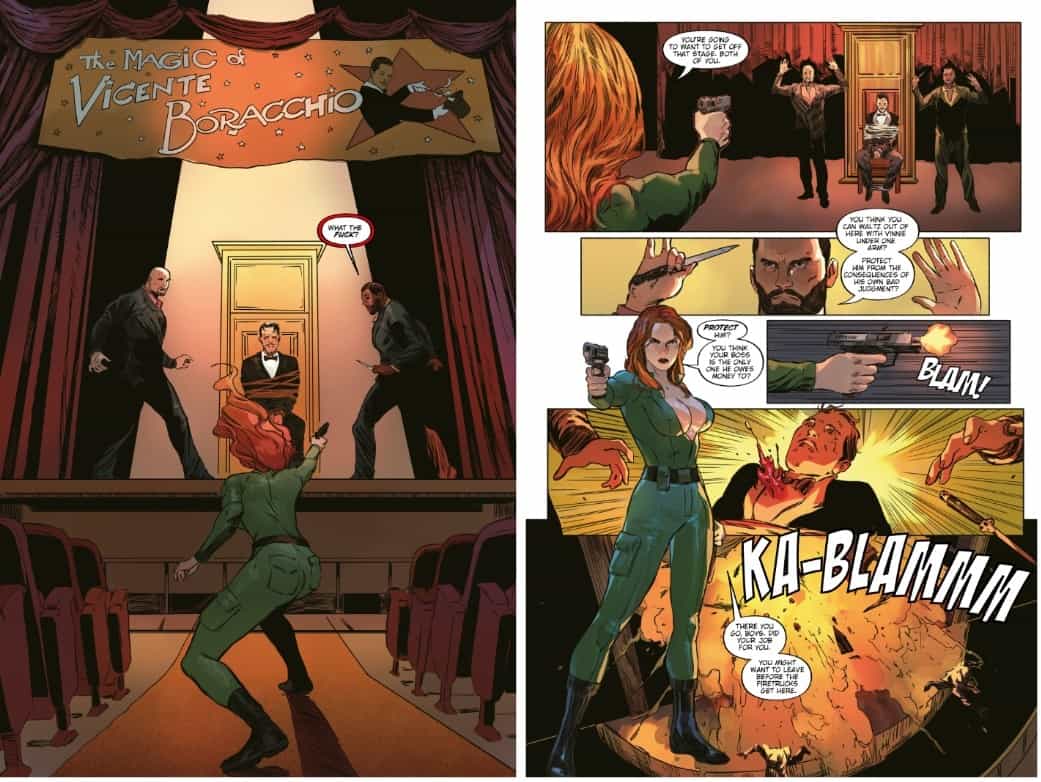
Ardai opens Heat Seeker with a clever nod to what Dahlia does. She is using the stage of a magic show to “kill” her client in an explosion witnessed by the two men who wanted him dead. From there the entire series is an exercise in misdirection as Dahlia tries to hide Brook and a hired gun pursues both characters. There’s a lot of back and forth surprises throughout the series, none more surprising than that Dahlia and the hired gun pursuing her know each other.


W: Charles Ardai | P: Ace Continuado | I: Juan Castro | C: Asifur Rahman | L: David Leach
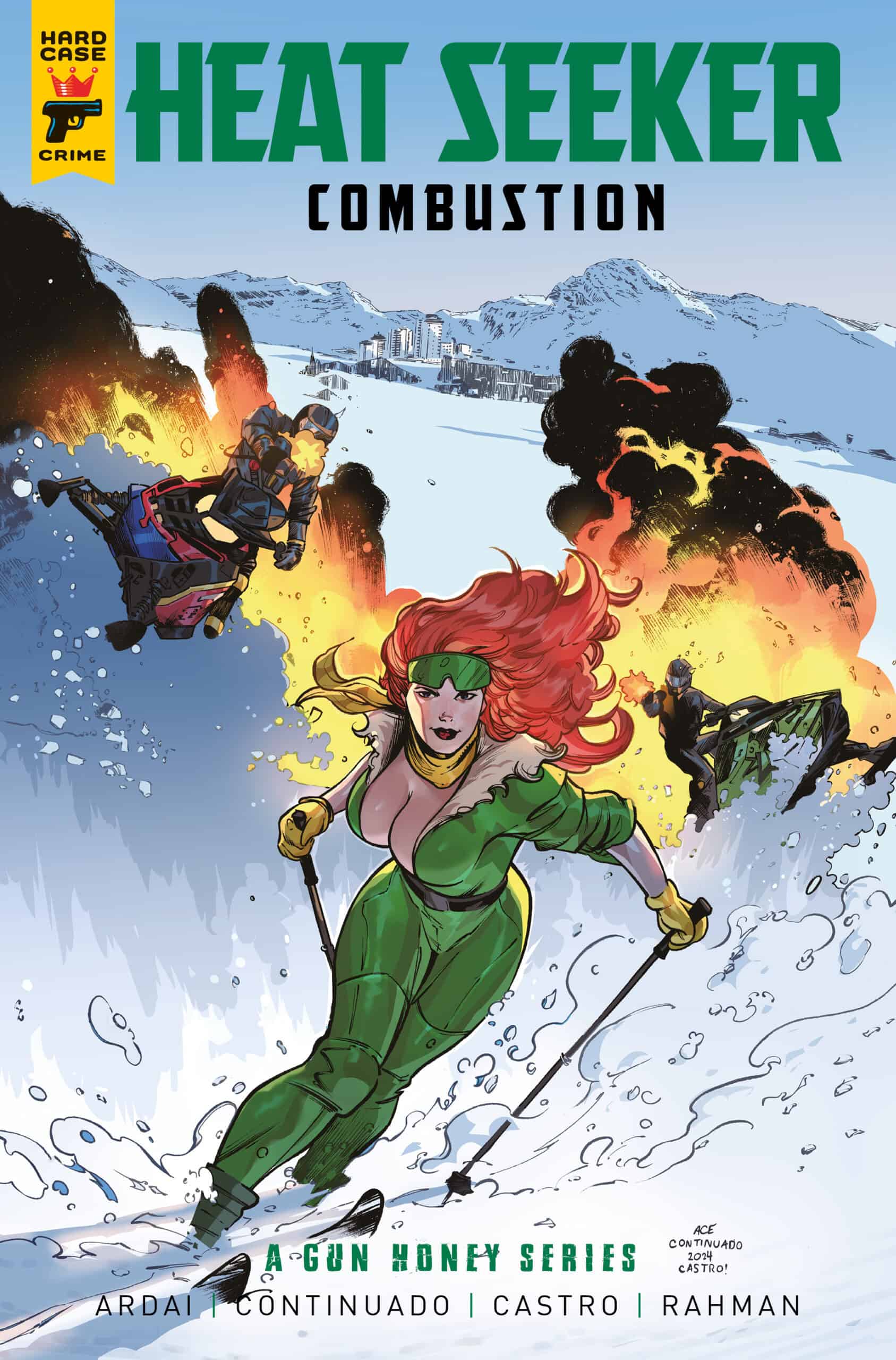
Heat Seeker: Combustion is a settled down affair compared to the first series. The only person Dahlia is charged with hiding is a young girl, the daughter of a scientist. Like the first Heat Seeker series, there are some reverses. The father’s motives for hiding his daughter come into question more than once. There are changes in loyalty along the way, most notably a female member of the hit squad who is moved by the daughter’s plight. The remaining bad guys are ultimately defeated via clever science as opposed to anything Dahlia does.
This series provides slightly more development for Dahlia. Much of it comes via her actions with Evie, the former hit squad woman turned ally. After the first series’ development of Dahlia came almost entirely by way of her actions, this is a welcome change.
The plot here is also much easier to follow. Only having to hide one young girl streamlines the series considerably and lets scenes breathe a little bit more than they could in the first series.
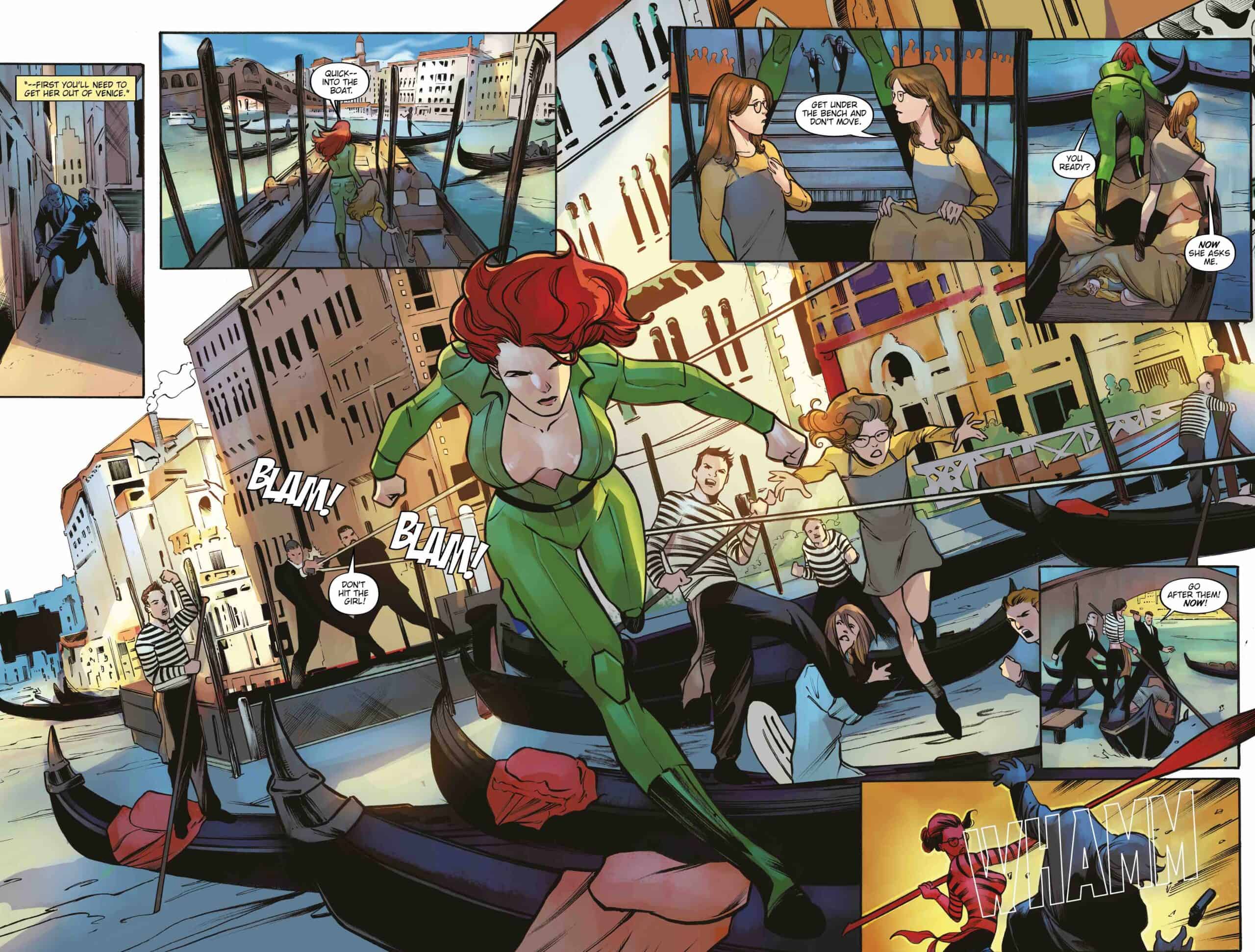

Continuado’s style is consistent across both series. Characters are expressive, but that expressiveness comes mainly through the depiction of their eyes. Facial linework is kept to a minimum. This can create a small measure of confusion as characters switch their physical appearance from time to time (especially in the first series), but at the same time it plays into Heat Seeker’s overall concept. If character’s faces were heavily detailed, would transforming their appearance be as easy from a visual sense? The only real exception to this style are extreme closeups where additional lines better flash out features around characters’ mouths, cheeks, and foreheads.
Heat Seeker’s cast is heavily female, and Continuado succeeds especially at depicting strong women. This begins with how their emotions are displayed visually. While they are expressive, they never come across as broad, giving away what they’re thinking via visible shock or confusion. There is power behind their eyes, and it translates well when seen head on in the panel. Further, their posture is always upright–near ramrod straight. And movement comes across as quick, easy, and purposeful.
The two inkers bring slightly different styles to the Heat Seeker series. Zapata’s inks in the first Heat Seeker series work very well with Continuado’s art. The lines are thinner and accentuate the overall art very well. Castro’s inking in Heat Seeker: Combustion is of a thicker style which robs Continuado’s work of a little bit of finesse.
Rahman’s coloring in both series is rich but restrained. Characters and settings feature a wide variety of tones which creates nice visual contrast and overall engaging pages. But the palette is not an overly vivid one. The choice allows the art and ink work to maintain center stage rather than being blown out by overly bright coloring.
Leach’s lettering work is effective in how it doesn’t particularly stand out. Dialogue and captions are well organized in text heavy sequences. The captions for the internal monologue use a slightly brighter color palette. They stand out from the art enough to be easily noticed but not so much that they become a focal point. Sound effects are largely done in white, either opaque text or outline. The work is “simple” in the sense that it plays well with the more subtle choices made by the art team.
Final Thoughts
Heat Seeker and Heat Seeker: Combustion straddle the line of classic private detective story sensibilities. The nature of Dahlia’s job creates a through-the-looking-glass version that pushes the line somewhat. The plots work well even if character development is at a minimum. The collected volumes also include fascinating backmatter material that offers solid behind-the-scenes information on the writing. Both Heat Seeker trade paperbacks are fast paced, visually interesting spinoffs of the Gun Honey series.