Henry Davis
There is a reasonable amount of doubt when it comes to comic book outsiders making an attempt to tell stories within the medium. Whether it’s folks in film and TV turning their Netflix pitches into short-lived comics that fail to understand the tools of the trade, or YouTube personalities dumping their soul into cliché-ridden extensions of their brand, a strong sentiment of distaste has been built among most readers for these kinds of stories.
At first glance, John Walsh’s Eyepatch Wolves seems to fall into the latter camp. He’s a video essayist with a penchant for covering Japanese media, strange video games, and even stranger human beings. Much of his popularity comes from the narratives within his work heightening the topics he covers, and he is one of the people you can credit (or blame) for launching Garfield’s eldritch nature into popular culture. He’s no stranger to storytelling, and especially not to comics. His many essays on manga showcase a strong understanding of sequential art as a storytelling medium, along with some history as an animator prior to his YouTube career. He’s been entrenched in the world of independent illustration and has a clear love for the medium that comes off as more academic than many of his peers.
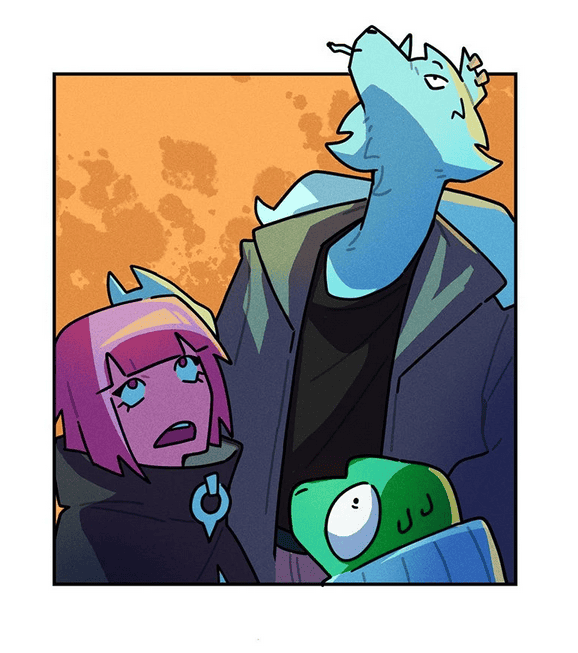
That care comes across in every panel of his webcomic Eyepatch Wolves, which features the assistive talents of co-writer Morgan Hampton (Green Lantern Corps), artist Swimnemo, and colorist Dojo. What started as a clothing project, Eyepatch Wolves follows two problem-solvers for hire, Crow and Wolf, as they navigate the bizarro world of Angel City. The elevator pitch for the uninitiated is that it’s River City Girls meets Batman Beyond, with a splash of Scott Pilgrim for good measure.
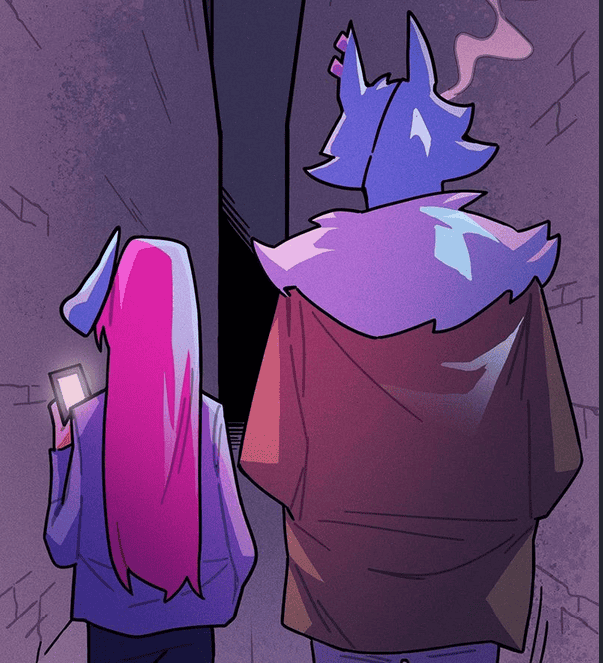
It follows two “problem-solvers for hire,” Crow and Wolf, as they try to make change in their hometown while fending off their own demons. From the first chapter, these two charm the reader immediately. Crow is a deeply messy bundle of fun, driving the story forward with lopsided motivations and a penchant for violence that would fit quite well into any Street Fighter entry. Wolf, on the other hand, is the enigmatic straight man, more likely to quell a sticky situation with his words first, fists later.
Credit – @BROBEXX from the ‘Building Angel City’ artbook
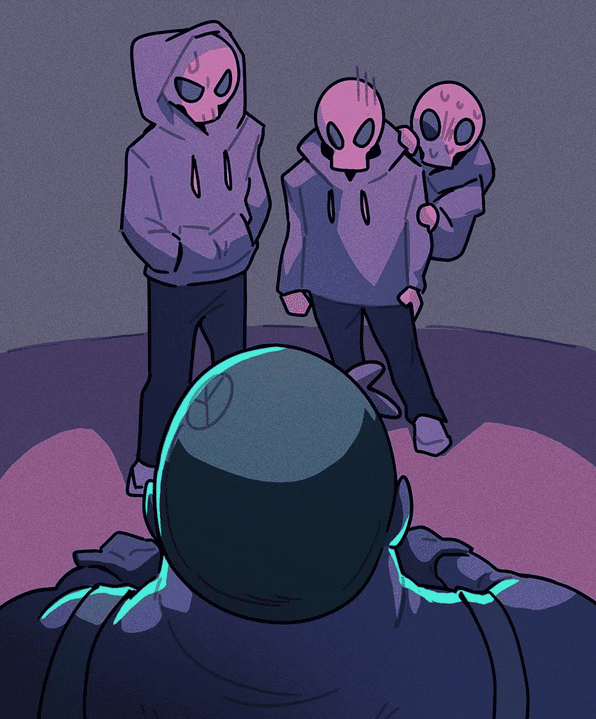
The two are set against the aforementioned Angel City, a setting with a pulse all its own. It’s overrun by corporate sleazebags, identity-stripping gangs, and false prophets, all racing to claim a slice of the city for themselves. It’s a world plagued by uniformity and group think in service of the individual, rather than the wider citizenry that call this place home. Our protagonists navigate this as objectively as possible, but it’s made clear that trying to take a centrist path is not something one can do if they have any hope of saving this city from itself. It’s a rather oppressive world, made digestible by an anime-inspired sense of surrealism that keeps each chapter electric with energy while still grounded enough in its characters to be taken seriously. This may be a world inhabited by anthropomorphic animals and over-the-top human caricatures, but it wears its themes on its sleeve quite loudly.
Setting up a world this rich in a comic formatted for the “Webtoon” scroll experience is not easy, and as much as I’d love to give John and Morgan all the credit for this, Swimnemo’s art is what really ties it all together. Each character is illustrated with a rich sense of expression that removes almost any need for overbearing exposition. Angel City, even within a format that restricts the artist’s paneling ability into small snapshots, is given such an interesting atmosphere. It sits on the edge of cyberpunk, but carves out its own dystopian path by filling its streets with colorful characters and tactile uses of contemporary architecture. Dojo’s color work highlights the differences in tone between the likes of a corporate high-rise and a working-class ramen shop, their use of lighting turning simple illustrations into atmospheric moments of both dread and excitement.
If this were the early 2000s, this book would’ve been published by Oni Press, and it would’ve been a cult sensation. It blends comic sensibilities from across the globe and winds up with a very unique identity of its own that stands out against the creator’s internet personality. However, for fans of his work, what you love about Super Eyepatch Wolf, the essayist, is still present in this book. It is the kind of comic that only this creator could have made, filled with humor, heart, and eclectic inspirations that had me hooked for its first five chapters. Please, check this comic out—you might find yourself falling for a story that readers of our site might not typically go for.
You can find Eyepatch Wolves here, and find more of the creative teams work on YouTube, in Comics, and more.