


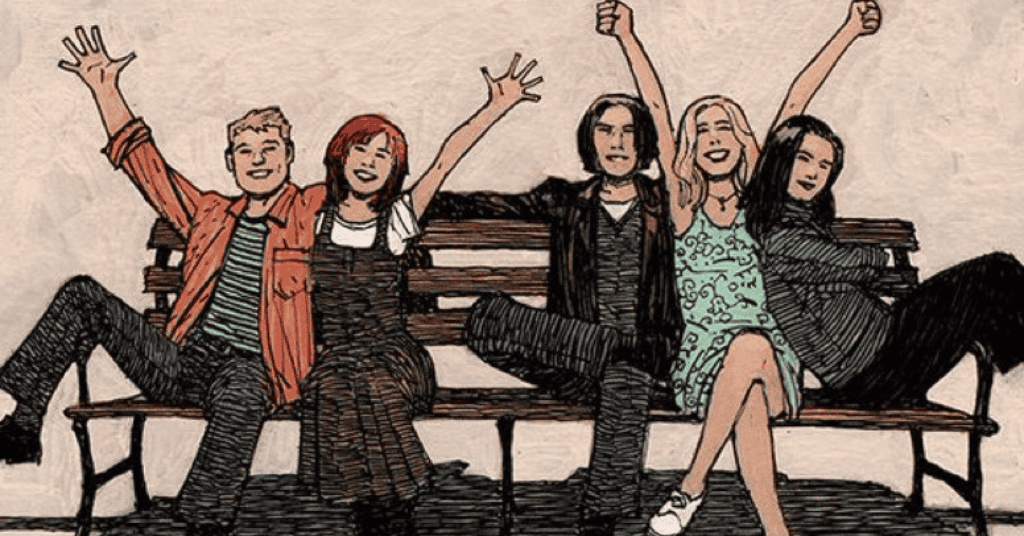
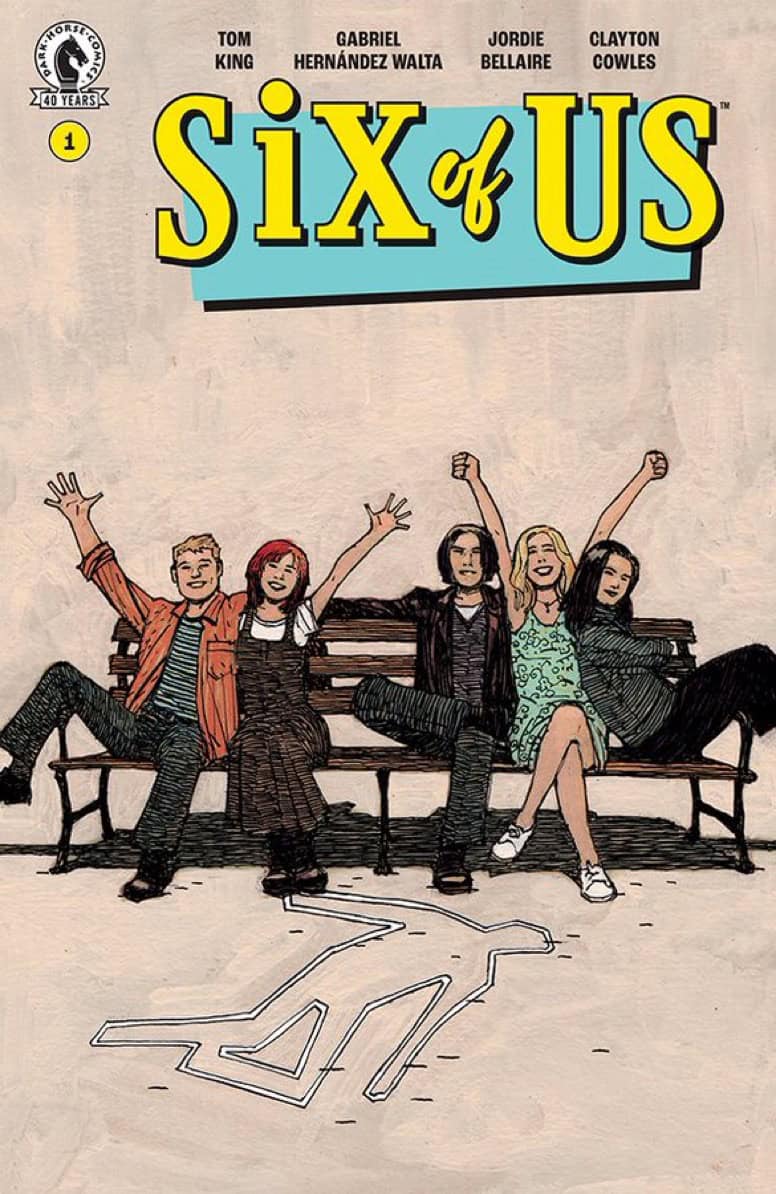
Six of Us #1

Recap
Six actors built America’s favorite sitcom. Millions tuned in. Billboards lit the skyline. Then one of them died…
A beloved cast member of a hit ensemble sitcom dies under mysterious circumstances, sending shockwaves through Hollywood and revealing the secrets, betrayals, and desires lurking beneath the glittering facade. As the surviving cast members confront their past; old rivalries and hidden truths emerge and the line between life and performance begins to blur.
Review
Six of Us #1 is a murder mystery centered around the cast of a hit sitcom from the mid 1990s of the same title, brought to life by Tom King and Gabriel Hernández Walta, the acclaimed creative team behind the masterpiece that was The Vision. The issue opens at the funeral of one of the sitcom’s six main cast members, Tim McQueen, immediately establishing an ominous tone for what follows. From there, the narrative begins jumping backward and forward through time, offering glimpses into the lives of the six actors, from the moment their show skyrocketed in ratings to the years that followed. With each vignette, the seemingly perfect lives these characters built for themselves begin to reveal cracks beneath the surface. Friendships become strained, relationships become complicated, and long buried secrets slowly begin to emerge, suggesting that the murder is only one piece of a much larger story. By the end of the issue, nearly everyone has a reason to be suspicious, leaving readers to wonder who could have been responsible for McQueen’s death. Ironically, the one person who cannot be considered a suspect is McQueen himself.
From the jump, Six of Us wears its inspiration from Friends proudly, with several of its characters, personalities, and circumstances echoing the beloved sitcom. The mid-1990s past setting further reinforces those similarities, giving the series an immediately recognizable framework that allows readers to understand the dynamics between the characters without requiring an excessive amount of setup. Each member of the group occupies a familiar sitcom archetype, but King does not simply recreate those personalities. Instead, he uses those recognizable traits as a foundation before gradually revealing the insecurities, resentments, ambitions, and personal baggage hidden beneath them. That contrast between the polished image presented to the public and the messier reality behind closed doors is where the series begins to distinguish itself.
At times, however, the similarities to Friends can feel almost too uncanny, particularly when it comes to Tim McQueen. His personality and role within the sitcom bear more than a passing resemblance to the late Matthew Perry’s Chandler Bing. That comparison is especially noticeable given the way Tim uses humor and sarcasm as a shield, making his eventual death feel even more significant because of how much the character initially resembles the lovable comedic presence audiences would expect to find in a sitcom like this. Still, rather than diminishing the mystery, those similarities make the concept more fascinating. Readers seemingly are encouraged to bring their own familiarity with these sitcom archetypes into the story, only for King to gradually challenge those assumptions and ask what might really be happening behind the scenes.
The structure of the story is arguably its greatest strength. Rather than presenting the murder and then moving forward chronologically, King scatters the narrative across different periods of the characters’ lives. Each jump through time adds another piece to the puzzle while simultaneously raising new questions. The approach can make the story feel deliberately fragmented, but that fragmentation works in the series’ favor because it mirrors the way memories and personal histories can be pieced together after something tragic occurs. The reader is constantly reassessing what they thought they knew about these characters as new information comes to light.
That storytelling device becomes even more intriguing through the decision to have Tim serve as the narrator of his own murder mystery. His voice provides a fascinating perspective on the events, particularly as he introduces readers to his former castmates and recounts the history of their relationships. We see how the group initially came together, how their friendships evolved, and where each relationship stood before Tim’s untimely demise. There is already a suggestion that Tim may be an unreliable narrator, although it is difficult to determine whether he is intentionally withholding information or simply incapable of understanding what the other characters were truly thinking. His narration is limited by his own perspective, meaning that what he remembers as friendship may have been resentment to someone else, while what he considered harmless behavior may have left a much deeper mark than he realized.
That uncertainty gives the issue an additional layer beyond simply figuring out who killed Tim. The real mystery may ultimately involve understanding who these people actually are when the cameras stop rolling. Their sitcom presented an idealized version of friendship and happiness to millions of viewers, but the glimpses into their private lives suggest something considerably darker. The contrast between public perception and private reality feels like it could become one of the defining themes of the series.
Of course, one of the biggest selling points of Six of Us is the reunion of Tom King and Gabriel Hernández Walta. The two have already demonstrated an uncanny ability to explore the human condition through unconventional stories, focusing on the emotional complexities that exist beneath seemingly ordinary lives. That sensibility is immediately apparent here. King takes what could have been a straightforward murder mystery and layers it with questions about fame, friendship, perception, and the lasting impact people can have on one another. Walta’s artwork complements that approach beautifully, helping establish the subtle tension beneath the surface and giving the characters an emotional presence that makes their relationships feel authentic.
While this is only the first issue, there is already an enormous amount of potential here. Six of Us establishes its central mystery quickly, introduces a compelling cast, and creates enough unanswered questions to make the reader eager to start piecing everything together. More importantly, it feels like there is a much larger story waiting underneath the murder investigation. With King and Hernández Walta at the helm, the series has the creative talent necessary to turn its familiar sitcom inspired premise into something considerably more layered and unexpected. If this opening chapter is any indication of what is to come, Six of Us could develop into another memorable exploration of the darker side of seemingly perfect lives.
Final Thoughts
Six of Us #1 turns a seemingly perfect 1990s sitcom cast into a web of secrets, resentment, and murder, with Tom King and Gabriel Hernández Walta delivering a compelling mystery that leaves everyone looking potentially guilty.
Six of Us #1: The Best of Friends
- Writing - 10/1010/10
- Storyline - 10/1010/10
- Art - 10/1010/10
- Color - 10/1010/10
- Cover Art - 10/1010/10