Synthetics Volume One #2
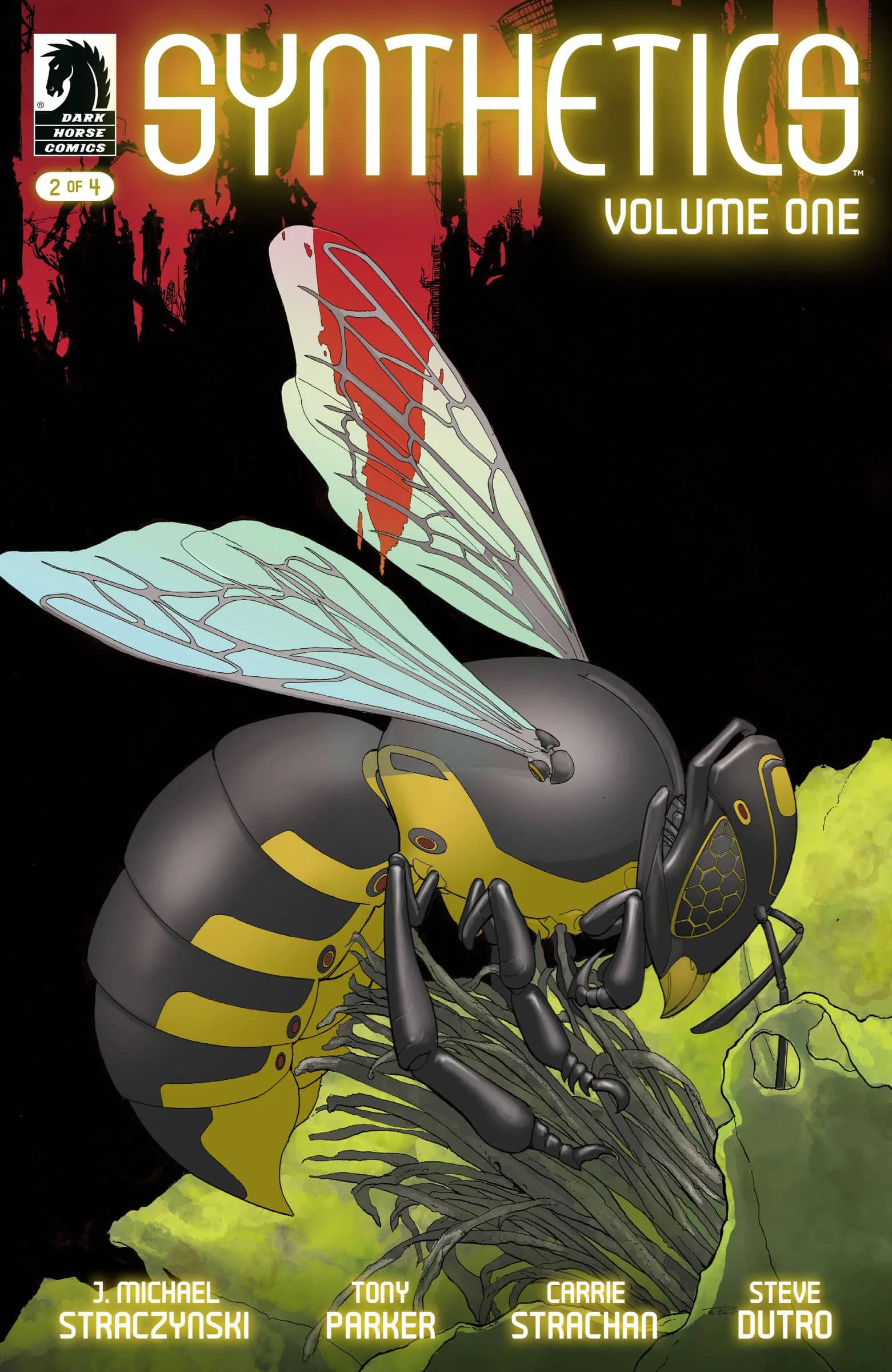

Theron Couch
Recap
Nick and Denny finally have a thin lead in their case, but following this trail of breadcrumbs could lead them somewhere unexpected. Meanwhile, Blake Wohl has their own lead on what could possibly be the story of a lifetime. And as Hernando and Yuri feel danger closing in and the fate of the world at stake, they must accelerate the Synthetics timeline and simply hope that their hard work isn’t undone!
More Dark Horse coverage from Comic Watch:
Synthetics Vol. 1 #1: Big Ideas
Review
Synthetics Vol 1 #2 is largely an exercise in world building. Straczynski does advance the synthetic human storyline, especially the technical science fiction aspects. But for the most part he concerns himself with the world in which this larger storyline is taking place. Straczynski takes what were, in some ways, throwaway references to a doomed to extinction humanity on a poisoned world and expands what that looks like for the society.
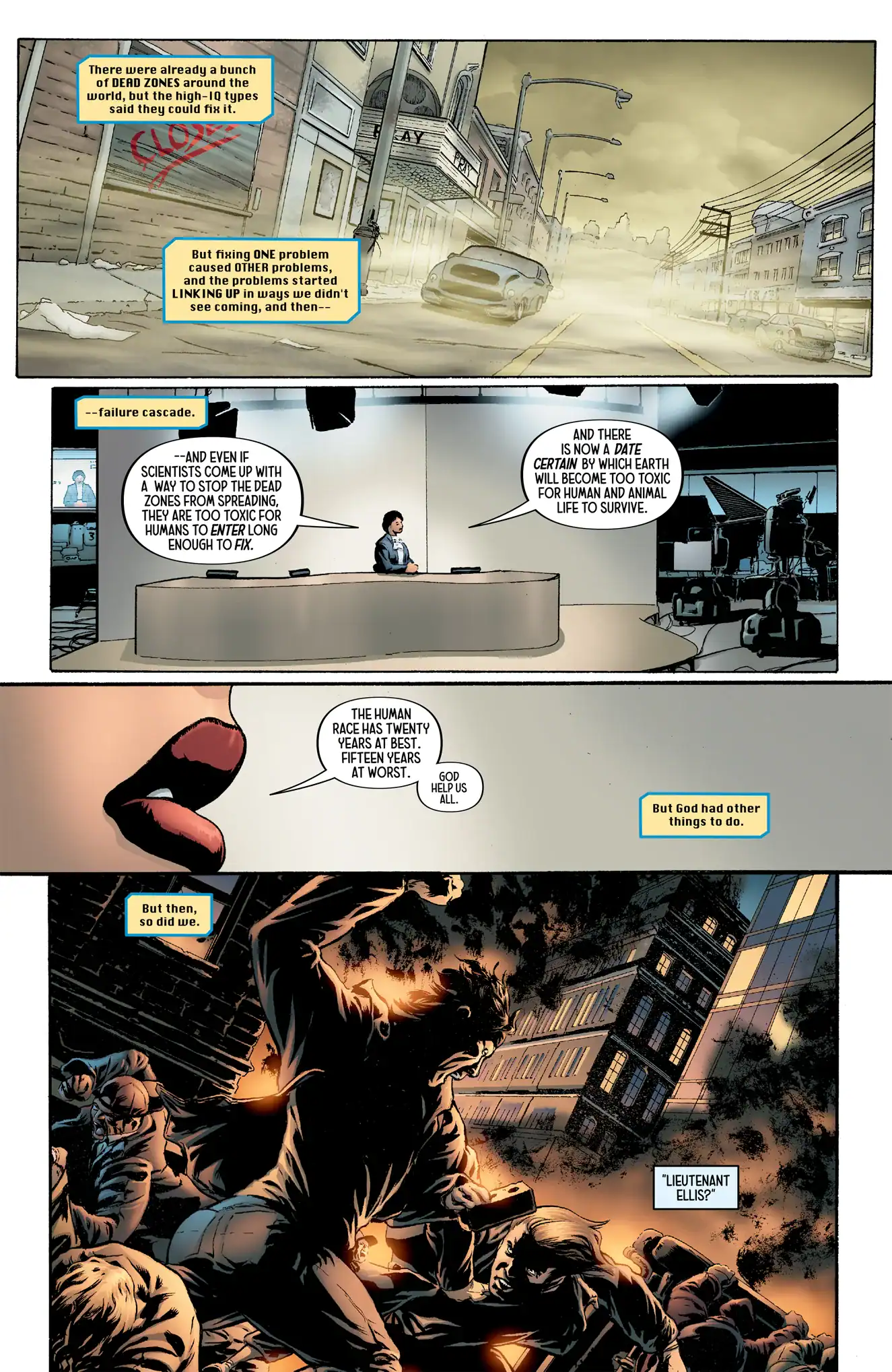
A flashback opens Synthetics Vol 1 #2. The opening pages depict the news broadcast that broke the story that humanity has 15-20 years left to it. The announcement is very understated–a moment that is more whimper than bang. It is followed by a panel of people rioting in the streets, but that flashpoint isn’t what Synthetics Vol 1 #2 concerns itself with. The issue catches up to the present day with Nick and Denny’s investigation of the black market memory dips introduced in the first issue. Straczynski uses Denny’s point of view to explain the different ways people cope with the end of the world. Flash riots by young people who don’t care about the consequences of the violence, constant self-indulgent raves by others who don’t want to form lasting relationships. Neither of these ideas are groundbreaking.
 Straczynski finds something more interesting in the concept of people who live in classic looking clean houses where it’s always daytime and a loop of footage plays featuring reports of the world healing itself. These people never interact with the outside world beyond picking up supply deliveries in their garage. They’re sticking their heads in the sand until the end. And the revelation that Nick spends most of his money to keep his sister happy in this environment makes him out to be a far less jaded character than he originally seemed to be in the first issue.
This world building effort feels destined to be rewarded when Straczynski digs deeper into the synthetic human storyline. Instead of simply doing a “humanity dying, humanity needs synthetic upgrades” story, Straczynski is building up what the society that may receive such technology looks like. Who’s to say it will be well received across the board?
Strachan’s coloring is a big mood creator when it comes to these world building elements. The flash riot produces fire and explosions, so it’s no surprise to see rich reds and dark oranges throughout these pages. Strachan throws the full surroundings into this color scheme. Denny and Nick stand out but the full surroundings have a hellish color scheme. The rave sequence is only depicted on one page, but Strachan’s use of neon colors getting lost in shadow and darkness simultaneously feels like a party, but a very bleak one.
Nick’s sister’s house is the one distinguished most by Strachan’s work. The color scheme is rich and bright, completely different from the rest of the world. The color choice is likewise unique to this world. The house’s interior is rich in shades of pink and trimmed in bright white. Nick’s sister wears an aqua blue dress. The head in the sand space is truly its own world.
The flash riot sequence benefits considerably from Parker’s high level of detail when it comes to surroundings and backgrounds. The thicker lines Parker uses for outlines combined with heavy use of dark black shading keeps everything differentiated, especially within Strachan’s heavy red color scheme.
Parker’s facial details are more spare by comparison, but it is enough to depict meaningful expressions. This also plays well into the different societal environments Straczynski has created. Nick’s sister’s beaming smile is another way to show off how strange the world she is living in is.
Nick’s internal monologue tells a lot of the story in Synthetics Vol 1 #2. The color scheme Dutro picked for the box border, fill color, and text font and color works very well in combination with Strachan’s color scheme. The boxes always stand out and are easy to read.
Final Thoughts
Synthetics Vol 1 #2 advances the plot minimally but is still a very engaging comic. Straczynski makes the world that the comic exists in truly fascinating. The visuals are compelling throughout, at times flashy, and repeatedly gripping. It’s harder to get into than the first issue, but Synthetics Vol 1 #2 is still approachable and a good pickup for any sci-fi fan.
Synthetics Volume One #2: The Way Humanity Ends
- Writing - 8/108/10
- Storyline - 8.5/108.5/10
- Art - 7.5/107.5/10
- Color - 8/108/10
- Cover Art - 7/107/10