Terrorbytes #3

Theron Couch
Recap
A man finds himself in an automated prison and, because of the glitchy technology, can’t even find out what crime he’s accused of.
Review
Sometimes it feels like the technology is in charge. Bots on social media, automated customer service menus, puzzles to prove you’re not a robot–the list goes on. And when something goes awry, as it does in Terrorbytes #3, it can seem impossible to fix.
Terrorbytes #3 is less grounded than the first two issues. Ezra’s fourteen second trial for a crime he may or may not have committed (he doesn’t even know what it was supposed to be) sounds comical. And indeed, at times it feels like a black comedy: time to serve goes up rather than down, the most accessible lawyers are bots that work for the prison, guards aren’t needed because prisoners turn each other in, and so forth.
The disturbing part of Terrorbytes #3 isn’t the story itself, though. Certainly the idea of automated justice is scary. But worse is the implication of glitchy technology running everyone’s lives on a daily basis. What kind of decisions are made behind the scenes that no one knows about? In Ezra’s case it was his fourteen second trial. And once he was found guilty, none of his other computerized devices and appliances functioned. Technology is everywhere and if one thing stops working right, will it all stop working right?
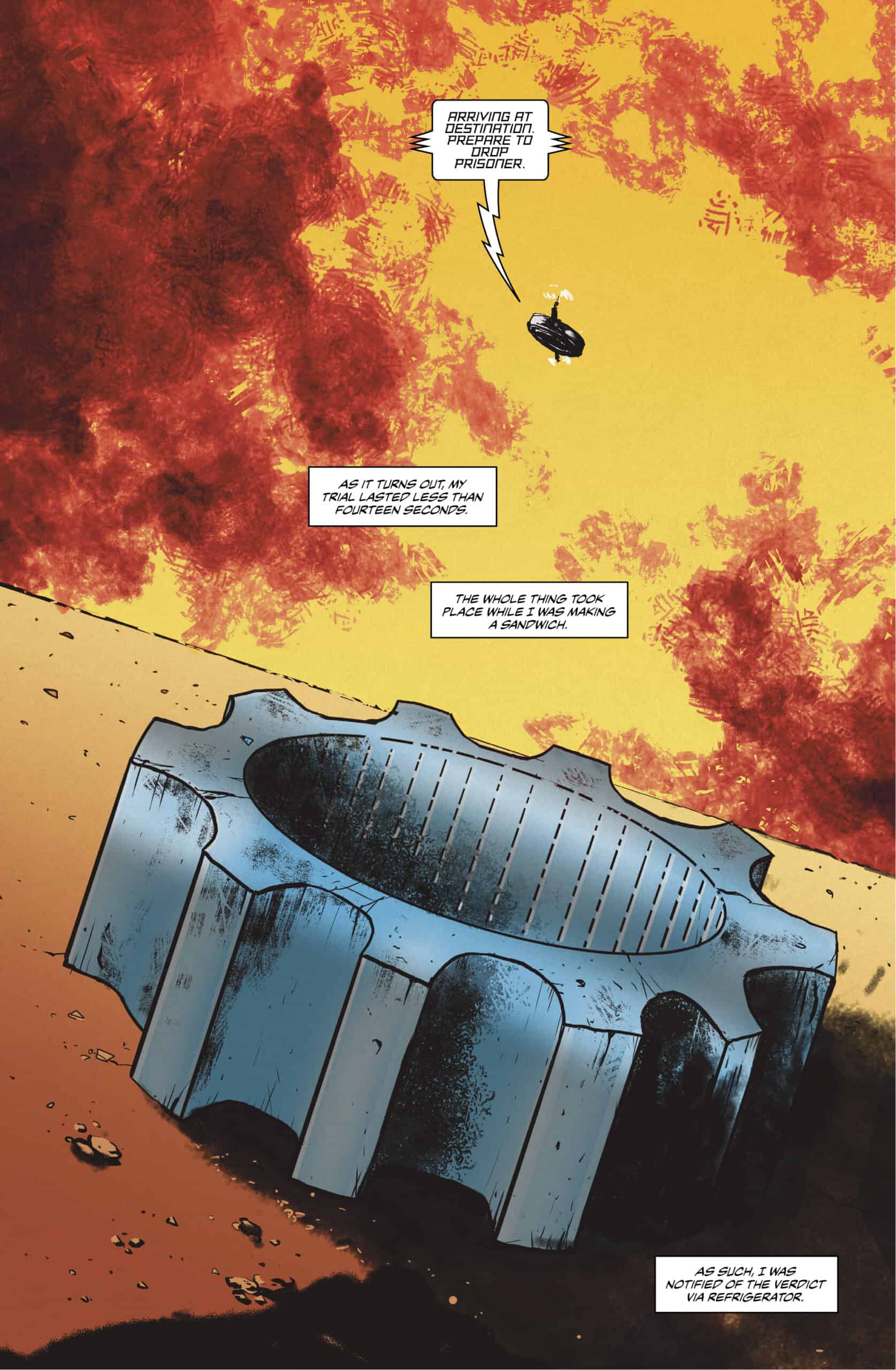 Ponticelli’s style feels rough when it comes to characters. Shading is less about patches of lines and instead ink blots that look a little like smudged fingerprints. This more generous shading is the exception, though. In most cases Ponticelli achieves extra detail of expression with what almost seem like stray lines. It’s effective and suits the issue’s tone and setting.
That setting is depicted in very minimalist terms. Table and benches on a field of black. The presence of a wall is implied only by barred windows or a computer screen. The prison itself sits alone, isolated from any sign of life. With the technology seeming to be in charge in Terrorbytes #3, this minimalism further dehumanizes Ezra and his fellow prisoners.
Wright’s color choices for the settings and backgrounds contrast each other effectively, and this contrast plays well into the settings’ minimalism. And overall, almost everything about the prison itself is drab and dark. The prison is as bleak as it is dehumanizing.
Mangual keeps the depressing feeling going with his color choice for the caption boxes used for Ezra’s internal monologue. The color is a very faded yellow, borderline beige. Whereas the white dialogue bubbles leap off the page in this otherwise drab environment, the caption boxes don’t. Indeed, they feel a part of it.
Final Thoughts
Terrorbytes is working as a series not just because the stories themselves are compelling, but because of what those stories say about technology today and where it might go tomorrow. Additionally, the rotating art teams give each story its own unique identity. Terrorbytes #3 is no exception, and with each issue largely stand alone, fans of science fiction and technology-run-amok dystopias should not miss it.
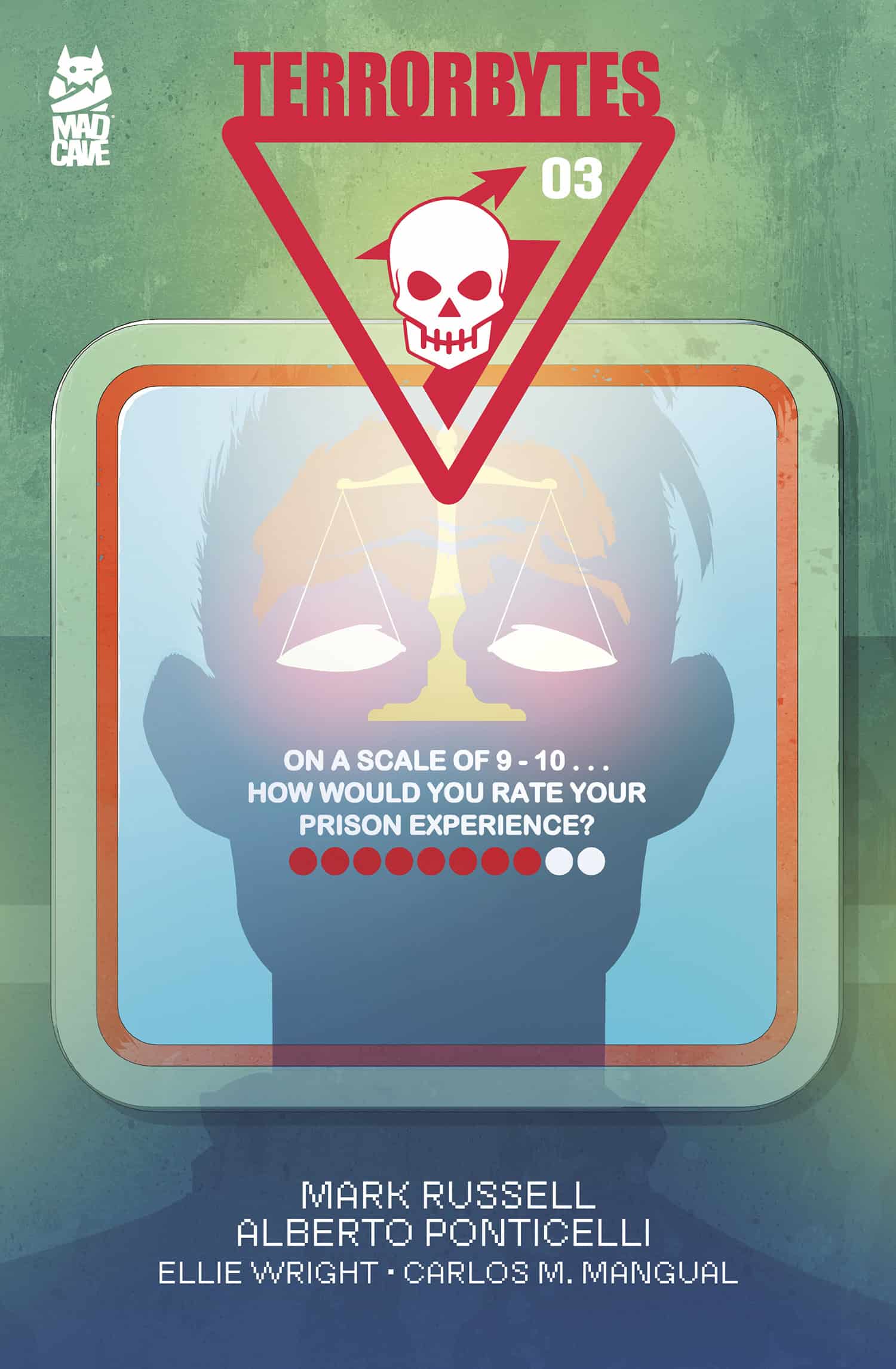
Terrorbytes #3: Glitchy Justice
- Writing - 8/108/10
- Storyline - 7.5/107.5/10
- Art - 7/107/10
- Color - 7/107/10
- Cover Art - 8/108/10