Terrorbytes #8
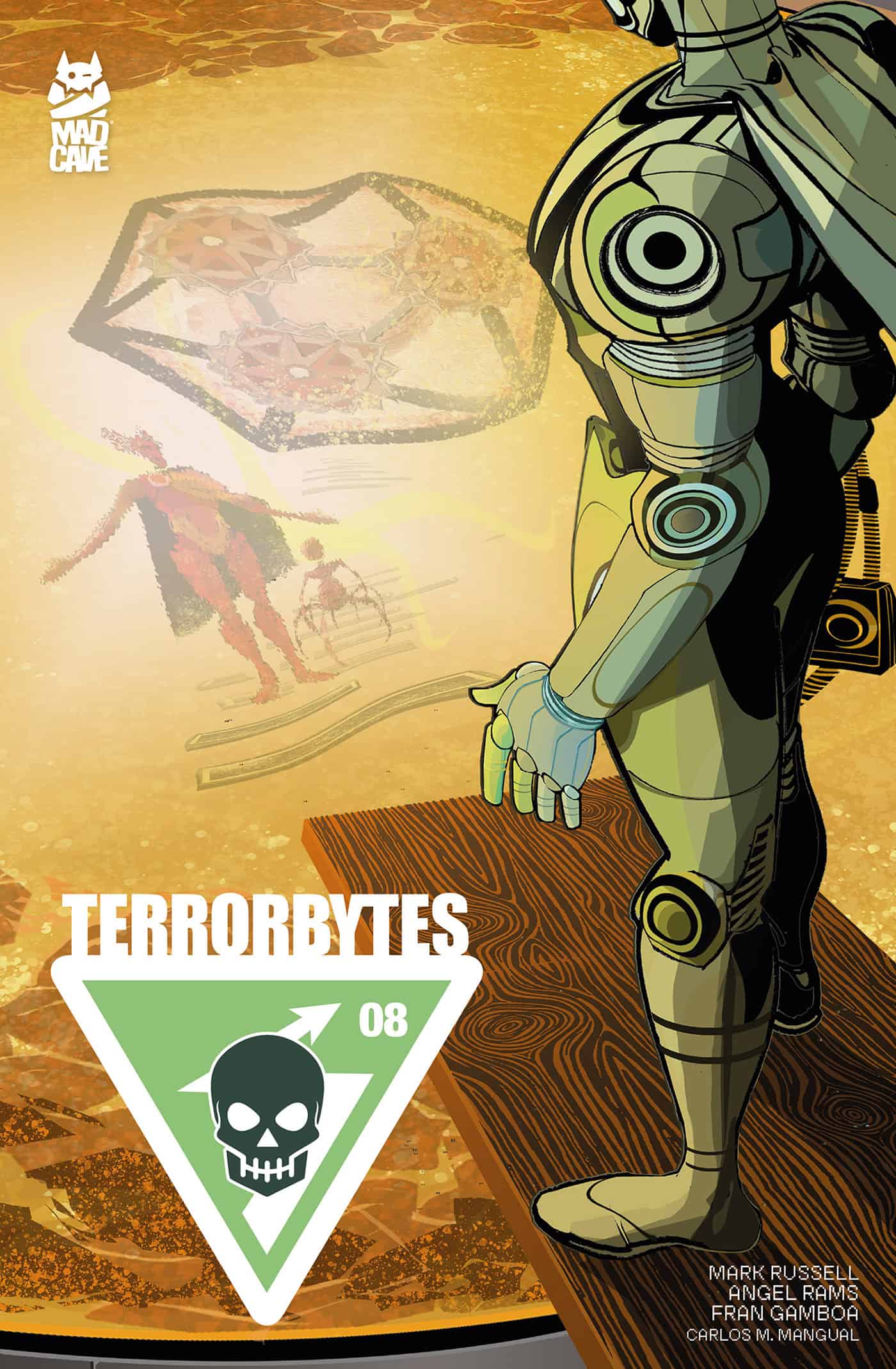

Theron Couch
Recap
On a ruined Earth, the man responsible for humanity’s extinction stands trial—while the truth behind the apocalypse reveals a universe far more terrifying than anyone imagined. As science, greed, and cosmic indifference collide, the final verdict may prove that humanity was never in control to begin with.
Review
Commentary on emerging technology and how humans interact with it is a major component of every Terrorbytes issue. Broad social commentary, especially absent a major technological backdrop, isn’t something the series has engaged in. That is not the case with Terrorbytes #8.
The only Earthbound scientific or technological idea at work in Terrorbytes #8 is that of a “God theory”–a concept apparently tied to string theory that will explain everything about why the universe behaves the way it does. This storyline ties into a late-issue revelation that might be the most unconventional in the series so far. But while this idea is essentially Terrorbytes #8’s plot, it is not what the issue is about.
Terrorbytes #8’s story is largely concerned with the broad dumbing down of society: a president who fires his science advisors when he doesn’t like what they say, a group of people worried that their clothes are surveilling them, the human reliance on unreliable AI, and so forth. Terrorbytes #8 isn’t concerned so much with the technology that humans are developing as it is with the stupidity of the humans who are using it. There isn’t necessarily anything new here, but Russell does a good job depicting the idea.
This commentary also includes some class-based ideas. They tie more directly into the issue’s unconventional ending, though, and aren’t quite as effective as the rest of the issue.
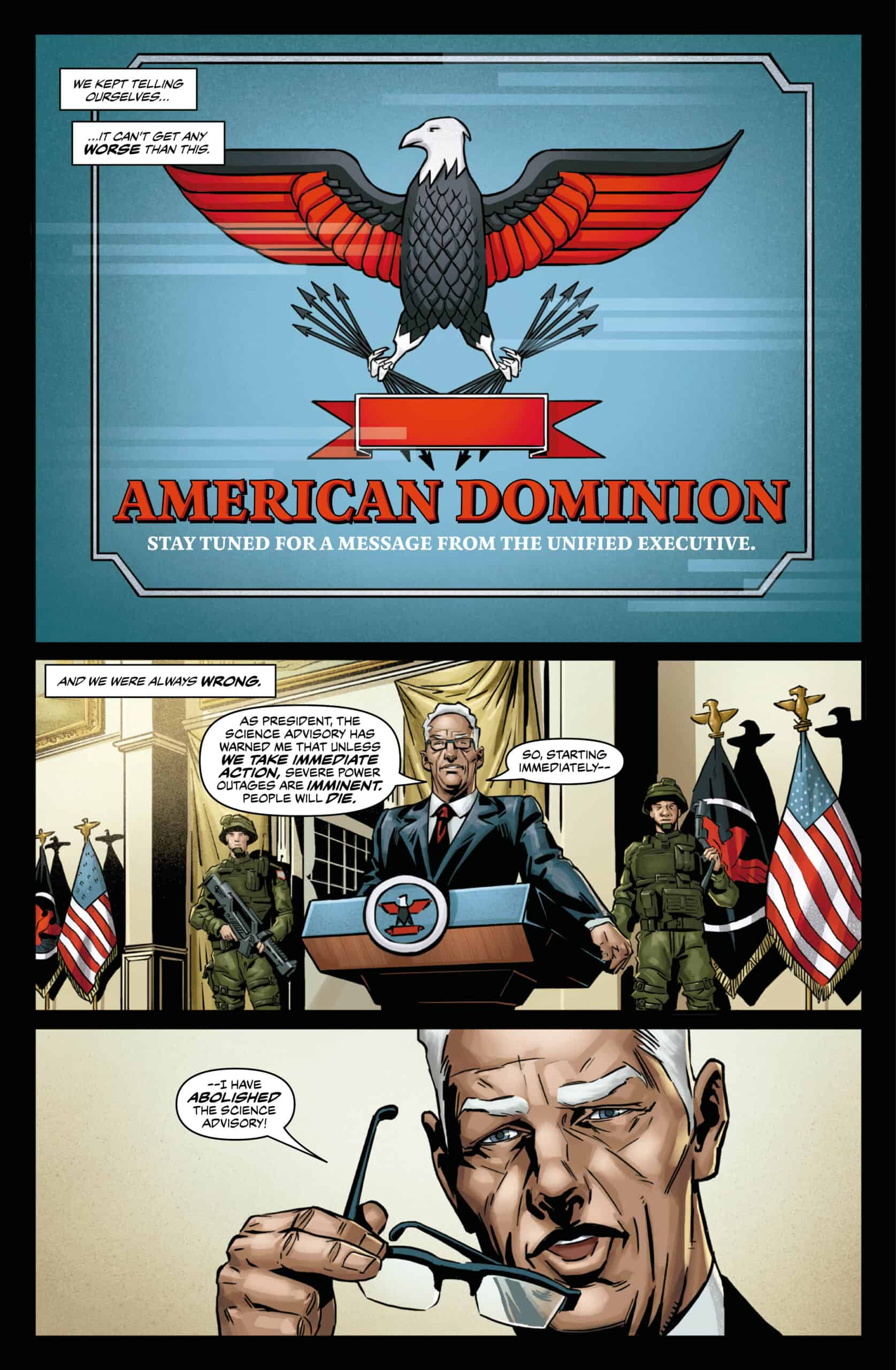 Russell’s script tells its story in broad strokes; even the two characters involved in the limited plot are on panel briefly. Rams’ art bears a lot of the responsibility of communicating emotions in a comic that is extremely low on any interpersonal dialogue. Heavy detail through thicker lines and patches of black shading do a good job delineating features and thus clearly expressing emotions. Rams’ art helps the reader to understand characters who are present only momentarily in a fast moving story.
Rams’ thicker lines and heavy black shading also do a good job creating crisp characters that help with contrast on the pages. Characters who aren’t in the process of any significant movement still stand out nicely on the page.
Gamboa uses an overall vivid color palette. The story has a kind of hyper real quality which this palette plays into nicely. Additionally, the vivid colors blend well with Rams’ thicker lines that already create a nice sense of contrast between elements on the page.
This issue’s story is related by one of the scientists working on the “God theory” question. It’s told almost entirely through caption boxes over the various images of the world they describe. Mangual uses an italicized font for the text in those boxes which is a very effective way to set them apart from all other text in the issue and remind the reader that it’s all connected to the one storyteller.
Final Thoughts
Terrorbytes #8 offers wider commentary than every issue that preceded it. The technology behind that commentary is much more in the background than has been in every entry to this point. Ultimately, though, Terrorbytes #8 is extremely effective in its wider examination of society.
Terrorbytes #8: System Failure
- Writing - 7.5/107.5/10
- Storyline - 8/108/10
- Art - 7.5/107.5/10
- Color - 7/107/10
- Cover Art - 6/106/10