


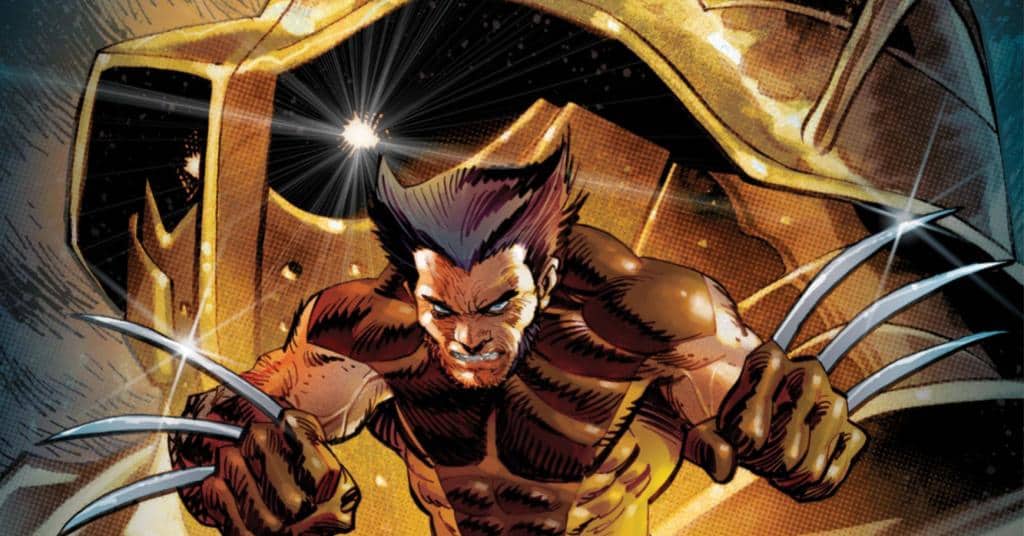
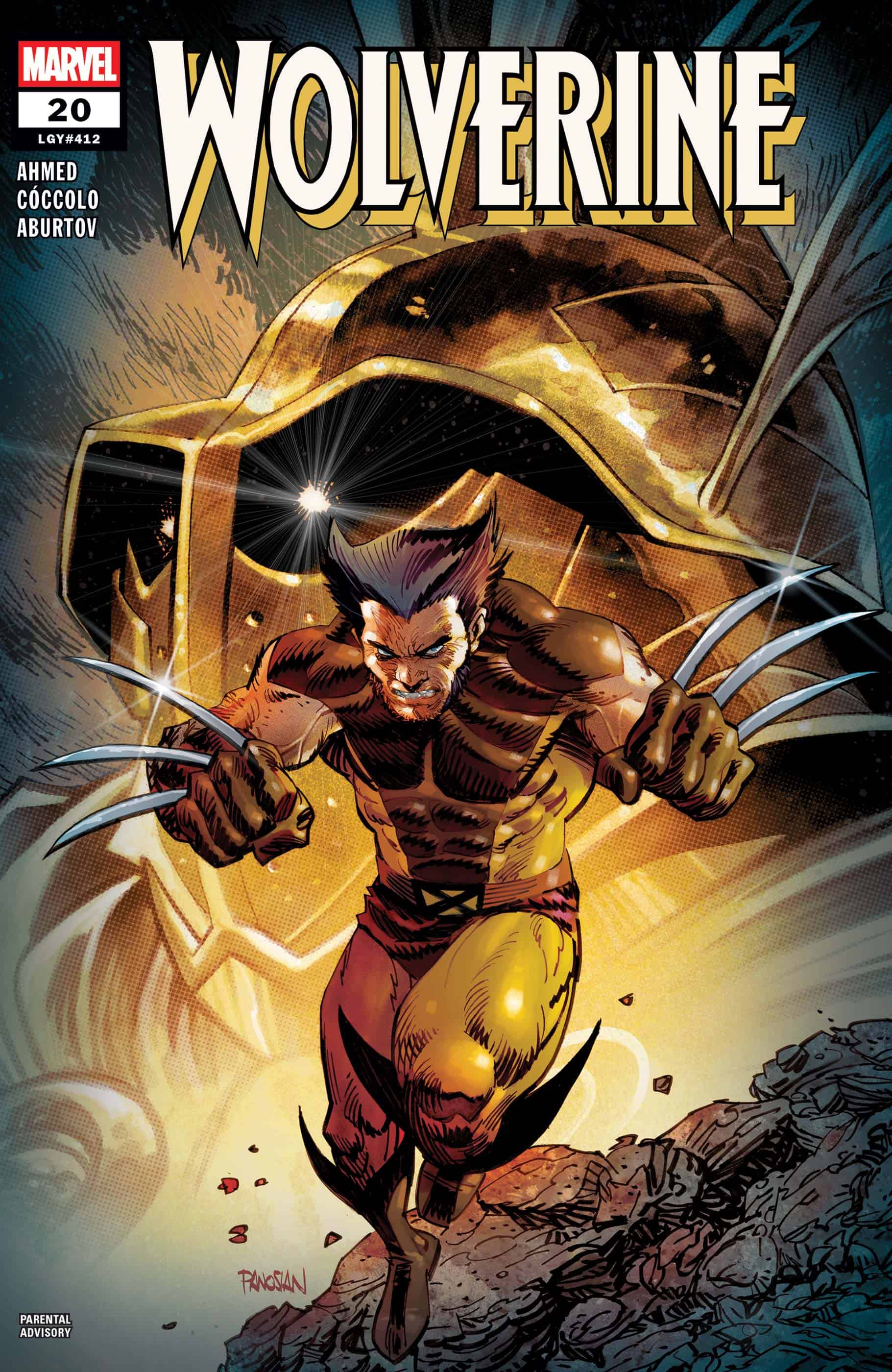
Wolverine (2024) #20

Recap
Tasked by Athena to defeat the Adamantine, Wolverine and Hercules are outmatched. After shattering his claws on the chest of the Adamantine, Wolverine is left broken. With both warriors down, the Adamantine truly seems unstoppable.
Review
Wolverine #20 is a comic that gets its characters right and its plot wrong.
Ahmed’s Wolverine truly feels like a man who has seen it all. Logan is reserved and regretful, in contrast to Benjamin Percy’s audacious and aggressive Wolverine from the previous volume, or Gail Simone’s nostalgic and nurturing Wolverine from the concurrent Uncanny X-Men run. Martin Coccolo draws Wolverine with remarkable expressiveness. The subtle angles and linework, particularly in Wolverine’s eyes, convey every emotion the character feels without the text ever specifying them. In particular, Coccolo’s rendering of Wolverine in the second-to-last panel conveys so much emotion that the scene would work just as well without text. Wolverine is a man with regrets, and this comic really emphasizes that at every opportunity. The art is amplified by Dan Panosian’s expert inks.
The dynamic between Wolverine and Hercules in this issue is one of the highlights. These two characters’ history dates back to the 1979 Marvel UK Comic, At the Sign of the Lion, where Hercules and Wolverine met and fought for the first time. Logan and Hercules have a unique dynamic as warriors, with a love for combat; both heroes hold the other in high regard, viewing each other as inspirations. Both men share a deep sense of honor and nobility, and, for better or worse, a true love for combat. Ahmed writes Hercules with a god-like, benevolent arrogance, charging headfirst into battle with the Adamantine, with no regard for the experimental weapons surrounding them in the previous issue. In a way, Wolverine shares this same arrogance, attacking the Adamantine without much planning or thought. Furthermore, these characters are genuinely friends, and their panels together perfectly capture their relationship.
Ahmed expands Wolverine’s mythos in ways that feel fresh. Since Wolverine’s resurrection in 2018’s Return of Wolverine, Logan has been running errands for the X-Men or defending mutantkind against the prejudice of the Marvel world: extensions of the ongoing X-Men comics. Now, Wolverine is teaming up with Athena to battle the physical embodiment of a godly metal. For the first time in nearly a decade, Wolverine is doing his own thing with his own set of side characters. Silver Sable, while not originally a Wolverine character, is a great addition to Logan’s supporting cast: her mercenary background blends perfectly with Wolverine’s preestablished history. Ahmed highlights how similar these two characters are, despite this run being their first major interaction across the entirety of Marvel canon. One of Wolverine’s most interesting love dynamics was essentially created out of nothing. Finally, after years of operating as an X-Men solo book, Wolverine is restored to being his own character with his own problems.
However, Ahmed’s run for Wolverine is not perfect. The biggest flaw in this storyline is the main villain, The Adamantine. The Adamantine is motivated by two things: a love for combat and a hatred for “false metal.” The former motivation is shared by nearly every Greek mythology-based villain ever and feels very unoriginal. The latter motivation is much more interesting: the Adamantine hates adamantium for stealing its name and being a man-made recreation of itself. However, Wolverine already has a villain who hates him for his adamantium: Lady Deathstrike. Yuriko, who appeared earlier in Ahmed’s run as a puppet of the Adamantine, despises Wolverine for undergoing the Adamantium bonding procedure created by her father. The Adamantine shares a similar motivation to a character with a long-running history with the protagonist, making the original villain feel strangely recycled; there is very little that the Adamantine can say that hasn’t been said before.
This comic is advertised as the culmination of the past twenty issues of this series. While the emotional moments feel satisfying, the storyline itself feels anticlimactic. The combat between Hercules, Wolverine, and the Adamantine isn’t very dynamic. For a fight “a century in the making,” the characters just toss each other around for a couple of panels. The continued setting of an experimental weapons facility isn’t of any real significance to any of these characters, outside of just artificially raising the stakes of the conflict. Furthermore, this comic includes a literal deus ex machina that doesn’t feel satisfying at all. While this book does pull prophetic threads established in the previous issue, these plot points are loose and don’t add anything of value to the storyline itself. A cool concept that lacks meaningful substance and ultimately feels unearned.
Final Thoughts
This comic storyline feels like a myth pulled straight from Greek mythology. The art alone makes this book worth picking up. The comic is at its best when it's quieter, more emotion-focused: these moments pair Ahmed’s character work with Coccolo’s art in a way that feels refreshing. Like the myths it emulates, the comic is more memorable for its heroes rather than its resolution.
Wolverine #20: A Modern Greek Myth in Every Sense
- Writing - 8/108/10
- Storyline - 5/105/10
- Art - 9/109/10
- Color - 8.5/108.5/10
- Cover Art - 6/106/10