


Wonder Man #1

Recap
LIGHTS, CAMERA, SUPER-HERO ACTION!
SIMON WILLIAMS has had his ups and down, from being manipulated into villainy by the Enchantress, to being one of the brightest stars in the Avengers! But just like HOLLYWOOD, no matter how low the lows, Simon keeps fighting the good fight! But what happens when the past finally catches up to him? Enter Randolph Chancellor: Simon's former cellmate!
More Marvel heroes coverage from Comic Watch:
Fantastic Four #9: Detailed Invisibility
Review
Wonder Man #1 is a comic with two distinct tones. The barebones plot centers around Simon’s (Wonder Man’s) friend and former cellmate, Randolph, getting in trouble in Hollywood and needing help. It quickly morphs into a strange sequence of events where he’s accused of stealing thirteen million dollars and being hunted by Hellcat.
This plot is almost inconsequential in Wonder Man #1, though. The first issue comes across as more about offbeat dialogue and occurrences than anything else. Simon accuses Randomplh of stealing his car to which Randolph says he borrowed the car and it was stolen from him. Later, when Hellcat accuses Randolph of the thirteen million dollar theft, his response is that he “didn’t steal a car or thirteen million, or sleep with the Duchess or Birmingham or do any of the naughty things that the press say I did.” At one point Killerwatt, who really has nothing to do with the larger story, joins Simon at a taco truck with his agent. And throughout the issue, Duggan reinforces that Simon’s career is on the rocks–people don’t even want his autograph at comic book stores.
Simon’s inner monologue is the most interesting component in Wonder Man #1. It’s by far the most compelling element here, balancing the issue’s overall offbeat tone with more serious qualities, especially as they relate to Simon’s past and his current predicaments.
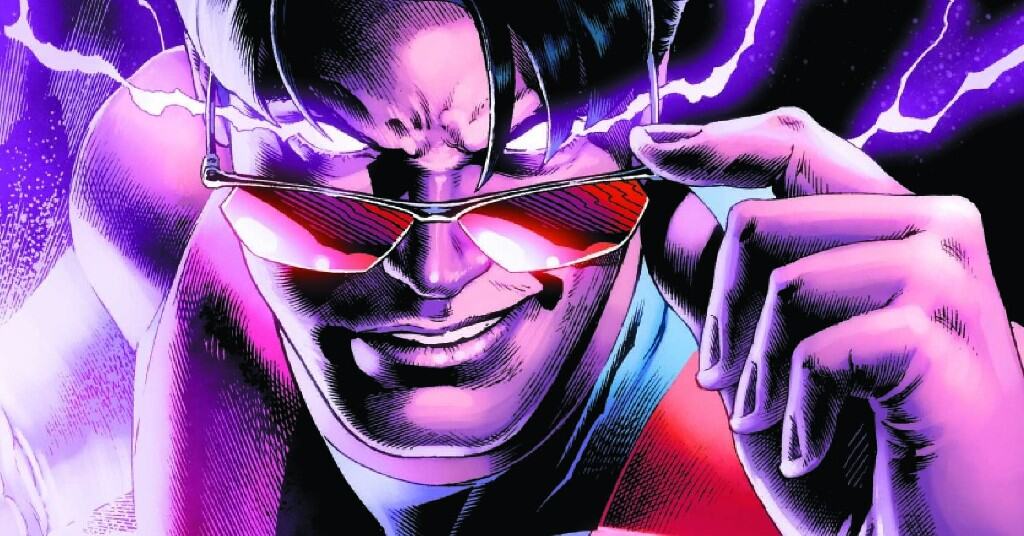
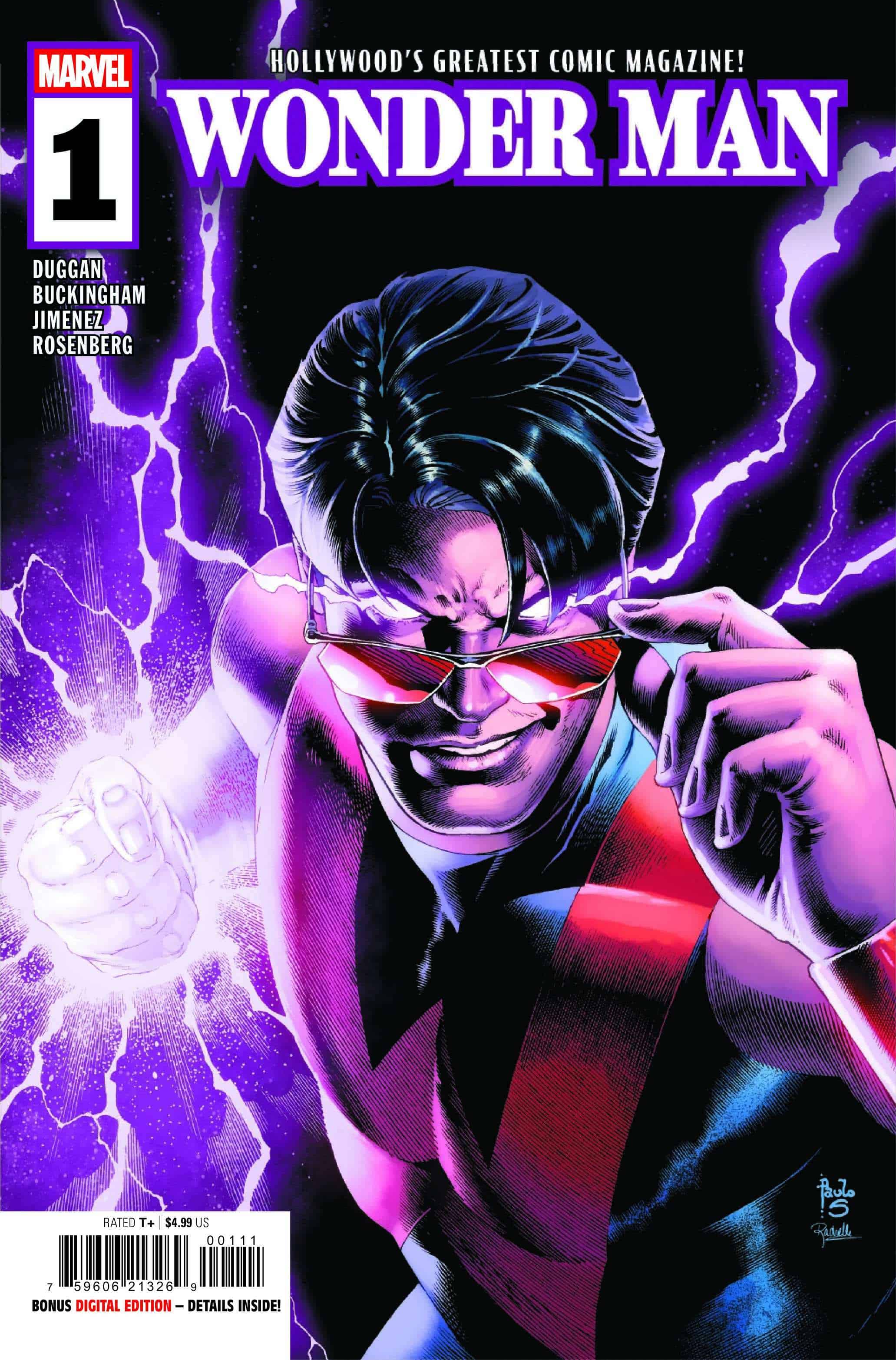
Buckingham and Jimenez’s Simon Wiliams is a very expressive character. Liberal linework in specific places give their Simon the appearance of full cheeks and a wide jaw. Simon’s eyes are covered by his red glasses, but his forehead is expressive. This level of detail in similar places is common on most male characters. Simon has the greatest range by far, though, and it effectively keeps him visually centered as the main character even when he is in closeups with other characters. Hellcat’s features are softer but not totally absent of detail as is sometimes the case with female characters. A few lines also establish a general face structure.
The page design is creative. Page borders in the flashback sequences have the look of classic film edge. The modern day has a similar look.
Rosenberg uses a vivid color palette overall which is a good complement for the heavier outlines of characters and objects, helping them pop. The flashback sequences are softened, clearly separating them from present day sequences. Nothing pops off the page during the flashbacks, but the overall sequences are distinct.
The red Caramagna uses for the caption boxes of Simon’s internal monologue works well in the present day sequences. It also matches the W on Simon’s costume. The red gets lost somewhat in the softer colored flashback sequences, though, especially against the backgrounds that are a faded brown and sepia.
Final Thoughts
Wonder Man #1 is a curious issue. There are serious elements at play, but they are tucked inside a lot of very offbeat moments. The issue ends with a lot of promise, but Duggan will have to blend the issue’s various facets better.
Wonder Man #1: A Two-Toned Start
- Writing - 6.5/106.5/10
- Storyline - 6.5/106.5/10
- Art - 7/107/10
- Color - 7/107/10
- Cover Art - 7.5/107.5/10