


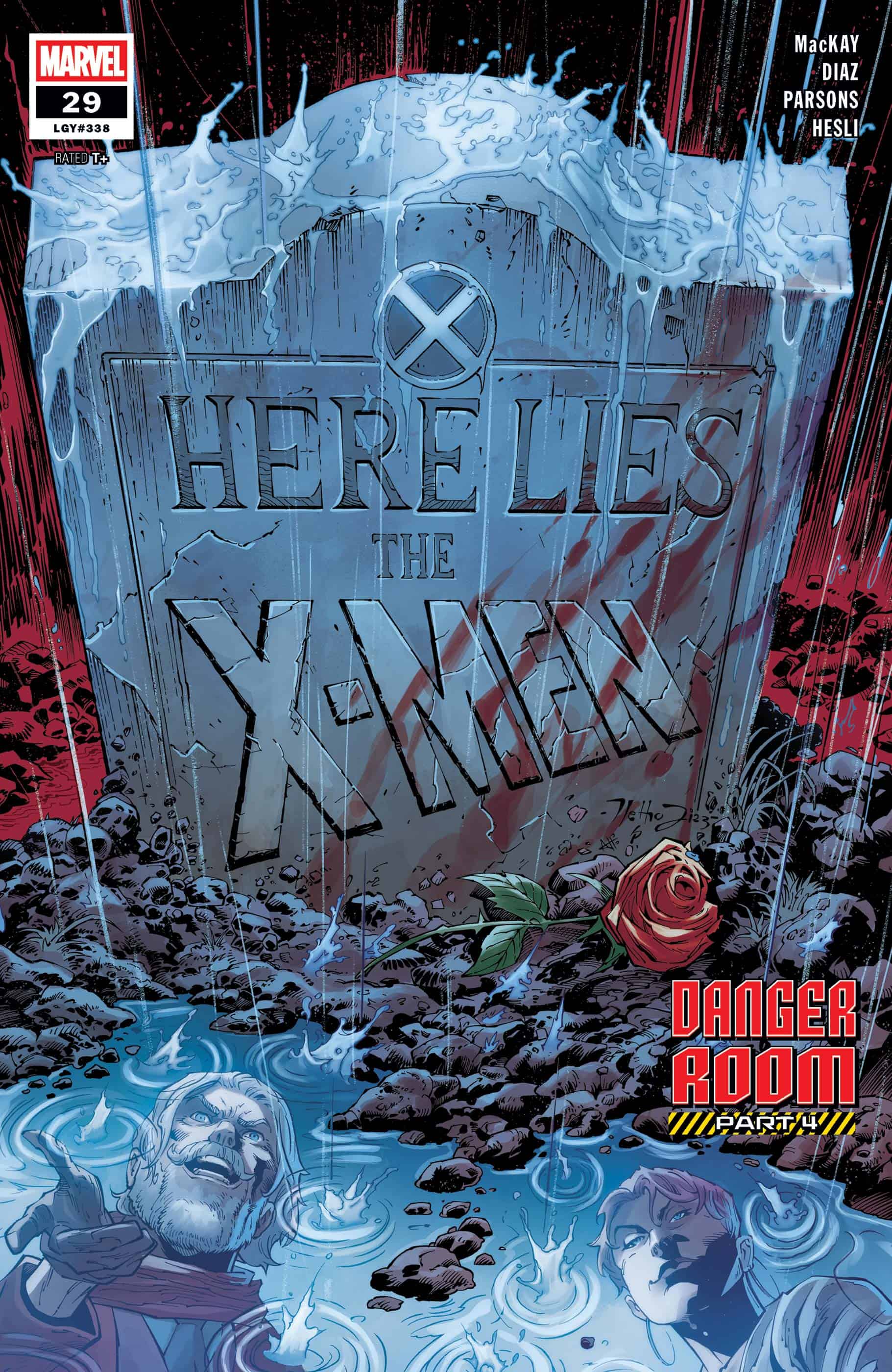
X-Men #29

Recap
The X-Men have been lured into various traps, including a hostile danger room in the form of a robotic ship. What’s more, the lovable Glob Herman has been shot, and Kid Omega is ready to tear apart the town of Merle, Alaska, to find the shooter.
Review
X-Men #29 continues the Danger Room storyline that’s been running since issue #26 back in March. Having gotten two issues in March, this story has had a lot of space to do something… anything. And as of yet, it hasn’t.
Warning: Various spoilers for X-Men #29 below.
Psylocke played only a small role in April’s X-Men #28 despite being the featured character on its Cover A. She was last seen, alongside John Greycrow and Xorn, using one of her signature psychic knives, or psi-blades, to retrieve the X-Men’s whereabouts from the mind of a Danger Room henchman. This naturally set up this issue to be some sort of rescue mission with Psylocke at the center of it.
Instead, we get several pages of Psylocke more or less walking back and forth while planning her next move. This only serves to continue extending the story without ever delivering the story itself. Before Psylocke determines her plan, we get a short scene with her and Xorn talking about their own powers in relation to one another as they dodge laser attacks on the Marauder. This is rather silly and only fills page space without adding anything to their character dynamic. To the reader, it would seem as if these two were just thrown together because the rest of the roster was busy and they needed something to do.
A large portion of the issue also takes time to focus on Kid Omega and his quest for revenge after Glob Herman was shot last issue. Omega himself just comes across as annoying in this issue, walking into town and threatening people who clearly have no idea what he is on about. Loose cannon type characters are supposed to blow up the narrative and open new plot threads, not disrupt the flow of a storyline for a B-story. Temper reads as Omega’s sidekick, and it damages her character quite a bit.
As for the plot of the issue itself, nothing really happens. The characters move around a little, some of them at least, as more than a handful are simply completely absent for the entire issue, like Cyclops and Magik. Instead we get facsimiles of these characters in the form of artificial reality X-Men. The reveal that the all-new, not very different danger room is a kind of living entity ends up being very derivative of the “Dangerous” story arc from Astonishing X-Men Volume 3 (2004-2013).
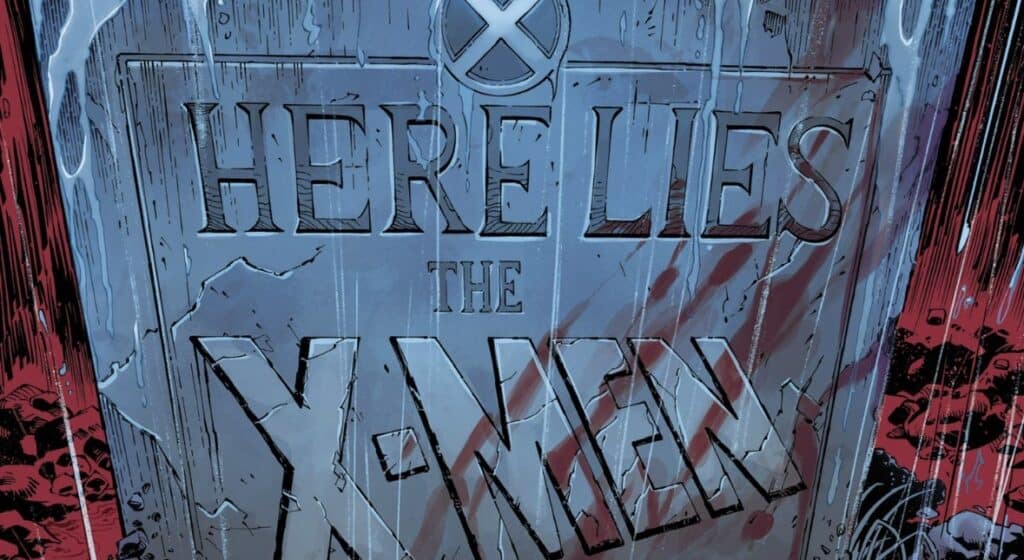
The art is smooth and well detailed, which makes an otherwise milquetoast issue easier to digest. It’s a much-needed strength of the issue itself, as the art does most of the heavy lifting. Characters move a lot and do very little, which is a symptom of the less than exceptional writing, but in that time Netho Diaz and Sean Parsons give a lot of attention to character motion in a way that reads as dynamic to the scene. Psylocke, for instance, who plays a central role in the issue, doesn’t just jump from point A to B; instead, she is repositioned several times across a handful of panels that gives the pacing of the issue a lot more continuity.
Final Thoughts
By the last page, X-Men #29, and honestly, the whole Danger Room story arc so far has felt like, at best, amateur fan fiction inspired by older X-Men storylines. There is a hint of substance to the writing; some scenes try to set up a meaningful narrative, but none of it ever comes together into something that the reader is actually supposed to care about. It is saying the same thing as any X-Men story about being the outcasts, but in a way that lacks the nuance that has defined X-Men in the past.
X-Men #29: Artificial Reality
- Writing - 6.5/106.5/10
- Storyline - 5.5/105.5/10
- Art - 8/108/10
- Color - 8/108/10
- Cover Art - 8/108/10