


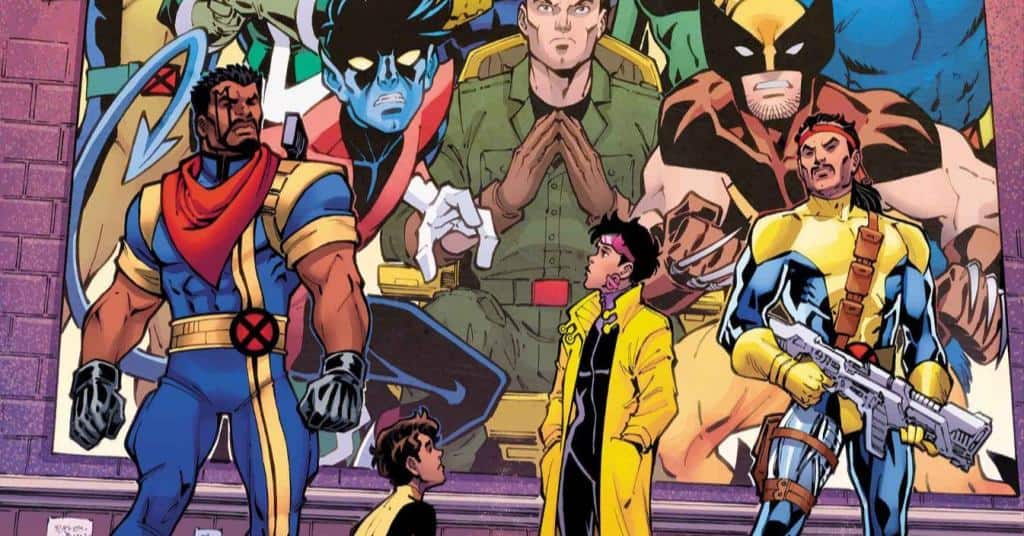
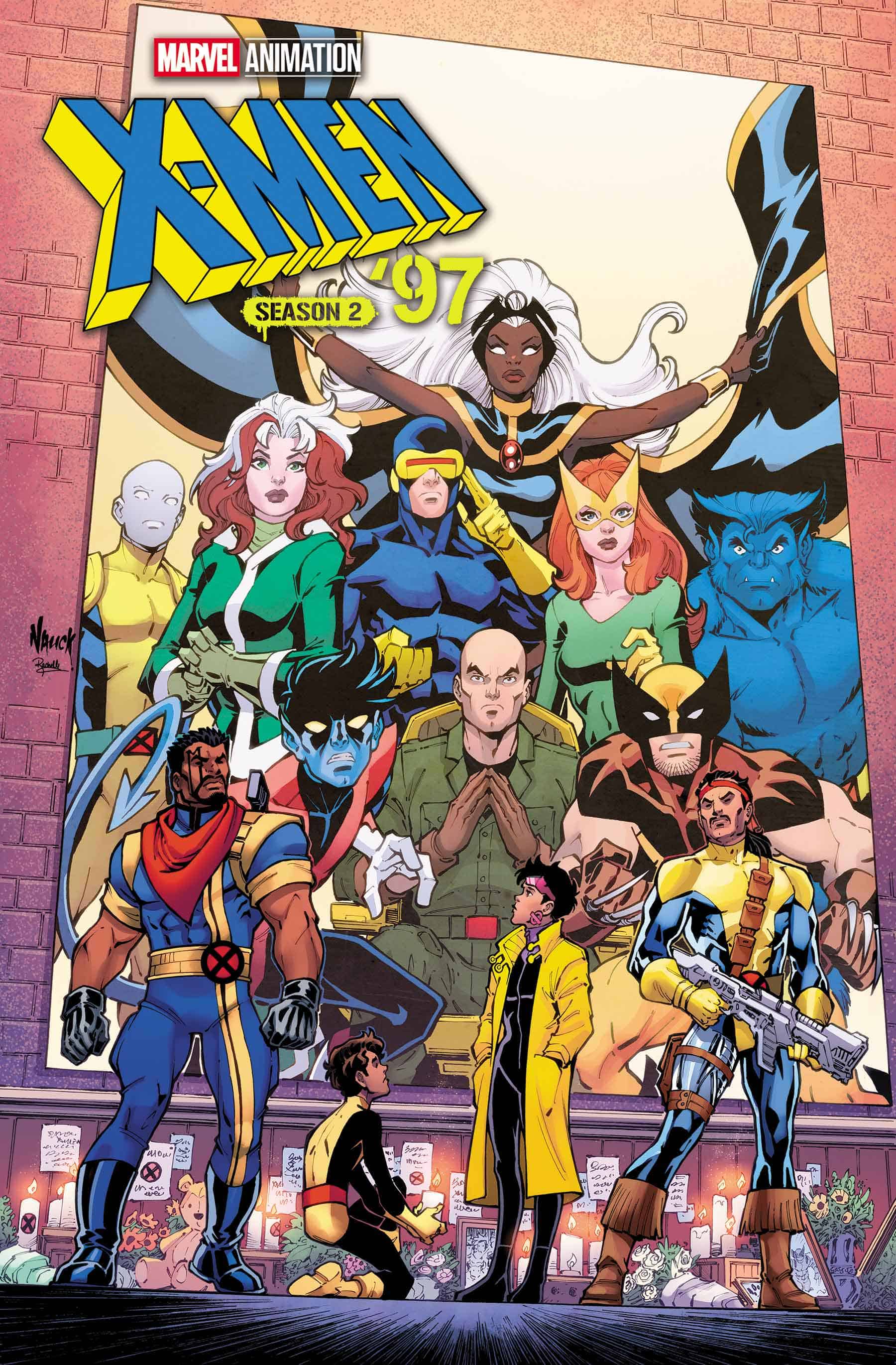
X-Men '97: Season Two (2026) #1

Recap
After defeating Bastion and Magneto on Asteroid M, the X-Men are scattered across time! With the world’s premiere mutant superhero team gone, it’s up to Bishop, Forge, and Jubilee to try and bring the X-Men back to the 1990s.
Review
TV and movie tie-in comics often struggle with feeling significant. The property that the comic is tied to will draw in millions of viewers; the comic will only draw in thousands (Deadline reported that X-Men 97 premiered with 4 million viewers; the highest selling comic of 2025, Deadpool/Batman #1, only sold around 500,000 units). Therefore, the comic must only be supplemental and not essential because most viewers will never read it. Steve Foxe manages to get around this by making this story purposely a sideshow. In the first few pages, the issue brands itself as “Background noise,” a strategy that ensures the comic only adds value without becoming necessary.
Following the remaining X-Men, Foxe shows how the world operates without the titular superhero team. The reader explores how the mutant population reacts to the aftermath of E-Day (Extinction Day). Foxe explores a lower-stakes perspective that the show rarely has time to sit with. This B-Plot feeling adds greater world-building to X-Men ‘97 universe, making an already fleshed-out world feel even more lived-in.
The biggest struggle with this comic is that it doesn’t really know its audience. Because the events in this comic series cannot majorly impact the plot of Season Two, this comic is stuck introducing a bunch of side characters. While many of these side characters are recognizable X-Men, many are not. All of the heroes receive introductions, with their names plastered on the panel next to them on the page. The villains receive no such treatment. Some of these villains are deep cuts from the comics. Only the most die-hard of X-Men fans will recognize some of these characters. The reader either knows who they are or they’ve never heard of them. However, these comics often serve as a bridge between casual show watchers and the comic book realm: a viewer might feel lost looking at characters with only nine references on the Marvel Fandom Wiki (as of 6/3/2026). Even just a name next to these characters could make the comic more accessible to new readers.
Salva Espín’s art is a solid translation of the X-Men ‘97 art style to comic form. The action feels cartoonish and weightless, but in a way that lends to the style of the show. These characters feel like cartoon superheroes swinging at each other in a cartoon world (which is what they are). Espín excels at drawing the less human-looking mutants. The characters who lend their appearance more for a comic medium are visually exciting and dynamic. While the human characters are fine, sometimes the faces look a little too-cartoonish, departing sharply from the X-Men ‘97 style.
Final Thoughts
X-Men '97: Season Two #1 is an intentionally irrelevant story that serves to expand the world of X-Men ‘97. For diehard fans of the X-Men franchise, this is absolutely necessary; for those who just watch the shows and movies and read their favorite characters, it’s skippable.
X-Men ’97: Season Two #1: An Exciting Prelude
- Writing - 6/106/10
- Storyline - 6/106/10
- Art - 7/107/10
- Color - 7/107/10
- Cover Art - 6/106/10