Cyclops #2:

Jamison Nilsson
Recap
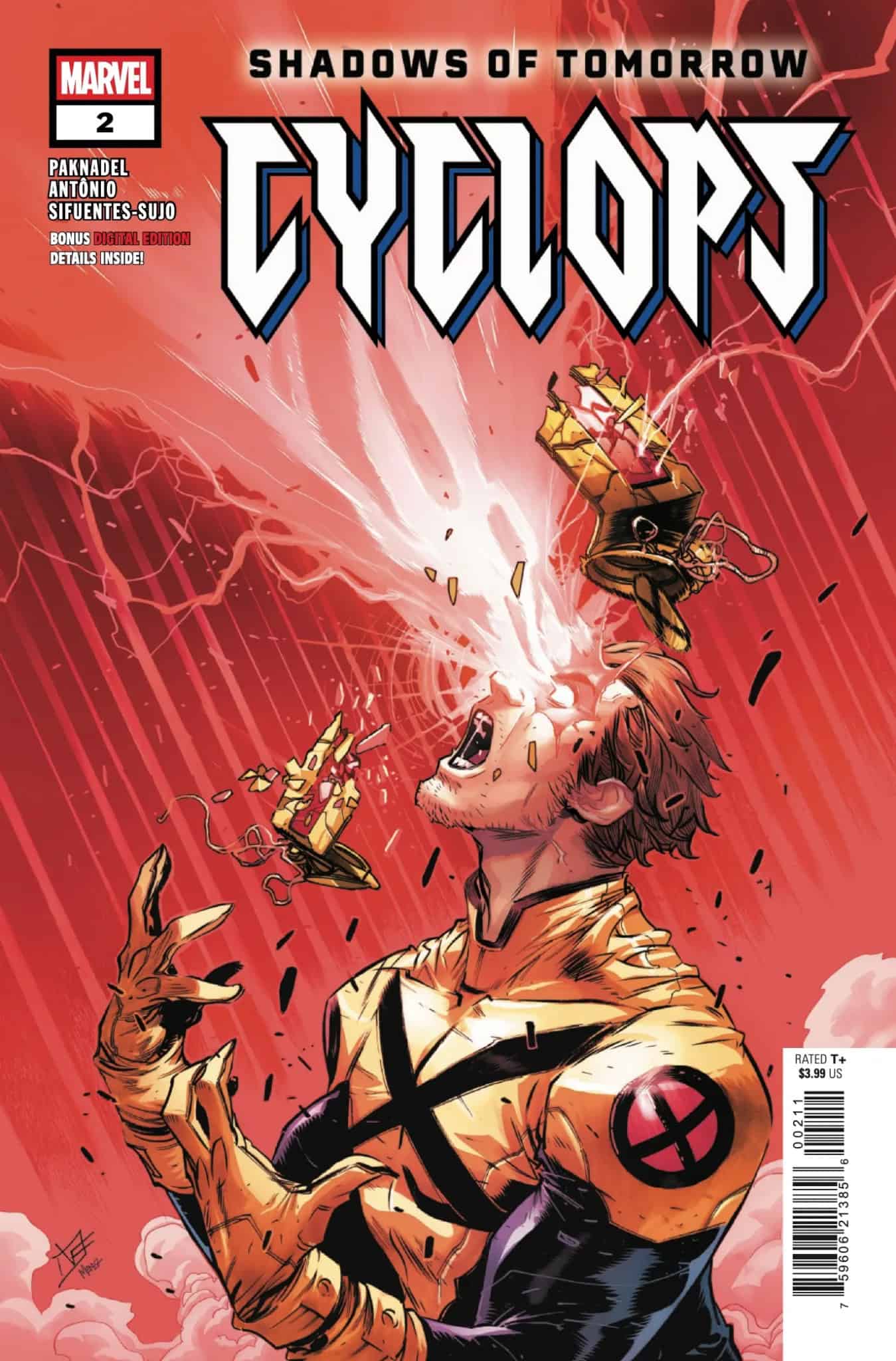
The X-Men Quinjet goes down over British Columbia and Cyclops’ visor cracks in the crash leaving him sightless and lost.
More recent X-Men coverage from Comic Watch:
Review
Cyclops has been many things to many characters, both mutant and human, in Marvel comics. For the most part, he represents responsible mutant leadership and liberty in just one of countless hostile ages for their kind. Cyclops himself has been at the mercy of the hostility, as Alex Paknadel tried to reinforce in February’s Cyclops #1, which saw Cyclops revisit the Essex State Home For Foundlings, where trauma and experimentation shaped the X-Men’s leader as readers know and love him today.
However, despite his decades-long role as the responsible leader, Cyclops is a deeply flawed character. He’s rigid, untrusting, and more than a bit skeptical when it comes to the possibility of long-term solutions. All of this combined with his character history makes Cyclops who he is. Not quite the boy scout like Captain America, but a short-sighted and psychologically guarded savior in a world all too ready to take advantage of his flaws.
And that’s just what he is to the young girl Mei, who needs his help, whose friends need his help, a blind fallen angel. In more ways than one. The X-Men have their code, but that kind of mutant morality does not apply to all mutants of the modern age.
Mei is immediately characterized by the dialogue between her and Cyclops. She makes little off-handed remarks about the men who’d see her dead before ever seeing her set free, pushes back against Cyclops’ “I’m the leader, follow me” attitude, and her mutant super strength fluctuates with her emotions. A simple agitating moment gets the better of her at the cost of a nearby tree while she shows a gentler side to a harmless forest animal. Seeing a brand new character at two opposite extremes, even for just a little while, immediately creates a sense of personality and connection for the reader to latch onto, which often enhances the impact of any storyline involving that character, big or small.
Mei’s contempt for Pierce’s Reavers and her desire to save her friends come out in a way that accentuates the growing post-Krakoan ideology across recent X-Men titles. Her entire situation, the vulnerability that led to her original capture by the Reavers, is connected back to Krakoa. Her personal expectations of Cyclops as a liberator come from the image that was cultivated during Krakoa’s rise and fall, when Scott was the leading military officer of an armed mutant nation.
It’s when Cyclops refuses to leap into action right away that Mei’s preconception of Cyclops gets challenged. He wants to regroup and reassess, like a strategist. But Mei is worried about her friends’ safety and isn’t looking for a general; she’s looking for a warrior, a savior.
But now for a bit about our villains. In Cyclops #2, Donald Pierce is written with a believable level of intelligence. Surmising Cyclops’ current condition by his actions, or rather his inaction, is great character work on a mad genius archetype by Alex Paknadel. The personalities of Donald’s reavers are also quite colorful and get showcased without wasting page time or slowing pace. “Endzone” talks in sports metaphors, and “Tearjerker” flies from one extreme to another, between begging for a second chance to impress the boss and committing atrocities without hesitation.
Rogê Antônio’s artistic sensibilities can be best described as brutal and raw, which creates an “in-the-moment” look perfect for the kind of wilderness survival story that Paknadel’s Cyclops is shaping up to be. Motion and page layout work together like old partners; every movement steps from one panel to the next and highlights the issue’s pacing when fight scenes take dangerous turns. There is plenty of variety as well; Antônio seems to resist settling into a formula, which makes every page feel unique as different panel layouts are used to reflect the climatic tension of different scenes. Linework is also sharp, albeit a bit blurred when it comes to the intense action scenes where characters grapple with one another for survival.
The colors by Fer Sifuentes-Sujo are highly energetic, charging the pace of the story. This can be seen with each beam of sunlight falling through the canopy of trees that add natural lighting to the scene, or the subtle glow of Cyclops’s eyes through his blindfold that threaten, at any moment, to turn this into a wholly different kind of story.
Final Thoughts
Cyclops #2 is an incredibly genuine issue that reads like a celebration of the entire creative team to the reader. As the second issue in a five-part limited series, it sets up the stakes and establishes the characters clearly without needless filler or fluff to bloat page count. The writing is sharp, and the art is detailed, with no glaring weaknesses or oversights that might otherwise lessen the impact of this story.
Cyclops #2: A Blind Fallen Angel
- Writing - 9.5/109.5/10
- Storyline - 9.5/109.5/10
- Art - 9/109/10
- Color - 9/109/10
- Cover Art - 10/1010/10