Doomquest #1
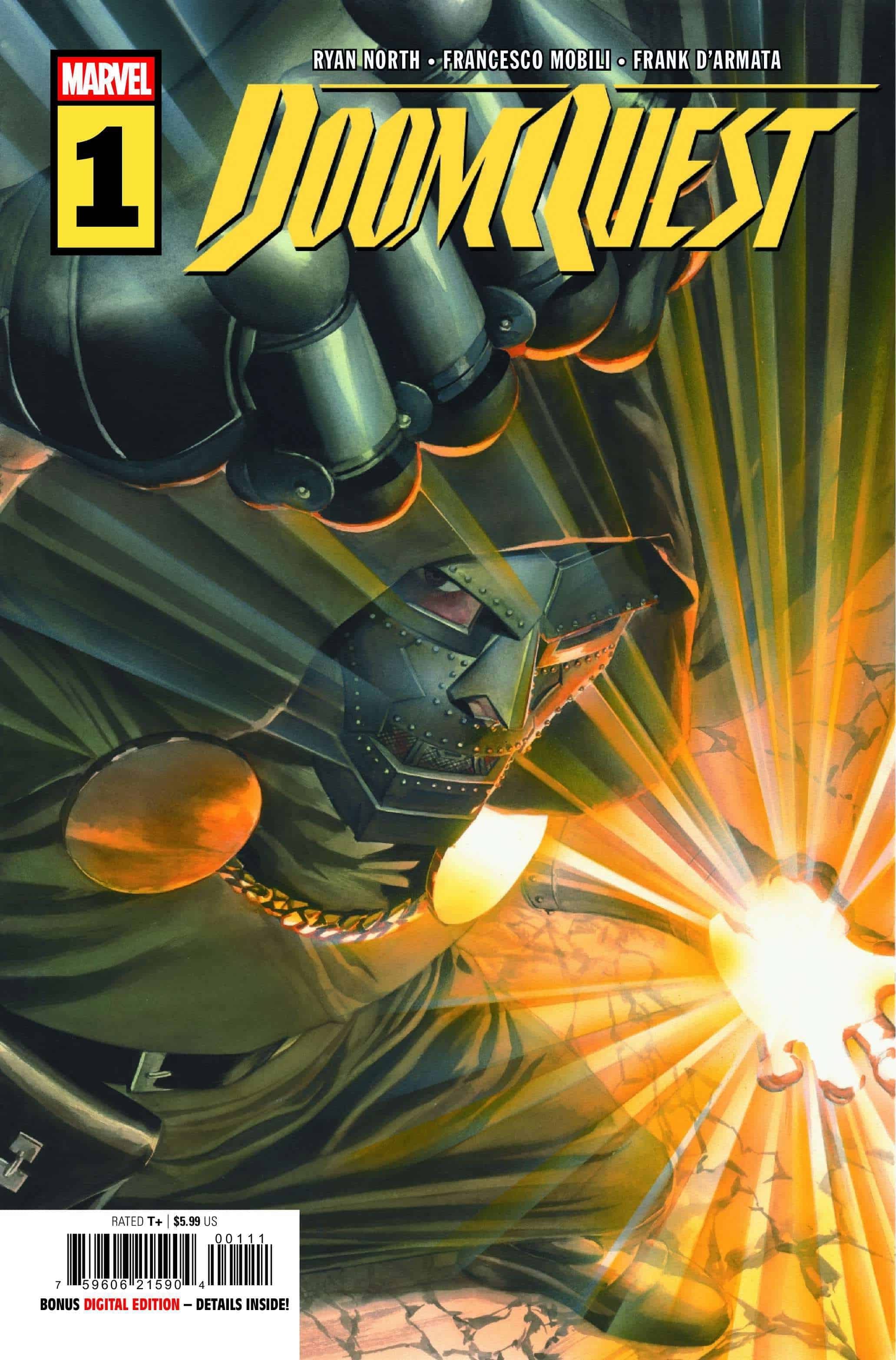

Theron Couch
Recap
Doctor Victor Von Doom is a great scientist, an unparalleled sorcerer, and the ruler of his own nation. He is, by any measure, a great man. And yet Doom wants more. And when Reed Richards — Mister Fantastic, his greatest enemy and eternal rival — is showcased at a prestigious international event to which Doom wasn't even invited, Doom is outraged.
Reed shares his plan for his eventual retirement project: the total optimization of history. He intends to go back in time, to all the eras humanity wasted on war and conflict, and fix them, saving trillions of lives and ensuring humanity can achieve its greatest and final glory. The idea of Reed rewriting history in his own image is, of course, antithetical to Doom, and so he decides to do it before Reed does. But when the Fantastic Four intervene, Doom finds himself in a battle he never intended — across all of time and space!
Review
It’s not surprising that Doom’s latest venture stems from jealousy of and competition with Reed Richards. In that way Doomquest #1 feels like a very classic Doom story from the start. There is the typical theme of Doom wanting to elevate Latveria as an example of his own superiority. And a nice bit of pettiness.
Doomquest #1’s story sits on the concept of an enlightened humanity using time travel to make the past more peaceful and eliminate deaths and destruction caused by humans’ aggression toward each other. This is Richards’ idea, so naturally Doom decides he needs to do it first. The story naturally sets Doom up as the villain even though he is the protagonist. But it’s hard not to view both sides as equally arrogant (no matter how much Reed argues that this is something that should only be done when humanity is at peace with itself). As a result, the built-in view of Doom as a villain is tempered–especially with the revelation on the final two pages.
Key to Doomquest #1’s story is that it is utterly divorced from the events of One World Under Doom. Readers can come at the series without worrying that it is freighted with story elements depending on other comics they might have missed.
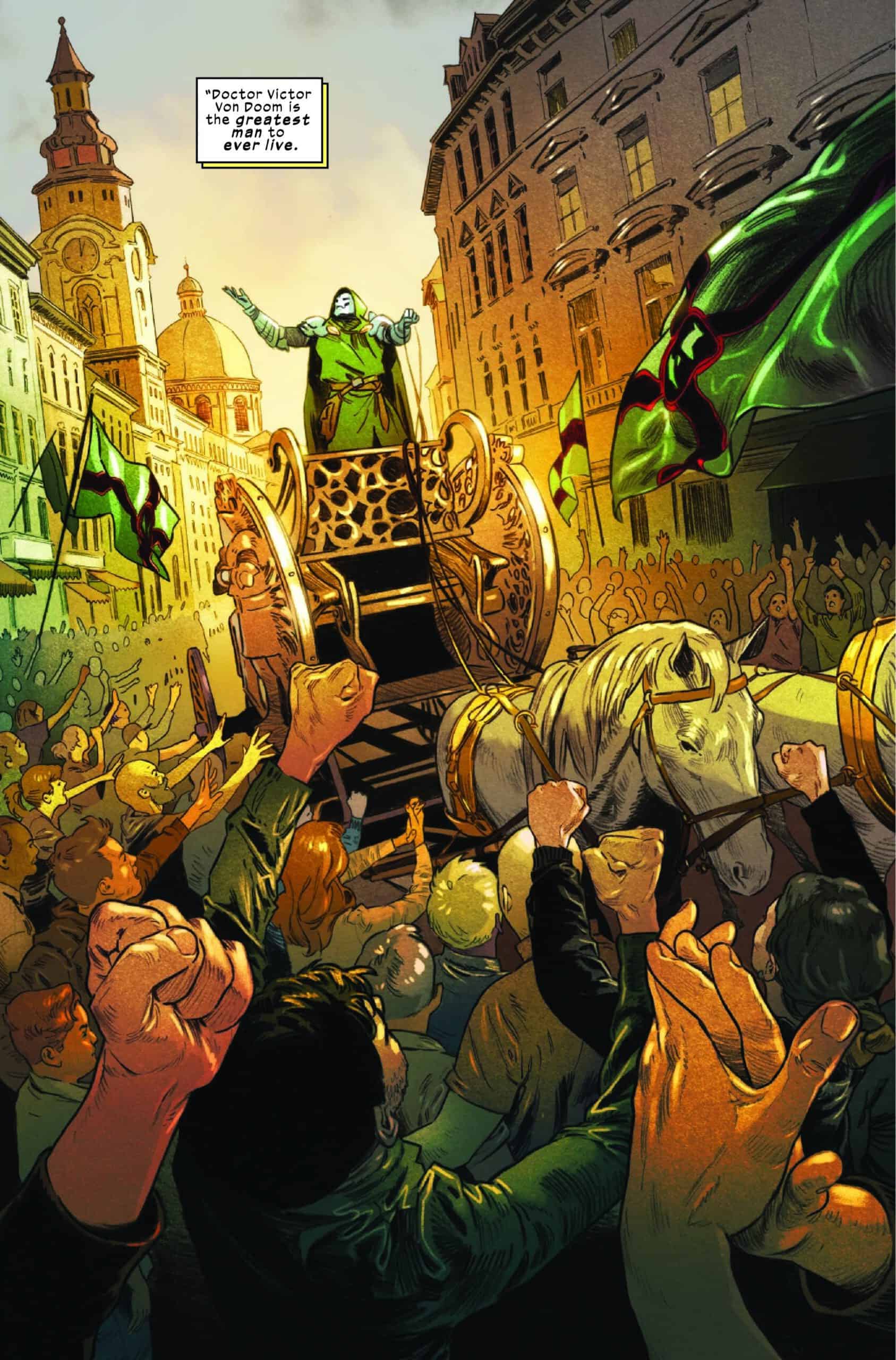 Doom has a classic look but is not always the most expressive character. Artists only have his eyes to play with. Mobili does a very good job on this front. Doom’s eyes always track toward whatever is happening in the panel. Shading from the mask covers them partly when he looks down relative to the panel’s point of view. His eyes widen or narrow depending on his attitude. There is a sense of emoting that helps connect Doom as a protagonist even though he never has a face to see.
Characters who are unmasked benefit from considerably more detail of course, and they are very expressive. Reed Richards especially, when discussing his thoughts on improving the past, is very emotive. In that way he is engaging in a way that Doom can’t be. However, because Mobili is so successful with what little he has to work with on Doom, he doesn’t feel overshadowed.
The coloring in Doomquest #1 is rich with a good level of contrast. This is especially the case with Doom where his green cape is constantly standing out against other color choices in panels.
D’Armata and Mobili’s work gels very nicely throughout the issue. Mobili uses a lot of subtle and graded shading that blends well with D’Armata’s careful attention to color shading in response to implied light sources. The result is engaging visuals during the slower sequences as well as action oriented ones.
Lanham augments Doomquest #1’s action sequences with very energetic sound effects. North uses them in great numbers during the issue’s second half, and Lanham realizes them in a variety of fonts, colors, and shapes.
Final Thoughts
Doomquest #1 is a fun first issue. It’s very Doctor Doom. After the big action of One World Under Doom and its heavy themes, it’s fun to simply play Doom in a more recognizable way with his smaller, standard arrogance and pettiness. The creative team delivers a solid first issue, and Doomquest #1 kicks off a creative series with a lot of promise.
Doomquest #1: Classic Doom Arrogance
- Writing - 8.5/108.5/10
- Storyline - 8/108/10
- Art - 8/108/10
- Color - 8/108/10
- Cover Art - 6.5/106.5/10