Poison Ivy #49
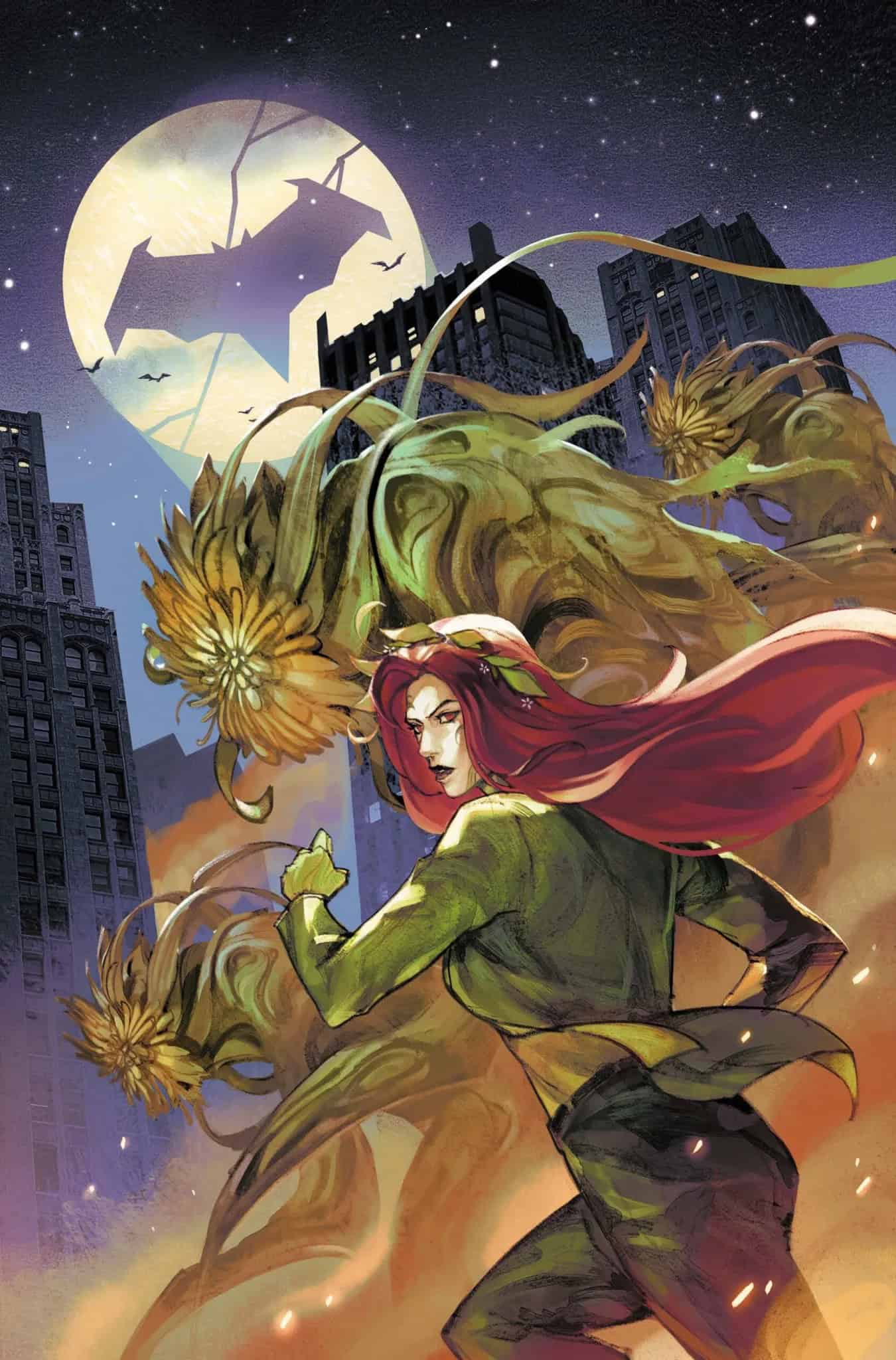

Theron Couch
Recap
NOWHERE TO RUN! Things seemed pretty good for Pamela Isley for a time there. Too bad the tables have turned. Now Poison Ivy finds herself stripped of all her power and trapped in a city where she's public enemy number one . Can she make it out of Gotham alive, or is this the end for her once and for all? Find out in the penultimate chapter of the Bad Seeds saga!
Review
Poison Ivy #49 covers a lot of ground. Ivy’s search for Harley, continuing from the end of the previous issue, is the main driving force. But along the way Ivy confronts the Parliament of Trees once again, this time with even more shocking results. And finally, the story comes to a head hot on the heels of the events of Detective Comics #1114 and just prior to the events of Batman Bad Seeds Sunrise #1, serving as a bridge between the two issues.
Wilson begins Poison Ivy #49 on the same emotional note that the previous issue went out on: Ivy’s desire to find Harley before the end. She opens with Ivy’s past decision to sever ties with Harley in favor of trying to move her agenda forward as mayor. These opening two pages are a nice continuation of the running theme that Ivy’s brief term was a series of arrogant mistakes, only this time it’s a personal one.
Ivy’s trek across Gotham City brings her once more into contact with a representative of the Parliament of Trees–this time Lady Jane. This encounter doesn’t conclude Ivy’s role in Bad Seeds, but it does wrap up her recent ongoing conflict with the Parliament. Wilson completes Ivy’s downfall at this point. Ivy still has to face Vandal Savage and Batman, but in a very real sense this encounter with Lady Jane represents the end of everything she’s been and done up to this point. This story arc is a classic tale of hubris leading to a fall from grace, and Wilson does a very good job with it.
The emotional core of Poison Ivy #49 comes just before the issue’s surprising ending. Ivy finds Harley’s apartment building and finally realizes that Harley, Janet, and Peter were more important than any of her various machinations. WIlson hits this note perfectly, and if it weren’t for the greater needs of Bad Seeds, it would make a very strong end to the issue.
Lins’ art is ideally suited to Ivy’s emotional journey. Rather than relying strictly on changing the shape of Ivy’s eyes or making her mouth wider when shouting. Lins brings more subtle work to bear with additional lines, sometimes short and thin, sometimes longer and thicker to add nuance. Extra detail along the sides of Ivy’s eyes and across her forehead when shouting, for instance, makes her look actually emotional as opposed to merely loud. This kind of detail also leads to major emotional shifts between Ivy’s stubborn, defiant moments with Lady Jane and near desperation as she comes across Harley’s apartment building and laments how she cast aside all of her friends for her ambition. Ivy looks better in Poison Ivy #49 than she has in quite a while.
This same level of detail, while not as instrumental in conveying emotions, helps flesh out other characters. In the case of Lady Jane, the liberal use of lines all over her body creates a kind of bark-like lumpiness that reinforces her inhuman qualities. When Ivy encounters Savage, Lins’ detailed work contributes to his sense of size and power thanks to how his clothes layer on his body.
Prianto’s coloring is rich and relatively high in contrast, especially when it comes to Ivy’s hair. This is a staple of Prianto’s work on the series. Lady Jane is a very fun character visually thanks to the variety of colors Prianto uses. Alongside Lins’ art, these rich and varied colors give the character a sense of being connected to the plant life that is taking over the city. The darker background colors Prianto employs help everything else in the issue pop. This is slightly inconsistent from a story sense since the issue should take place just before and during sunrise, but the discrepancy contributes to better visuals.
A consistent lettering choice Otsmane-Elhaou makes in Poison Ivy is using irregular dialogue bubbles to help communicate a character’s condition, whether physical or emotional. This is now the second issue where Ivy’s dialogue bubbles have largely been scribbled ovals as opposed to the typical crisp, symmetrical one.
Vandal Savage gets lettering treatment similar to Ivy’s in his dialogue bubbles late in the issue: a sharp edge irregular bubble when he is shouting, a kind of dripping bottom bubble when he confronts Ivy with intentions to kill her, and a scribbled bubble similar to Ivy’s when events turn against him. This issue is a very good example of how simple lettering choices can underscore story elements.
Poison Ivy #49’s final scene, a confrontation between Ivy and Vandal Savage seems almost tacked on. Certainly Savage’s entire arc during Bad Seeds has been a single-minded focus on taking down Ivy. Nevertheless, the fact that this final scene is effectively repeated in Batman: Bad Seeds – Sunrise #1 begs the question of how necessary it is that it be here.
Final Thoughts
Bad Seeds may end in Batman: Bad Seeds - Sunrise #1, but the core storyline that the event grew out of ends here. The larger plot of Bad Seeds’ final issue may demand her presence, but Poison Ivy #49 is the big, emotional finish when it comes to Ivy herself. Wilson, Lins, and Prianto absolutely stick this landing.
Poison Ivy #49: An Emotional Climax
- Writing - 8/108/10
- Storyline - 7.5/107.5/10
- Art - 8/108/10
- Color - 7.5/107.5/10
- Cover Art - 8.5/108.5/10